

Active Valve Solutions for Precision Flow Control in Modern Systems
2026-10-23
In today's fast-paced industrial landscape, precision flow control is no longer a luxury—it's a necessity. From chemical processing to semiconductor manufacturing, even the smallest deviation in flow rate can lead to costly errors or compromised product quality. AVM active valve solutions are engineered to meet these exacting demands, delivering real-time adjustments with unmatched accuracy. But how exactly do these systems outperform traditional passive valves? Let's explore the technology behind modern flow control.
What Precision Flow Really Demands from a Valve
Precision flow control exposes every weakness in a valve's mechanical design. A valve that can throttle from 0 to 100 percent is useless if it cannot return to the same 37 percent opening with identical flow, cycle after cycle. The real demand is repeatability under shifting differential pressure. A tiny change in stem position must translate into a predictable change in flow, not a dead zone followed by a jump. That means the trim, guide surfaces, and actuator linkage have to eliminate backlash and stiction, because those small frictions are exactly what destroy precision at low flow.
Another demand is resolution in the critical low-flow range. Many processes require fine adjustment near the seat, where traditional valve geometry is least linear. A precision valve needs an equal-percentage or custom characteristic that spreads out control authority across the entire stroke, especially the first 20 percent. This often means machined cages, characterized plugs, or multi-stage trims rather than off-the-shelf globe designs. The seat itself must seal tightly enough to stop leakage, yet not bind when reopened to a hair-thin opening. Heat, pressure spikes, and particle contamination all test that balance, so material selection and thermal compensation become part of the precision equation.
Active Valve Internals That Cut Response Lag
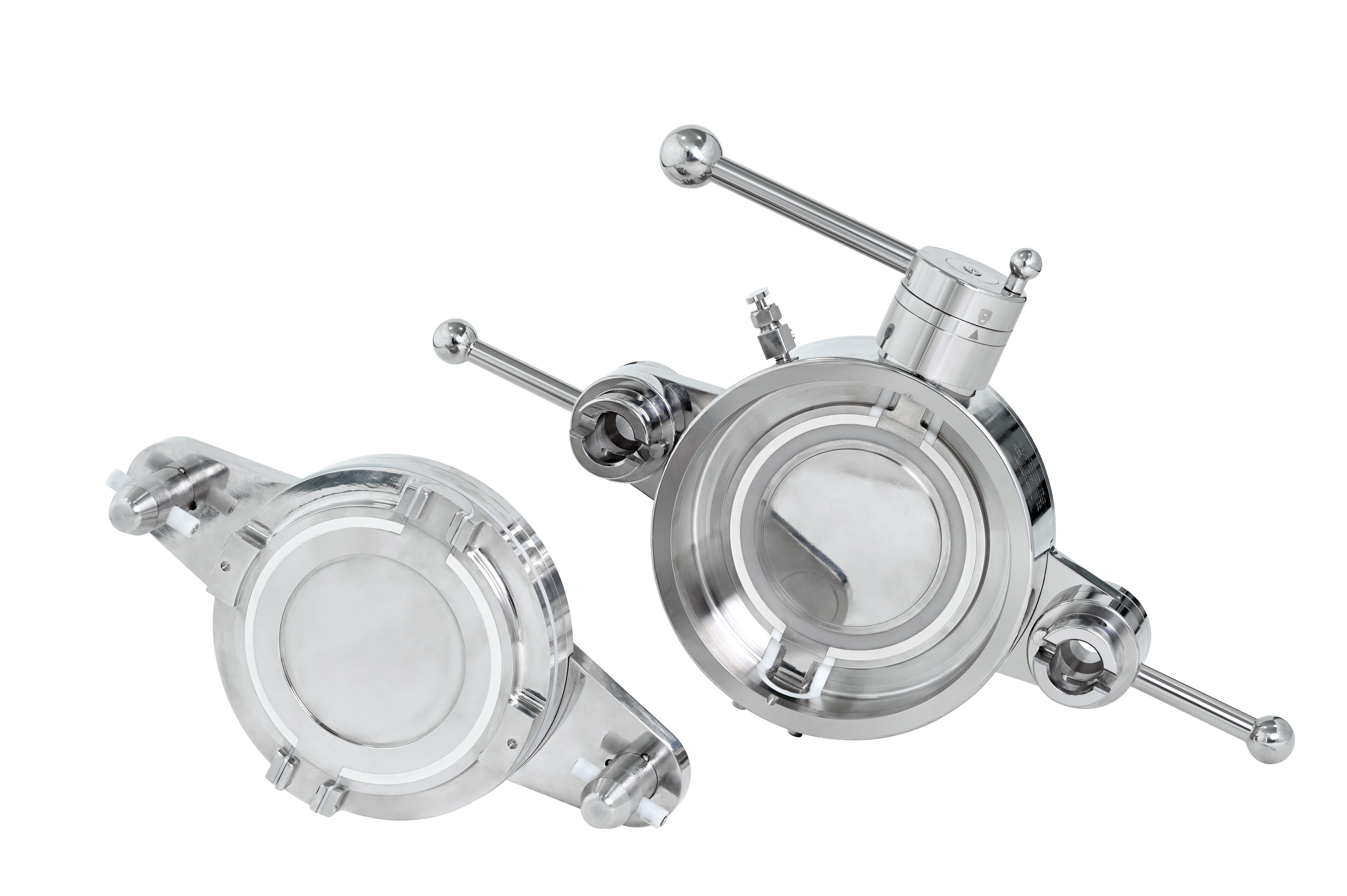
The real bottleneck in most valve systems isn't the actuator or the controller—it's the mass and friction buried inside the valve body itself. By reworking the internals with lighter spools, low-inertia poppets, and balanced flow paths, response lag drops from noticeable hesitation to near-instant movement. Instead of waiting for pressure to build or a heavy piston to slide, the valve reacts the moment the signal changes, giving you tighter control over position, flow, and pressure without overshoot.
One of the more overlooked tricks is matching the internal geometry to the actual duty cycle. A valve that's sluggish at low openings often has a spool land that's too wide or a spring that's fighting the pilot flow. Shortening the land overlap, using a progressive spring rate, or adding a small damping chamber can shave milliseconds off the dead time. In high-cycle applications, that's the difference between a smooth ramp and a sawtooth trace on the pressure gauge.
What separates these active internals from an off-the-shelf upgrade is the feedback loop inside the valve. A tiny pressure tap or position sensor feeds real-time data back to the trim, letting the valve adjust its own response curve on the fly. That means no more guessing at PID settings or compensating with external snubbers—the valve simply moves when you need it to, and stops when you don't.
Media Compatibility Without Compromising Control
True media compatibility often gets reduced to a checklist of file formats and codecs, but that misses the point. It's about letting your existing library, no matter how messy or mixed, simply work — without forcing you into a rigid, one-size-fits-all player. The goal is seamless playback across devices, yet the moment a platform starts dictating how you organize, stream, or transcode, the user becomes a passenger. Real compatibility means the software adapts to your media, not the other way around.
The tension appears when convenience features begin overriding personal preferences. Auto-generated metadata, forced folder scanning, or cloud-only libraries can strip away the granular control that enthusiasts and professionals rely on. A well-designed system handles MKVs with embedded subtitles, obscure audio tracks, and variable frame rates without breaking a sweat, but it also lets you turn off every automatic "enhancement" and manage files exactly as you see fit. The moment you have to fight the interface to keep your own naming conventions, compatibility has quietly turned into compromise.
That's why the best solutions treat compatibility and control as partners rather than opposites. You should be able to drop a decade-old AVI next to a brand-new HDR rip and have both play instantly, while still deciding which audio stream defaults, whether thumbnails generate, or if the library stays entirely offline. Playback should feel effortless, but configuration should feel like yours. When a media tool respects that balance, it stops being just another app and becomes an extension of how you already think about your collection.
Real-Time Correction Through Integrated Sensing
Integrated sensing weaves correction directly into the moment of action, so adjustments happen before errors can compound. Instead of stopping to measure and then react, the system continuously reads position, force, and trajectory in the same pass that executes the work. This tight coupling turns every motion into a feedback loop—each micro-deviation triggers an immediate compensating shift, keeping output aligned with the intended path even as material, wear, or operator handling introduces variability.
The hardware and software are not treated as separate stages but as a single responsive unit. Sensors embedded at the point of contact capture live data that feeds straight into the control logic, bypassing the delays of post-process inspection. Because correction is distributed across the entire operation rather than concentrated at checkpoints, the result is a process that self-stabilizes under changing conditions—no separate compensation step, no pause for recalibration, just a continuous adaptive rhythm that holds tolerance from start to finish.
Scaling Active Control Across Process Environments
Moving a control strategy from a pilot line into full production rarely works by simply copying gains. Each process environment carries its own thermal profiles, equipment lag, and operator expectations, so active control parameters that hold tightly in one unit often drift or oscillate in another.
The practical path is to treat scaling as a series of local re-identifications. Run a short excitation test after installation, fit a reduced-order model from the actual loop response, and let the active controller adapt its constraints instead of forcing the original tuning. This catches differences in valve deadband, sensor placement, and process dead time before they become stability problems.
What makes the difference at scale is less about advanced algorithms and more about clear handoff between units. Where multiple environments share utilities or feed streams, a controller tuned in isolation can fight its neighbors. Adding simple feedforward from upstream flow or pressure signals, and limiting rate-of-change on shared headers, often removes the cross-coupling that no amount of single-loop tuning will fix.
Built-In Diagnostics That Prevent Silent Drift
Most systems don’t fail loudly — they fade. A sensor’s baseline creeps a few millivolts, a calibration curve bends just enough to pass a spot check, and before anyone notices, the data is quietly wrong. Built-in diagnostics that prevent silent drift attack this problem by embedding continuous self-checks directly into the hardware and software stack. Instead of waiting for a scheduled maintenance window, the system compares live readings against reference signals, tracks long-term deviation patterns, and flags anomalies the moment they cross a threshold that actually matters for the application — not just a generic factory tolerance.
The real value is in how these diagnostics handle drift before it becomes a decision. A well-designed unit doesn’t just trigger an alarm; it can isolate whether the shift is coming from a degrading amplifier, thermal expansion in a mounting bracket, or contamination on an optical window. By keeping a rolling history of each channel’s noise signature and response time, the system learns what normal aging looks like and separates it from an early-stage fault. This turns maintenance from a calendar-driven chore into a targeted intervention — you replace a seal because the trend says it’s due, not because the manual says so.
For teams operating in remote or safety-critical environments, that difference is enormous. Silent drift in a pressure transducer on an offshore platform or a flow meter in a chemical plant can skew everything from inventory records to emergency shutdown logic. Built-in diagnostics close that gap by making the instrument’s own health a first-class data stream. The result is fewer false alarms, more trust in the numbers, and a system that tells you when it’s starting to lose its grip — long before the drift becomes dangerous.
FAQ
They combine a fast-acting actuator with real-time sensor feedback, so the valve position adjusts continuously instead of relying on preset mechanical stops. This closed-loop behavior lets them hold flow within tight tolerances even when upstream pressure drifts or downstream demand changes.
The onboard controller samples flow or pressure signals many times per second and recalculates the required valve opening almost instantly. As a result, the valve can compensate for disturbances before they turn into measurable deviations, which is something passive or manually tuned valves simply cannot match.
Semiconductor fabrication, biopharmaceutical processing, analytical instrumentation, and fuel cell test stands come to mind first. Anywhere that demands repeatable micro-liter or ultra-low flow control, or where a small overshoot can scrap an entire batch, active valves quickly pay for themselves.
Material compatibility matters as much as control performance. Look for wetted surfaces made from inert materials like PTFE, PEEK, or high-grade stainless steel, and check that the actuator is isolated from the fluid path. Also ask about particle generation and cleanroom ratings if the system handles sensitive chemistries.
Yes, especially in pneumatic systems where continuous bleed or oversized valves waste compressed air. Active valves can meter only the flow actually needed at each moment and shut off completely between cycles, which lowers both air consumption and downstream pressure fluctuations.
A sensor measures the actual flow or differential pressure, sends that value to the valve's controller, and the controller compares it against the desired setpoint. The difference drives an actuator correction. This self-correcting loop means the system stays accurate without constant manual recalibration, even as friction, temperature, or load changes.
One frequent mistake is placing the sensor too far from the valve, which adds transport delay and can cause oscillation. Another is ignoring proper filtration upstream, because tiny particles can stick to the valve seat and ruin low-flow precision. Always follow the manufacturer's recommended straight-run lengths and electrical grounding practices.
Instead of time-based overhauls, many teams use condition monitoring data from the valve's own diagnostics to schedule cleaning or seal replacement. Still, a quick monthly check of electrical connections, air supply quality, and any visible wear around the actuator is a good habit that prevents unexpected drift.
Conclusion
Precision flow control in modern systems rarely comes down to a single valve parameter or a catalog spec. It demands fast, stable response when upstream pressure shifts or downstream demand changes, and it demands that the valve internals themselves do not introduce lag. Active valve designs address this by using lightweight, directly actuated components and feedback from embedded sensors, so corrections begin before the process variable has drifted far. Compatibility with aggressive or viscous media is handled through material selection and internal geometry that keep control authority intact, rather than forcing a trade-off between chemical resistance and flow precision. That matters because real processes are rarely clean, steady, or forgiving.
Beyond the basic control loop, these valve platforms include diagnostics that watch for seat wear, friction changes, or sensor drift, flagging small shifts before they become process upsets. The same architecture scales across laboratory, pilot, and full production environments because the control logic and sensing remain consistent even when line sizes or flow ranges change. Operators do not need to re-tune the valve when moving from one process stream to another; the active loop adjusts based on measured conditions. The practical outcome is a valve that holds setpoints with less manual intervention, fewer recalibrations, and a clearer picture of when maintenance is actually needed, rather than relying on fixed schedules or reacting after a failure.
Contact Us
Contact Person: Ananda
Email: [email protected]
Tel/WhatsApp: 8619016718200
Website: https://www.wzaomi.com