

Best Aluminum Intake Manifold Parts for Superior Engine Performance
2026-07-06
Upgrading your intake manifold is one of the most effective ways to unlock hidden horsepower and torque. Yet, with so many options on the market, finding parts that truly deliver can be a challenge. That’s where precision‑engineered aluminum intake manifolds come into play—offering the perfect blend of strength, heat dissipation, and airflow optimization. When you’re chasing superior engine performance, every component matters. That’s why enthusiasts are turning to DDR for manifolds that don’t just promise gains, but actually deliver them on the dyno and on the street. In this post, we’ll dive into what makes a great aluminum intake manifold and how the right choice can transform your driving experience.
The Metallurgy Behind Aluminum Manifolds That Last
The secret to a long-lasting aluminum manifold starts with the alloy itself. Foundry-grade compositions like A356 are not chosen by accident—their carefully balanced silicon and magnesium content delivers a rare combination of castability and strength. Silicon improves fluidity during pouring, filling intricate mold passages without cold shuts, while also reducing thermal expansion. Magnesium, on the other hand, enables precipitation hardening during heat treatment, creating finely dispersed Mg₂Si particles that anchor the microstructure against cyclic stresses. The result is a metal matrix that resists crack initiation even when subjected to the rapid temperature swings and pressure pulses typical of intake systems.
Heat treatment transforms a raw casting into a resilient component. After solidification, the manifold undergoes a solution heat treatment at temperatures just below the alloy’s melting point to dissolve as-cast segregation and homogenize the grain structure. Rapid quenching traps solute atoms in a supersaturated state, setting the stage for artificial aging. By precisely controlling time and temperature—often targeting a T6 temper—the material develops a dense nano-scale precipitate network. This network impedes dislocation movement, substantially boosting tensile and fatigue strength without making the alloy brittle. The carefully tuned aging cycle also relieves residual casting stresses, minimizing distortion over years of heat cycling.
Metallurgical durability hinges on process control far beyond the chemistry and heat treat schedule. In premium manifold production, vacuum-assisted casting or low-turbulence mold-filling techniques reduce entrained oxides and hydrogen porosity—two common culprits behind premature failure. The solidification rate is engineered to promote a fine, equiaxed grain structure throughout, eliminating weak columnar zones where cracks can propagate. Even secondary phases like iron-rich intermetallics are managed through melt cleanliness and rapid cooling to prevent brittle platelet formation. These meticulous in-process controls ensure that every manifold retains a consistent, defect-minimized microstructure, capable of shrugging off the thermal and mechanical onslaught of modern engine bays for hundreds of thousands of miles.
Airflow Optimization Tricks That Generate Noticeable Torque
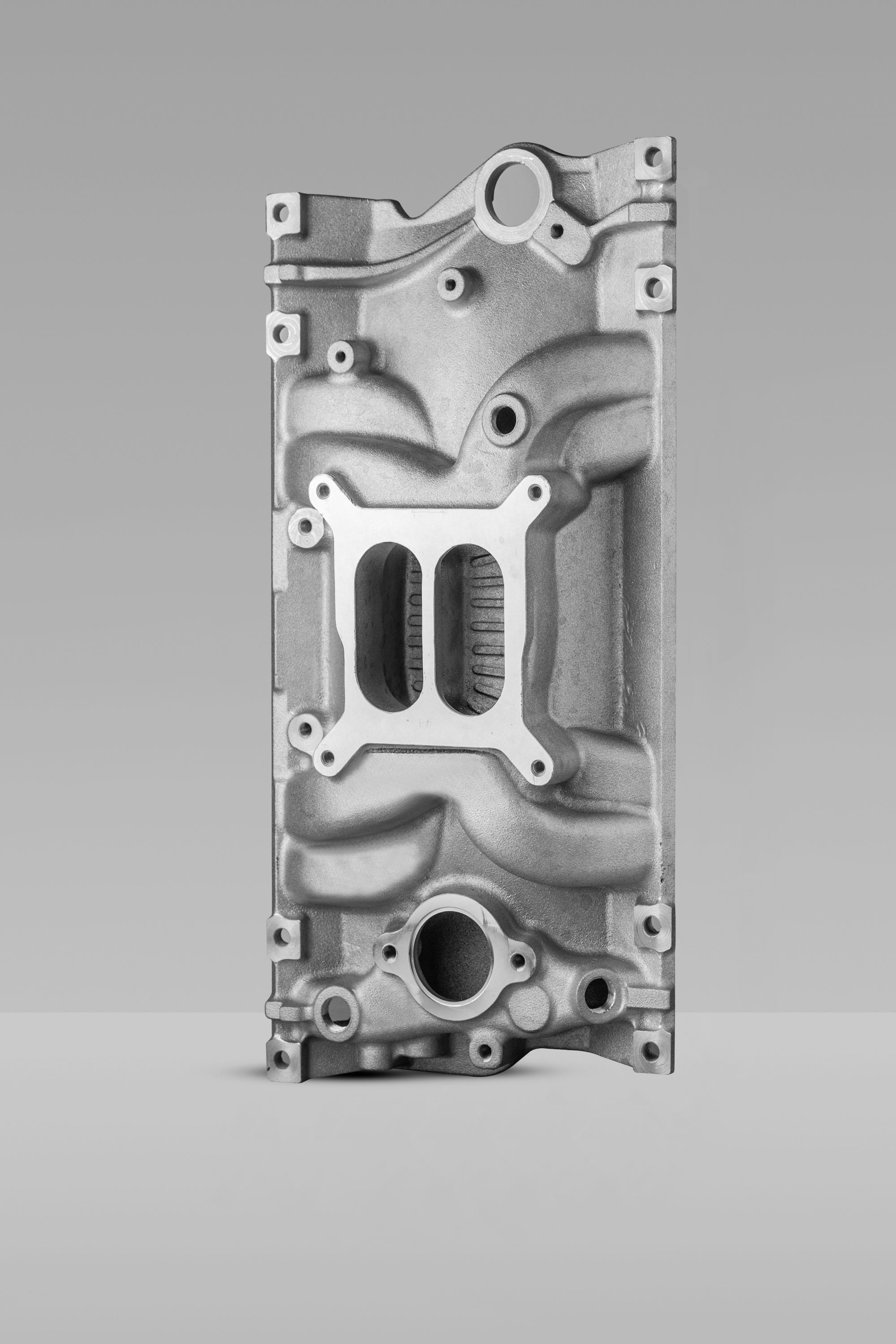
When chasing every last pound-foot of twist, the path air takes into your cylinders matters far more than most realize. It's not just about cramming in more oxygen molecules—it's about how they arrive. A somewhat overlooked trick is port velocity manipulation. By carefully reshaping the intake runners, you can create a standing wave that literally rams extra air into the combustion chamber right before the intake valve snaps shut. This inertial supercharging effect is subtle on paper but punches hard in the seat-of-the-pants meter, especially in the mid-range where most street engines spend their lives. The result is a fat, flat torque curve that makes the car pull from corners like it just got a fresh set of lungs.
Another move that consistently delivers is ditching the factory air intake maze. Stock setups are often tuned for noise suppression, not flow. Replacing all that ribbed tubing and restrictive filter housing with a smooth, large-diameter pipe and a high-flow filter element does two things: it reduces pumping losses and straightens the airflow path. Less turbulence means the mass air sensor gets a cleaner reading, and the throttle response sharpens up considerably. On dyno sheets, you'll typically see a modest peak gain, but the real story is how much wider the torque band gets. That's the stuff that shoves you back in the seat at part throttle without needing to downshift.
One last gem that old-school tuners swear by is the thermal barrier approach. Wrapping the intake manifold and charge pipes with reflective material or using phenolic spacers keeps heat from the engine from soaking into the intake charge. Cooler air is denser air, so you get a little extra oxygen without any extra boost. Pair that with a well-designed air duct that grabs true cold air from outside the engine bay, and you've got a setup that delivers repeatable, all-weather torque. It's a combination of small things that compound into a driveability difference you'll notice the first time you merge onto a highway on a hot day. No dyno queen numbers here, just real-world grunt that comes on strong and stays consistent.
Why Swapping Your Manifold Unlocks Hidden Engine Potential
Stock manifolds are designed with cost and mass production in mind, often prioritizing noise reduction or fitting constraints over airflow efficiency. Their cast construction can leave rough internal surfaces and sharp bends that disrupt the smooth passage of exhaust gases. Swapping to a performance-oriented manifold eliminates these restrictions, reducing backpressure and allowing each cylinder to exhale more freely. This seemingly minor change lets the engine breathe deeper, transforming wasted energy into usable torque and horsepower across the rev range.
Many drivers are unaware that their factory exhaust layout creates uneven scavenging between cylinders, causing one bank to work against the other. A quality aftermarket manifold with equal-length runners and a merged collector balances the pulses, creating a natural vacuum that pulls exhaust from neighboring cylinders. The result is a cleaner, more complete combustion cycle that not only boosts output but also improves throttle response and fuel efficiency—unlocking reserves the original design left trapped inside the engine.
Thermal Properties That Make Aluminum a Standout Choice
Aluminum's exceptional thermal conductivity ensures rapid heat dissipation, making it ideal for applications ranging from electronics cooling to high-performance cookware. Unlike many other metals, it efficiently transfers heat without sacrificing structural integrity, allowing components to stay within safe operating temperatures.
This metal also boasts a low thermal expansion coefficient relative to its conductivity, meaning it expands minimally when heated. That dimensional stability is crucial in precision systems where tight tolerances are non-negotiable, preventing warping and ensuring long-term reliability.
Another standout property is aluminum's high melting point combined with lightweight nature, which enables its use in extreme environments without adding unnecessary bulk. From aerospace heat shields to automotive radiators, these thermal attributes give aluminum a decisive edge over competing materials.
Runner Design Nuances That Fine-Tune Your Powerband
Shaping a runner isn't just about length—it's about how the air column behaves from the plenum to the valve. Subtle tapering, where the cross-section shrinks ever so slightly toward the port, can accelerate the intake charge without choking flow at higher rpm. This gradual squeeze raises air speed right where it matters, fattening the torque curve just before peak power. Get the taper angle wrong, and you'll either kill top-end breathing or lose the very ramming effect you're chasing.
Runner entry geometry plays an overlooked role in how effectively the cylinder fills. A simple bellmouth radius might look efficient on a flow bench, but in a pulsing, real-world manifold, a carefully rolled entry with a slight undercut disrupts the boundary layer less and lowers the pressure drop across the port. Some builders exaggerate the radius on one side to bias flow toward the long-side of the port roof, correcting an inherent tumble issue without sacrificing high-lift flow numbers.
Material and wall finish are more than cosmetic choices—they influence heat rejection and surface friction in ways that shift the powerband. A cast surface with intentional texture can keep the boundary layer attached just a touch longer during part-throttle transitions, smoothing out that annoying stumble at 2,500 rpm. Meanwhile, composite runners with lower thermal conductivity keep the charge denser, delivering a measurable bump in horsepower on heat-soaked dyno runs, even if the cross-section is identical to aluminum.
Weight Reduction That Actually Improves Handling Feel
Shedding weight from a car is often celebrated for straight-line speed, but the true artistry lies in how it transforms the connection between driver and machine. By strategically trimming mass—especially from rotating components like wheels, brake discs, and flywheels—the reduction in inertia makes the steering feel more immediate and alive. Turn-in becomes sharper, and the car responds to inputs with a newfound eagerness that no amount of horsepower can replicate. It’s the kind of change you feel through your fingertips the moment you flick the wheel into a corner.
The benefits extend beyond quickened reflexes. A lighter chassis allows the suspension to work with less burden, maintaining tire contact over uneven surfaces where a heavier car would become skittish. This translates to a more composed ride and greater confidence when exploring the limits of grip. Moreover, reducing mass high up in the vehicle—like swapping a steel roof for carbon fiber—lowers the center of gravity, which diminishes body roll and makes weight transfer more progressive. The result is a car that breathes with the road rather than fighting it.
It’s crucial to distinguish between arbitrary weight loss and purposeful refinement. Gutting a car indiscriminately can ruin its balance and everyday usability. Instead, focusing on unsprung weight and rotational mass yields tangible improvements without sacrificing comfort. Lightweight alloy wheels, two-piece brake rotors, and a well-judged flywheel not only sharpen response but also make the car feel more agile in every input. When done right, this thoughtful lightening turns a good-handling car into a sublime one, rewarding the driver with a sense of precision that feels entirely natural.
FAQ
Aluminum handles heat better and resists cracking under high pressure or boost, which is common with forced induction setups. Plastic can warp or fail over time, while a well-designed aluminum piece maintains its shape and seal, supporting consistent airflow.
Gains vary by engine and supporting mods, but it’s not unusual to see 10–20 horsepower on a tuned engine, especially if the factory manifold was restrictive. The biggest jump comes when paired with a throttle body upgrade and a proper ECU calibration.
A smooth, ported interior reduces turbulence, letting air move faster into the cylinders. This translates to sharper throttle response and stronger mid-range pull. Some tuners even extrude-hone the runners to eliminate casting imperfections for a near-mirror finish.
Yes, many aftermarket options feature thicker walls and reinforced flanges to handle elevated boost pressures without ballooning. Look for models with provisions for direct port nitrous or extra sensor bungs if you plan on serious forced induction tuning.
Single-plane intakes prioritize top-end power, great for high RPM drag setups. Dual-plane designs boost low-end torque and street drivability. Your choice depends on where you want the powerband: stump-pulling off the line or screaming on the top end.
Most quality kits retain stock sensor locations, but you might need to extend the harness for the MAP or IAT sensor. Some engines require an adapter for the throttle body or a recalibration. Always check compatibility with your ECU before bolting one on.
It’s doable on many popular engines if you’re comfortable with a wrench and have the factory service manual. Toughest parts are usually reaching hidden bolts and torquing the manifold evenly to prevent vacuum leaks. Give yourself a weekend and a friend.
Not much beyond periodic inspections for loose bolts and vacuum leaks. The aluminum itself won’t rust, but the gasket surfaces should stay clean. On methanol setups, flush the intake occasionally to prevent corrosion from the alcohol.
Conclusion
Selecting a top-tier aluminum intake manifold transforms how an engine breathes and performs, starting with the advanced metallurgy that gives these components exceptional longevity. Modern casting techniques and carefully chosen aluminum alloys resist fatigue and corrosion far better than older materials, meaning you get a part that maintains its structural integrity even under high-stress, repeated heat cycles. This durability pairs with superior thermal properties—aluminum sheds heat quickly, keeping intake air denser for more efficient combustion and consistent power delivery. When you combine that with precisely shaped runners, you unlock a broad, usable powerband. Slight tweaks to diameter and length shift torque peaks exactly where you want them, whether that’s stronger mid-range pull for street driving or screaming top-end for track days. Those subtle runner nuances are what separate a generic swap from a truly fine-tuned upgrade.
Beyond the metallurgy and thermal advantages, the airflow gains from a well-designed aluminum manifold are immediate and noticeable. Smooth internal surfaces and optimized plenum volumes slash turbulence, letting the engine inhale deeper and respond quicker to throttle inputs—a trick that translates directly to more torque you can feel from the driver’s seat. Swapping out a restrictive stock manifold essentially uncovers potential the factory left on the table, often without any other modifications. And there’s a handling bonus that many overlook: shedding several pounds off the nose of the car. That weight reduction lightens the front end just enough to sharpen turn-in response and improve overall balance, making the car feel more agile through corners. It’s a holistic upgrade that touches durability, power, drivability, and chassis dynamics all at once.
Contact Us
Contact Person: Shelly
Email: [email protected]
Tel/WhatsApp: 8613967667688
Website: https://www.yongyu.com/