

Boxing Ring Maker Essentials for Building a Safe Professional Ring
2026-10-12
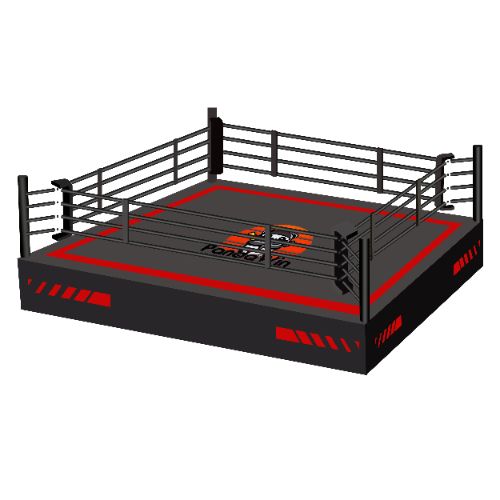
Every punch thrown in a professional ring is a test of both skill and structure. Beneath the ropes and canvas lies a carefully engineered platform that absorbs impact, protects fighters, and upholds the integrity of the sport. Yet many overlook the critical details that separate a safe, competition-ready ring from a dangerous shortcut. In this guide, we break down the boxing ring maker essentials—from frame materials and shock absorption to corner padding and surface tension. Whether you're outfitting a gym or building from scratch, PandaWin Sports brings field-tested insights to help you construct a ring that meets professional safety standards without compromising performance.
Picking Lumber That Stays Stiff Without Adding Bulk
Stiffness in wood isn't just about grabbing the heaviest board off the pile. Some species deliver a much higher modulus of elasticity relative to their density—vertical-grain fir and spruce, for example, resist bending without the dead weight of oak or hickory. When you flip through a stack, sight down the edge of each board to rule out bow or twist; a piece that's already curving will lose load-bearing ability long before it actually fails.
Watch the grain pattern more than the species label. Tight, evenly spaced growth rings usually signal slower growth and more consistent fiber alignment, which translates to better stiffness for the same thickness. Avoid boards with large knots clustered near the center third—they create weak points that force you to oversize everything else just to compensate. A moisture meter helps too: wood above 12% moisture will sag as it dries, no matter how rigid it felt in the lumberyard.
If solid wood keeps coming up too heavy for the span, look at laminated veneer lumber or parallel-strand products. They're engineered to put high-stiffness veneers in the outer layers where bending stress is highest, leaving lower-grade material in the core. That gives you a beam that holds its line without the extra pounds, and you can often drop a full size compared to conventional framing lumber.
Why Turnbuckle Covers Need Closed-Cell Foam, Not Open-Cell
Turnbuckle covers live outdoors, often in marine or industrial settings where rain, spray, and humidity are constant. Open-cell foam acts like a sponge: once water finds its way inside, it stays trapped against the metal, accelerating rust and inviting mold. Closed-cell foam has a sealed structure that sheds moisture instead of absorbing it, so the turnbuckle stays dry even after repeated wet-dry cycles.
That same closed-cell structure also holds up better under compression and temperature swings. Open-cell foam loses its shape as the voids fill with water and freeze, breaking down the material from the inside. Closed-cell foam keeps its resilience, maintains a snug fit around the barrel and threads, and doesn't become a breeding ground for mildew. For anything that must protect rigging hardware season after season, closed-cell foam is the only choice that doesn't quietly work against you.
Getting Rope Tension Right So Fighters Don't Get Tangled
Most people yank the ropes as tight as they'll go and call it a day, but that's exactly how you end up with fighters bouncing off a stiff wall instead of being safely absorbed. The real trick is to aim for a slight give, roughly a half-inch of inward flex when someone leans their full weight against the middle rope. Too slack and a fighter can slip through or get a limb wrapped up during a scramble; too tight and the rebound effect sends them lurching back into the center with no control. That middle ground keeps the action contained without turning the boundary into a hazard.
Check all four sides with the same pull test, because uneven tension is the silent cause of most tangle incidents. A corner where one rope is noticeably firmer than the one below it creates a gap that catches gloves, elbows, and occasionally a chin. Trainers often overlook the subtle shift that happens after a few rounds of heavy contact, so rechecking between sessions matters more than the initial setup. Run a hand along each rope and listen for a consistent thrum rather than a loose flap or a rigid twang.
When you get the tension dialed in, fighters can use the ropes the way they’re meant to be used, leaning, pushing off, and absorbing lateral movement without fighting the equipment. That clean recoil also makes it easier to keep your footing near the edge, which is where a lot of scrambles turn into injuries. If you see a rope start to sag mid-session, stop and adjust before the next round; a two-minute fix beats untangling a fighter who got caught in the gap.
Floor Padding That Absorbs Impact Without Feeling Spongy
Most foam underlays trap energy by compressing too far, which creates that unstable, sinking sensation. The alternative is a dense, closed-cell structure that spreads force across a wider area—so the floor doesn’t bounce back or bottom out. Think of it less like a mattress topper and more like a firm rubber track: it gives just enough to protect joints and subfloor, then stops.
Installers often describe the right pad as “quiet but grounded.” You can feel the impact leave your foot, but your stance stays stable for lifts and quick changes of direction. That balance comes from a rebound rate tuned for controlled return, not softness. It also helps prevent the floor from flexing at the seams, which is what eventually causes locking systems to creak or fail.
If you are replacing a cheap foam pad, the difference is immediate: fewer echoes, less fatigue after long sessions, and no mushy sink when you step near heavy equipment. The best way to test is to drop a weighted ball or a pair of shoes onto the sample. You want a dull thud without a visible bounce or a lingering sag.
Corner Post Design That Survives Rope Jerks and Body Slams
When a wrestling ring takes a beating night after night, the corner posts are the silent workhorses. Rope jerks send sudden, violent tension through the top turnbuckle, while body slams crash against the steel with full force. A design that survives this punishment doesn't rely on a single massive weld or an overbuilt plate. Instead, it spreads the load through a reinforced sleeve that slides over the post's base, locking into the frame with two offset bolts rather than one centered pin. This lets the post flex just enough to absorb torque without permanently bending or tearing at the thread points.
Many rings fail because the corner post is treated as a static column. In reality, it's a pivot point under constant dynamic stress. The best survival-oriented posts use a two-piece construction: a solid steel core for vertical stiffness, wrapped in a thick-walled tube with a slight gap at the top. That gap allows the turnbuckle eye to rotate freely without chewing into the metal, so repeated rope jerks don't create a stress riser. Add a rounded bottom flange instead of a sharp 90-degree corner, and the post can rock microscopically during a body slam without cracking the ring frame weld.
Finally, there's the finish. Powder coating hides hairline cracks until it's too late. A bare, oil-quenched post with a machined surface will show fatigue early, letting a promoter swap it before failure. But the real trick is to under-tighten the bottom nuts slightly — by about a quarter turn past hand tight — and use nylon-insert lock nuts. That small bit of intentional slop lets the post shift under a two-hundred-pound body slam, returning to position each time. Over-tightening is what shears bolts and snaps welds. This design philosophy keeps a corner post alive through years of rope jerks and body slams, not because it's stronger, but because it's smarter about where it lets the energy go.
Fire Code Compliance Most Workshop Builders Overlook
Many workshop builders focus on structural strength and electrical capacity, but fire code compliance often slips through the cracks. One frequently missed item is the required clearance around heating equipment and flammable storage. Builders might place a workbench too close to a furnace or store oily rags near a spark source, assuming it's fine because no one checks until an incident happens. Inspectors, however, pay close attention to these distances and the presence of fire-rated separation in mixed-use spaces.
Another overlooked area is proper ventilation for welding or spray-painting zones. A workshop that creates fumes but lacks adequate exhaust or a fire suppression system can fail a final inspection quickly. Builders sometimes skip installing heat detectors rated for dusty environments, thinking standard smoke alarms are enough. In reality, sawdust and metal shavings can trigger false alarms or fail to detect smoldering fires early, leading to code violations.
Exit paths are also a common point of failure. A workshop may have plenty of space for moving materials, but if stored lumber blocks a rear door or the emergency lighting is not wired to a backup source, the building will not pass. Fire code requires clear, illuminated egress at all times, not just during business hours. Taking the time to walk through the space as an inspector would—checking clearances, ventilation, and exit routes—can save a builder from costly corrections later.
FAQ
Use kiln-dried hardwoods like maple or birch for the frame. They resist warping better than softwoods and hold screws securely under repeated impact. Avoid pressure-treated lumber because the chemicals can corrode metal brackets and create uneven surfaces.
A safe professional ring typically uses a minimum of 1.5 inches of closed-cell foam padding under the canvas. For better shock absorption, layer a 1-inch high-density foam base with a 0.5-inch memory foam top. The total padding should compress no more than 40 percent under a 200-pound impact.
The top rope should sit at 52 inches above the ring floor, the middle rope at 36 inches, and the bottom rope at 20 inches. Tension must be tight enough that a 150-pound push deflects the top rope no more than 6 inches. Use turnbuckles with lock nuts and check tension before every event.
Each corner needs a minimum of three-inch-thick foam padding covering the entire post, including the turnbuckle and rope attachment points. The pad must wrap fully around the post and extend at least 12 inches along the ropes. Also use a steel corner plate under the canvas to prevent post movement.
Anchor the ring legs to the floor with heavy-duty rubber isolation pads that grip the surface. For portable rings, use cross-braced leg frames and bolt-on steel stabilizing bars on all four sides. Avoid simple sandbags; they shift under lateral force and create gaps between the ring and floor.
Place interlocking rubber gym tiles, at least three-quarters of an inch thick, under the entire ring footprint. This spreads impact loads and reduces vibration transfer to the building floor. Never set the ring directly on concrete, as it causes excessive rebound forces on fighters' joints.
Inspect all ropes, turnbuckles, and corner pads before every event and after every 20 hours of training use. Re-tension the ropes at least monthly in a busy gym. Replace the canvas when you see any tear longer than two inches, and replace padding if it stays compressed more than 15 percent after a session.
Steel posts should be at least 3 inches in diameter with a wall thickness of 0.25 inches. Aluminum posts are acceptable but must be at least 4 inches in diameter to avoid flexing. The posts need to extend 14 to 18 inches above the top rope to safely anchor corner pad straps.
Conclusion
Building a safe professional boxing ring starts with material choices that balance rigidity and give. The frame lumber has to stay stiff under heavy lateral loads without adding so much mass that the ring becomes difficult to transport or adjust; many experienced builders favor laminated or select-grade dimensional lumber that resists warping while keeping cross-sections lean. Turnbuckle covers are a small detail that matters a lot, especially where fighters hit the ropes hard. Closed-cell foam is non-negotiable here because it does not absorb sweat or water the way open-cell foam does, so it holds its shape and protective density over time instead of turning into a soggy, flattened hazard. Rope tension is another failure point: ropes need enough tautness to keep a boxer from sliding through, but if they are over-cranked, a fighter can get tangled or bounced unpredictably.
Floor padding has to walk a fine line between shock absorption and stability. A pad that feels spongy can roll an ankle or sap a boxer's footwork, so many ring makers use layered high-density foam with a firmer top sheet that spreads impact without bottoming out. Corner posts take constant abuse from rope jerks and occasional body slams; designs with reinforced steel inserts or through-bolted connections hold up far better than simple welded tabs. Fire code compliance gets forgotten in small workshops, but it changes everything from foam selection to wall clearances and exit paths. A ring built with non-certified foam or blocked egress can fail inspection even if the structure is otherwise sound. Checking local fire ratings for padding and keeping the surrounding space clear is a simple step that keeps a professional ring both safe and legal.
Contact Us
Contact Person: Fei Xu
Email: [email protected]
Tel/WhatsApp: +8618631245578
Website: https://www.pandawinsports.com/