
China Carbonated Beverage Filling Machine Buying Guide for Maximum Uptime
2026-10-31
When production lines stop, every minute drains profit. For beverage producers who depend on carbonated filling machines, uptime isn't a luxury—it's the whole game. Yet many buyers still chase the cheapest quote or the fastest delivery, only to discover that downtime from poor sealing, unstable CO₂ injection, or flimsy components eats the savings within months. This guide cuts through the noise. You'll learn what actually keeps a China-built carbonated beverage filling machine running shift after shift, and how Wanying Machinery addresses those failure points at the engineering level. If maximum uptime matters more than upfront price, keep reading.
Where Chinese Carbonated Filling Lines Lose the Most Uptime
On most Chinese-built carbonated lines, the biggest silent uptime killer sits in the capping turret. The spring-loaded heads get knocked out of torque spec after long runs on warm, syrup-splashed fillers, and once two or three heads drift loose, the line starts spitting under-torqued bottles. By the time the jam or leaker count climbs, maintenance is already chasing bottles instead of recalibrating the whole head stack. A 20-minute reset every 300,000 bottles beats a 4 a.m. cap-feeder teardown.
The carbonation tank and its pressure loop take second place. Many machines use a single PID loop tied to a cheap pressure transmitter that tends to read high once the snubber line collects syrup mist. Operators compensate by lowering the CO2 setpoint, which drops carbonation and forces the filler to slow down for foaming. Replacing the snubber and running an auto-zero check every CIP cycle usually returns 8–12% of rated speed without touching a single valve.
Finally, the infeed and discharge stars lose more time than any bearing failure. Because the neck guides are often cut from mild steel with no edge rounding, scratched PET preforms start wobbling at higher speeds and shave minutes off every shift through micro-stops. Swapping to hardened, radiused guides and verifying star-wheel pitch after every bottle format change removes most of the short stops that never show up on a maintenance log.
Questions to Ask Before You Buy a Rotary Filler from China
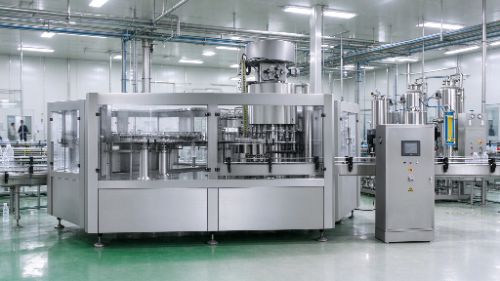
A rotary filler is a significant investment, and the distance between you and a Chinese manufacturer can turn small misunderstandings into costly problems. Before signing anything, push for specifics about the machine's wetted parts: which stainless steel grades are used, whether elastomers are FDA-compliant, and how the design handles abrasive or acidic products. Ask for video of a similar product running at the viscosity and fill volume you need, not just a polished brochure clip. The more precise your questions about material compatibility and real-world throughput, the fewer surprises you'll face during installation.
Changeover and cleaning often separate a machine that works well in the demo from one that works well on your floor. Find out exactly how long a format change takes, what tools are required, and whether the filler can be fully cleaned without dismantling half of the cabinet. Request a detailed spare parts list with lead times, and ask who covers freight if something arrives damaged or missing. Also clarify whether the quoted price includes nozzles, hoppers, and conveyors sized for your containers, or if those are treated as expensive add-ons later.
After-sales support matters even more when the factory is thousands of miles away. Ask for a written response time guarantee, whether remote troubleshooting is available via video call, and if the manufacturer has a local service partner in your region. Request references from buyers in your industry who have run the same model for at least a year. Finally, agree on acceptance criteria before production starts: fill accuracy, speed, and rejection rates should be measurable and documented. A supplier that hesitates to commit to these numbers in writing is probably not one you want to wire a deposit to.
Why Over-Speccing Your Filler Often Backfires on Uptime
A spec sheet can make a high-end filler look like cheap insurance for uptime. It rarely works out that way. Fillers that exceed the actual mechanical or thermal demands of an application tend to introduce new failure modes: higher viscosity, uneven dispersion, faster screw and barrel wear, and more frequent clogging at feed throats or nozzles. Each of these quietly eats into scheduled production hours.
The real cost shows up in unplanned stops. A filler that is harder than necessary can turn a routine material change into a half-shift cleanup. Operators then spend more time chasing pressure spikes and burn marks than making product. Over-speccing does not add safety margin; it adds complexity where the process was already stable. Uptime suffers because the equipment is now fighting the material instead of simply moving it.
The better move is to match the filler to the job, not chase the highest grade on the data sheet. When the filler behaves predictably within the machine's normal operating window, wear parts last longer and changeovers stay short. Leaving the extra performance on the table is often the smarter choice for keeping lines running.
How to Read a Chinese Supplier’s Service Record Like a Plant Manager
Start by treating the service record as a living log of operational friction, not a polished brochure. Look for patterns in how issues are logged, assigned, and closed. A plant manager doesn't care about a perfect record; they care about whether delays were caught early, whether root causes were named instead of vague “human error,” and whether corrective actions actually showed up in later entries. Check timestamps against real production shifts — if every problem is magically resolved at 9:00 AM, someone is scripting the log instead of living it.
Next, draw a line between internal notes and what was shared with the buyer. Suppliers often keep two versions: the raw internal log with blunt language, and the cleaned-up external report. Ask for the raw version, or at least compare the tone across entries. A real record has uneven wording, crossed-out lines in scanned pages, and occasional contradictory annotations — that's normal. A suspiciously consistent voice or perfectly rephrased summary for every issue suggests rewriting after the fact. Focus on entries where the supplier admits to rework or scrapped batches; how they describe the cost of those events tells you if they learned or just survived.
Finally, use the record to test the supplier's memory. Pick three past incidents and ask the production lead to walk you through what happened without looking at the file. If they can recall the specific machine, the shift, and what changed on the floor, the record is likely genuine and used as a working tool. If they need to flip pages and then recite a rehearsed narrative, the service record is probably a compliance artifact. A plant manager reads these logs the way a mechanic listens to an engine — not for the loud noises, but for the subtle rhythms that indicate whether the whole system is healthy or just idling before a breakdown.
The Maintenance Schedule That Keeps Carbonation Pressure Stable
A steady pour starts with a simple habit: checking the CO2 tank gauge at the same time every day. If the needle dips below the line you marked last week, find the leak before it becomes a flat-beverage emergency. Soapy water brushed over connections and the regulator stem reveals tiny escapes that can drain a tank overnight. Keep an extra set of O-rings and a small wrench near the gas line so minor swaps happen on the spot, not after the lunch rush.
Weekly attention goes to the regulator and the temperature around the carbonation system. Fluctuating room heat changes how much gas dissolves, so a cooler that cycles too warm can mimic a pressure drop. Record the high and low readings on a notepad taped to the unit; patterns show whether the issue is the schedule or the hardware. Every month, remove the regulator, wipe the inlet filter, and inspect the check valve for sticky residue. A slow hiss you ignore today becomes a tank replacement tomorrow.
When swapping tanks, never let the system sit open longer than needed. Purge the line for two seconds before connecting a fresh cylinder, then set the pressure to your baseline and wait five minutes before adjusting again. Small, consistent routines beat big corrections.
What Real Operators Check Before Every Bottling Shift
Real operators don't just glance at the schedule and hit start. They walk the line with a flashlight, checking that every guard is in place, that the filler valves aren't dripping from the last CIP cycle, and that the conveyor rails are set to the exact bottle diameter for today's run. A quick pull of the first few bottles off the rinser tells them if the air knife is actually drying threads before the fill, because wet threads lead to loose caps and leakers down the line.
Before the first case gets palletized, they'll verify the date code format against the work order, pull three consecutive bottles to check fill height and torque, and make sure the labeler isn't starting to drift. If carbonated product is running, they'll crack a bottle and check breakout pressure rather than trusting the tank gauge. These checks take maybe ten minutes, but they stop the kind of small drift that turns into a full line stoppage by mid-shift.
FAQ
The main difference comes down to the quality of the filling valves, the rigidity of the frame, and how well the control system prevents pressure fluctuations. A machine designed for uptime will use stainless steel components with tight tolerances, have fewer plastic parts in high-wear areas, and include automatic CIP functions so cleaning does not require excessive disassembly. You should also look for a manufacturer that tests each machine under actual carbonation pressure before shipping, not just a dry run.
Focus on 316 stainless steel for product-contact parts and EPDM or Viton seals rated for CO2 and acidic beverages. Cheaper machines often use 304 stainless or mixed metals that can corrode over time, especially with citric acid. Ask for material certificates and check whether the seals are easily replaceable from the front of the machine. If a filling head requires a full tear-down just to change one O-ring, your maintenance crew will lose hours every month.
Look for a machine with quick-release clamps on the star wheels and guide rails, and a recipe-driven control system that automatically adjusts fill levels, pressure, and valve timing when you select a new product. Some Chinese manufacturers offer motorized height adjustment for the filler bowl, which saves a lot of manual cranking. Before buying, ask how long a typical changeover takes with two trained technicians and request a video of the procedure.
Ask for a recommended spare parts list that covers the first two years of operation, and find out which parts are proprietary versus off-the-shelf. It is also wise to ask about lead times for valve assemblies, PLC modules, and servomotors. A good supplier will keep common parts in stock and offer an online portal or WeChat group for urgent requests. If the only answer is 'we can ship by DHL,' that does not tell you enough about their parts network.
Yes, if your goal is maximum uptime. Automatic lubrication removes a routine task that is often skipped during busy shifts, and remote monitoring lets the manufacturer's engineers see alarm history and sensor readings before you even open the cabinet. This can cut troubleshooting time in half. Just make sure the remote connection is secure and that your IT team approves of the protocol.
Many buyers assume a higher nominal speed means better output, but if the filler has frequent micro-stops or slow pressure recovery between tanks, real throughput will disappoint. Uptime is about stable performance over eight-hour shifts, not peak speed. Ask for an efficiency guarantee, such as 92% or higher at the rated speed with a specified bottle and carbonation level, and ask what happens if the machine fails that test.
Request a factory audit report or schedule a video walkthrough. Ask whether they test filling valves with actual carbonated water or just air, and whether they run a 24-hour continuous test before packaging. You can also ask for references from buyers in your region who run the same type of beverage. If a manufacturer hesitates to share test data or customer contacts, that is a signal to dig deeper.
Plan daily visual checks of the filling valves and conveyor wear strips, weekly lubrication of non-automatic points, and monthly inspection of the CO2 pressure regulators and valve springs. Every quarter, schedule a half-day for deep cleaning of the filler bowl and replacement of seals in the most-used filling heads. Keep a log of valve adjustments and any alarm codes. A machine that is maintained this way easily avoids the biggest causes of unplanned stops.
Conclusion
Most uptime losses on Chinese carbonated filling lines are not caused by catastrophic breakdowns but by small, recurring issues: filler valve wear, CO2 pressure drift, and star wheel misalignment. Before you commit to a rotary filler, ask direct questions about changeover time, local availability of wear parts, and whether the supplier can dispatch a service tech without a three-day delay. Over-speccing is a common trap—buying a machine rated for far higher speeds than your line actually runs often leads to idle operation, inconsistent carbonation, and more frequent seal replacement because the filler was not tuned to run efficiently at lower throughput. Reading a supplier’s service record like a plant manager means requesting specific downtime logs and root-cause summaries, not just polished reference letters from happy customers.
The maintenance schedule that keeps carbonation pressure stable goes beyond lubrication: it includes daily checks of CO2 supply pressure, filler bowl level, and snift valve timing. Real operators check more than bottle supply before every shift—they verify gas pressure at the source, inspect fill valve O-rings for nicks, test crowner torque, and watch the first few bottles for foam-over or underfill. These habits, combined with a filler sized for your actual production band rather than an aspirational maximum, keep uptime high without relying on emergency calls to a distant factory. Finally, treat the purchase as a long-term agreement: get written commitments for spare parts stock, remote diagnostics support, and a realistic on-site response time before you sign anything.
Contact Us
Contact Person: Tyson
Email: [email protected]
Tel/WhatsApp: +8613396971296
Website: https://www.wanyingmachinery.com