

China Fire-Resistant Silicone Sealant Essential Guide for High-Temperature Applications
2026-11-16
Most silicone sealants give up long before the fire does. That's the problem this guide solves. We looked past marketing noise to find what actually matters in China's fire-resistant silicone sealant market for high-temperature applications. You'll get clear criteria for temperature ratings, adhesion under thermal cycling, and smoke toxicity—not just product brochures. And because one name keeps surfacing in field tests, we put Baolongda Group under the lens too. If your next project faces sustained heat, this is the essential read before you spec a single tube.
What Separates a True High-Temperature Silicone from Standard Fire Caulk?
At first glance both products look similar coming out of a cartridge, but the resemblance ends once temperatures climb past 250°F. Standard fire caulk is formulated primarily as a firestop sealant, designed to intumesce and block smoke and flames during a fire event; it is not built for continuous thermal cycling or prolonged exposure to heat. A true high-temperature silicone, by contrast, uses a different polymer backbone and filler package that remains stable from roughly -65°F up to 600°F or higher, depending on grade. It does not rely on charring as its main defense, instead retaining elasticity and adhesion in conditions that would embrittle ordinary caulk.
Another distinction shows up in movement accommodation and substrate compatibility. Fire caulk often has limited flexibility once cured and can crack when pipes, flues, or metal housings expand and contract under heat. High-temperature silicone is formulated to handle repeated thermal expansion without tearing away from the substrate. You will also notice the difference in cure chemistry: many fire caulks are water-based or acrylic, which off-gas and shrink as they dry, while high-temp silicone is a moisture-cure RTV that stays dimensionally stable.
If you are sealing around oven flues, engine components, boiler stacks, or industrial heaters, choosing the wrong product is not just a performance issue, it is a safety hazard. A standard fire caulk may pass a fire test once, but it will not survive the daily grind of high heat, vibration, and thermal shock. A true high-temperature silicone keeps a reliable seal long after installation because it was designed for those operating conditions, not just for a worst-case fire scenario.
Why Joint Depth and Cure Time Decide Whether the Seal Survives
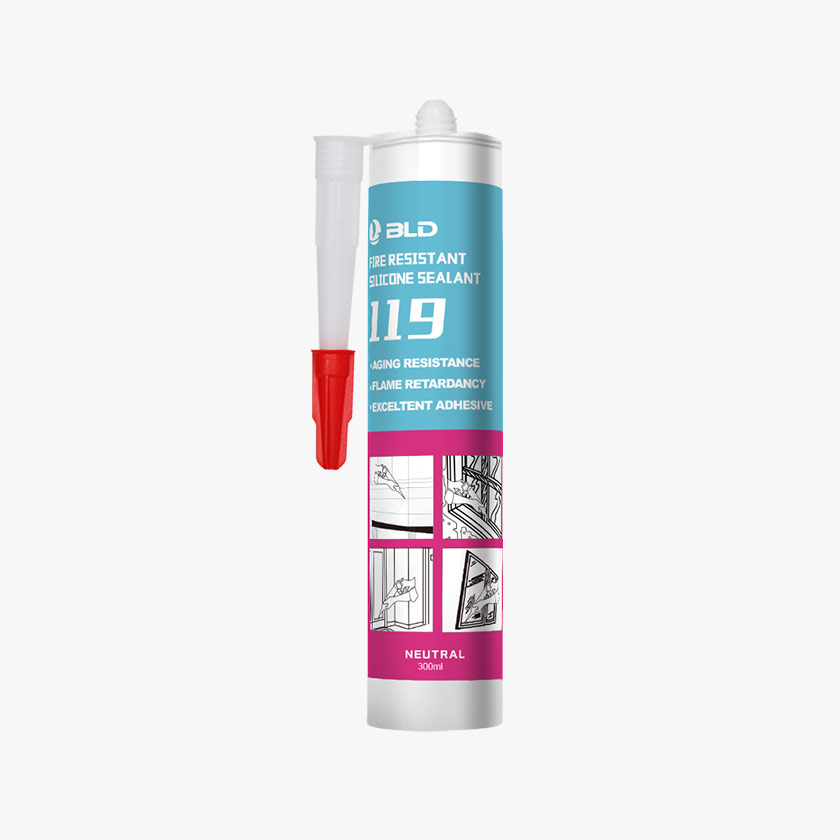
Most installers obsess over surface prep and tooling angles, but the two factors that quietly make or break a seal are joint depth and cure time. Get either one wrong, and even premium sealant turns into a cracked, peeling liability within a year. Joint depth controls the sealant's ability to flex without tearing: too shallow and the material can't stretch enough for thermal movement; too deep and you waste product while trapping stress in the middle. The rule of thumb is a 2:1 width-to-depth ratio for most joints, but narrow gaps under a quarter inch need closer to a 1:1 ratio to keep the sealant from drying out before it cures properly.
Cure time is the slower killer. Sealants don't reach full strength the moment the surface skins over. That tack-free layer fools people into painting, walking on, or submerging the joint within hours. In reality, moisture-cure products need days—not hours—to build internal cohesion. Pushing traffic on a floor joint after 12 hours can compress uncured material and break the adhesive bond invisibly. For submerged or high-humidity joints, an accelerated cure can trap moisture underneath, causing bubbles that never show until the first freeze-thaw cycle. The practical takeaway: measure the depth after backer rod installation, not before, and wait at least double the manufacturer's tack-free time before any stress.
Field failures almost always trace back to one of these two variables. A properly recessed backer rod gives the sealant a predictable cross-section, but skipping the depth gauge because "it looks fine" leads to hourglass shapes that tear at the sides. Similarly, shortcutting cure time because the substrate feels dry to the touch ignores how sealants cure from the outside in. When both joint depth and cure time are treated as fixed specs rather than suggestions, the seal survives decades of movement and weather. Ignore either, and you may as well be caulking with toothpaste.
The Role of Ceramic Fillers in Chinese Fire-Resistant Silicone Blends
Ceramic fillers do far more than occupy space in Chinese fire-resistant silicone blends. When the polymer matrix burns away, these inorganic particles—typically mica, calcined clay, or alumina trihydrate—sinter into a continuous, rigid shell. That shell keeps the underlying conductor insulated even after the silicone has degraded, which is exactly what separates a true fire-resistant compound from a merely flame-retarded one.
The transformation is not instantaneous, and filler selection matters more than loading level. Finer grades of mica align better under shear and produce a denser ceramic layer, while coarser particles leave voids that can crack as the char shrinks. Many Chinese compounders combine two or three filler types to balance early heat absorption with late-stage structural integrity, often using a small amount of glass frit to lower the sintering temperature.
There is a practical ceiling, however. Push the filler content too high and the uncured blend becomes stiff, difficult to extrude, and prone to surface roughness. Skilled formulators address this by surface-treating the fillers with silanes or by using irregular particle size distributions, so the blend flows well yet still forms a robust ceramic residue in a fire. That balance—not simply maximizing filler—is what separates reliable production batches from laboratory curiosities.
Real-World Applications Where Heat, Smoke, and Movement Collide
In underground mining operations, diesel loaders and drilling rigs generate exhaust heat, dense smoke, and continuous vibration as they move through narrow tunnels. Ventilation systems must track both air currents and the shifting positions of equipment to prevent smoke from pooling in dead zones while workers and vehicles keep moving through the haze.
Wildland firefighting crews face a brutal mix of radiant heat, thick smoke, and unpredictable fire movement driven by wind and terrain. Drones and ground teams rely on thermal imaging and motion sensors that have to filter out rolling smoke and swirling embers, while tracked vehicles crawl through burning brush where visibility drops to arm's length and the ground itself can shift underfoot.
Automotive brake testing labs recreate exactly this collision on a smaller scale: brake rotors glow from friction, pads release acrid smoke, and the entire assembly spins at high speed. Engineers study how heat expansion changes the gap between moving parts, how smoke particles interfere with optical temperature sensors, and how vibration patterns shift as the rotor warps and cools repeatedly.
How to Read Fire Test Reports Without Falling for Lab Tricks
Most fire test reports are written to impress, not to inform. A single headline number—say, a 'two-hour fire resistance' rating—can hide a dozen shortcuts. Start by checking which standard was actually used: a small-scale bench test is not a full-scale wall assembly test. And even within the same standard, the test conditions matter more than the final rating. If the report doesn't state the sample's thickness, density, moisture content, and how it was mounted, treat the result as provisional at best.
Laboratories know that certain omissions can make a material look better than it is. Watch for reports that don't include the full time-temperature curve, or that summarize only the average result while hiding one weak specimen. The fine print often reveals tricks: a specimen conditioned for weeks in a dry room, a joint protected in a way that can't be replicated on site, or a test stopped just before failure. Ask for the complete report, not the two-page summary, and compare the tested configuration to what you would actually build.
One of the oldest lab tricks is to test a different product than the one sold. Sometimes the report describes a version with extra fire retardants or a denser core, while the production run is lighter and cheaper. Check the product name, batch number, and physical properties against the material you are buying. Also look at the test date and the laboratory's accreditation—results from decades ago or from an unknown lab should raise immediate questions. A trustworthy report makes its limitations obvious; a suspicious one hides them behind confident language and cherry-picked graphs.
Common Installation Errors That Turn a Rated Sealant into a Weak Point
A sealant's laboratory rating means little if the joint is prepped or tooled incorrectly on site. One of the most frequent mistakes is applying sealant over a dirty or damp substrate. Even a thin film of dust, laitance, or moisture breaks the bond line, so the material peels away within months. Installers often rush this step, but wiping the joint with a solvent and letting it flash off completely is non-negotiable for long-term performance.
Another silent killer is improper joint dimensioning. Rated sealants are tested at specific width-to-depth ratios, usually around 2:1. When a joint is cut too deep or too narrow, the cured bead cannot accommodate the expected movement. Instead of stretching, it tears cohesively or debonds from the sides. Some crews try to compensate by overfilling the joint, which only worsens the problem because excess material increases internal stress at the bond line.
Tooling also gets overlooked. A sealant that is simply gunned in and left rough will have microscopic air pockets and uneven contact. Proper tooling with a rounded spatula or a dedicated profiling tool forces the material into the substrate and creates a concave surface that distributes stress evenly. Skipping this step turns a high-performance product into a cosmetic filler that fails under thermal cycling or structural vibration.
FAQ
It comes down to the formulation. Fire-resistant silicone sealants contain inorganic fillers and additives that form a stable char layer when exposed to flame. This char slows heat transfer and prevents the spread of fire through joints and gaps. A genuine high-temperature product also maintains flexibility and adhesion after repeated heating and cooling cycles, not just during a single fire test.
The gap has narrowed considerably. Many Chinese producers now use advanced compounding lines and source the same silicone polymers and fire-retardant fillers as global suppliers. You will find products that meet GB 23864, EN 1366-4, or UL 2079 standards. The main difference is often price and supply chain responsiveness, not raw performance. However, batch consistency varies more among smaller factories, so it pays to request third-party test reports before committing.
Most can handle continuous service from around minus 40 degrees Celsius up to 200 degrees Celsius, with intermittent exposure up to 300 degrees or higher depending on the grade. But temperature resistance alone is not the same as fire resistance. A true fire-rated product is tested against time-temperature curves like ISO 834, meaning it withstands rapid heating in a controlled furnace for a specified period, not just slow heat soak.
Construction joints in fire-rated walls and floors, penetration seals around pipes and cables, expansion joints in industrial furnaces, boiler flue collars, and smoke barrier systems all gain from this material. It is also used in automotive and marine exhaust areas where high heat and vibration are present. The key is that the joint must remain intact and block flame, smoke, and hot gases during a fire.
The surface must be clean, dry, and free of oil, rust, dust, or old sealant. Wipe with a suitable solvent such as isopropyl alcohol or acetone, and lightly abrade smooth metal surfaces to improve mechanical grip. For porous substrates like concrete, remove loose particles and consider a primer if the manufacturer recommends one. Also install a backer rod to control sealant depth and prevent three-sided adhesion, which can lead to premature failure.
It generally adheres well to steel, aluminium, glass, ceramic, and many painted surfaces. Some plastics such as polypropylene, polyethylene, and PTFE have low surface energy and will need a primer or adhesion promoter. Galvanised steel can also be tricky due to its zinc coating, so a light abrasion and solvent wipe improve bonding. Always run a small adhesion test on the actual substrate before full application.
Tack-free time is usually between 10 and 30 minutes at room temperature, but full cure depends on joint depth. A typical rule is around 3 to 4 millimetres per 24 hours at 23 degrees Celsius and 50 percent relative humidity. Fire resistance ratings are only valid after the sealant has completely cured, so do not expose fresh joints to high heat or flame until the manufacturer's stated cure time has passed.
Read the safety data sheet before use and wear gloves and safety glasses. Uncured silicone releases small amounts of oxime or alcohol vapours during curing, so work in a well-ventilated area and avoid breathing concentrated fumes. If the material contacts skin, wash with soap and water; if it gets into eyes, rinse thoroughly and seek medical advice. Keep open flames and ignition sources away from wet sealant, and never use it in confined spaces without forced air circulation.
Conclusion
China Fire-Resistant Silicone Sealant Essential Guide for High-Temperature Applications covers key technical and practical points. A true high-temperature silicone differs from standard fire caulk mainly through ceramic filler formulation that maintains integrity under extreme heat, rather than merely intumescing. Joint depth and cure time are critical: if the sealant hasn't fully cured before exposure, or if the depth-to-width ratio is wrong, it may crack or lose adhesion. Chinese manufacturers often use ceramic fillers to form a rigid char that blocks flame, smoke, and hot gases even when movement occurs. Real-world applications include industrial furnaces, power plants, and high-rise building expansion joints where heat, smoke, and structural movement intersect. Reading fire test reports requires attention to actual joint configuration, substrate type, and whether the test conditions match the intended use, not just the pass/fail rating.
Common installation errors can undermine rated performance. Poor surface preparation, incorrect joint backing material, insufficient primer, or forcing sealant into dirty or damp joints can cause premature failure. Installers sometimes ignore the manufacturer's specified cure time or apply too thin a bead, which reduces fire resistance. To get the best from China fire-resistant silicone sealant, follow the guide's recommendations on joint design, curing, and realistic testing data rather than relying on marketing claims.
Contact Us
Contact Person: Charles
Email: [email protected]
Tel/WhatsApp: +86-0536-3350888
Website: https://www.baolongda.com/