

China Garage Gym Machine Guide for a Practical Home Training Space
2026-11-26
Most home gym guides recycle the same list of treadmills and dumbbells, but a practical training space in China comes with its own obstacles: limited square meters, humidity, noise constraints, and the need for equipment that earns its place every day. This guide cuts through that noise. Whether you are converting a spare room or a balcony corner, you will see how a garage gym machine setup can be compact without being weak, and durable without costing a fortune. Along the way, we also look at options from Yingruis, because finding gear built for real home conditions matters more than copying a Western-style garage fantasy. If you want a space you will actually use, not just admire in photos, the next sections give you a clear starting point.
Making Sense of a Compact Chinese Garage Footprint
At first glance, the compact Chinese garage footprint seems like a simple rectangular slab, but its dimensions tell a different story. Typically smaller than Western single-car garages, these spaces are often designed around the practical turning radius of a city car and the tight alleyways that feed into them. The result is a layout where every centimeter counts: a shallow depth forces storage upward, while a narrow entry demands precise reversing angles that locals master through daily repetition.
What makes these footprints intriguing is how they adapt to changing family needs. A space initially meant for a motorcycle or a compact sedan slowly accumulates shelves along one wall, a workbench at the back, and perhaps a fold-down table near the door. Because the physical footprint cannot expand outward, residents learn to negotiate with vertical space and temporary clutter. The floor markings, oil stains, and faded painted lines become a kind of informal record of how the garage has been used over the years.
Understanding these compact footprints also means reading the surrounding context. The approach angle from the street, the position of a neighbor's wall, the slight slope for drainage—all shape what can actually fit inside. A few centimeters of extra width near the entrance may allow a car door to open just enough for a person to squeeze out. These are not design flaws but intentional compromises born from dense urban living, where the garage is less a showroom and more a working extension of the home.
Machines That Pull Double Duty in Limited Square Meters
A washer-dryer combo tucked beside the kitchen counter can save a trip to the laundromat without demanding a dedicated utility room. In compact apartments, a single unit that washes and dries eliminates the need for two bulky appliances and frees up a closet for pantry storage or coats. The trade-off is usually a longer cycle, but for anyone working with under 50 square meters, the space gained often matters more than the wait.
Countertop ovens with convection and air-fry settings serve a similar purpose. They bake, roast, crisp, and reheat in one appliance, which means a full-size oven can be removed or left unused except for holiday meals. Even a small induction cooktop paired with a slim dishwasher drawer can turn a narrow kitchen into a functional cooking zone without piling gadgets onto every surface.
Voltage, Outlets, and the Reality of Residential Power
Most homes in North America get called 120-volt service, but the number on the label is more of a polite agreement than a measured fact. Depending on the neighborhood transformer, the time of day, and how much load the utility is carrying, the actual voltage at a receptacle can drift anywhere from about 114 to 126 volts without anyone noticing. Most devices shrug this off, but audio gear, older LED dimmers, and some motor-driven appliances can behave differently at the edges of that range.
The outlet itself adds another layer of confusion. A standard NEMA 5-15 receptacle looks familiar, yet kitchens and laundry rooms often have 20-amp versions that are almost identical except for a small horizontal slot on the neutral side. Older houses may still have ungrounded two-slot outlets, and plenty of people use three-prong adapters as if the missing ground were just a formality. It is not. The physical shape of the plug tells only part of the story; wire gauge, circuit length, and connection quality quietly set the real limits.
There is also a common assumption that a device will draw its rated wattage simply because it is plugged in. In practice, a microwave and a toaster on the same branch circuit may trip a breaker even when both are well within their individual ratings, because residential circuits are shared, not dedicated. That is not a product flaw but the ordinary reality of residential power. Voltage is nominal, outlets are varied, and the wiring behind the wall matters more than the number printed on the faceplate.
Handling Humidity and Concrete Floors Before They Ruin Equipment
Concrete slabs give off moisture long after they harden, and that slow release becomes a problem when it meets cooler metal surfaces on compressors, presses, or storage racks. In humid months, the floor can also pull water from the air and hold it just below the surface, which raises the dew point around machine bases. The result isn't dramatic at first: a thin film of condensation, a little rust at the bolt holes, a seal that starts to swell. Left alone, those small signs turn into electrical faults, pitted bearing housings, and rust that spreads under the paint.
A practical fix starts at the slab level. If you're working with an existing floor, test the moisture content with a calcium chloride kit or an in-situ probe before placing sensitive equipment. A penetrating epoxy or silane/siloxane sealer can slow vapor drive from below, but it won't fix standing water or poor drainage at doorways. For new pours, a 10-mil minimum vapor barrier directly under the slab and a compacted subbase make a bigger difference than most topcoat products. Keep the area around machine feet open so air can move instead of trapping dampness under skids or kick plates.
Humidity control changes how the concrete behaves. Aim to keep the space between 40% and 55% relative humidity where possible, and avoid letting the slab temperature drop below the dew point when outside air comes in. In unconditioned buildings, use floor fans, dehumidifiers, or supply vents pointed across problem zones rather than down at standing water. If equipment has leveling feet, add isolation pads or stainless shims to break direct contact with damp concrete. Check under fixed bases with a flashlight during weather swings; that's usually where the first bead of rust tells you the floor is still working against you.
Where Local Brands Shine and Imported Units Make Sense
Local brands often have an edge when it comes to understanding regional tastes, pricing expectations, and after-sales responsiveness. Consumers looking for daily practicality or a stronger connection to familiar service networks tend to find domestic models more appealing, especially in markets where spare parts and maintenance are easier to access. This familiarity can translate into lower ownership costs and fewer surprises over time.
Imported units, on the other hand, earn their place when the priority shifts toward specific build qualities, engine choices, or design languages that local factories rarely replicate. Buyers who have done their homework often accept a higher sticker price or longer lead times because the vehicle offers a particular driving feel, cabin material standard, or safety package that simply is not available from nearby assembly lines.
The smarter decision usually comes down to how the car will actually be used. A commuter who values predictable servicing and easy parts replacement may lean local, while someone covering long highway miles or chasing a distinct ownership experience may find the import worth the extra cost. Neither category wins outright; the context of ownership determines which one makes more sense.
Arranging the Room So It Still Parks a Car When Needed
Keeping a clear path from the main door to the far wall makes the difference between a room that feels like a garage and one that actually works as both. Instead of pushing storage against every wall, leave the center lane open and use shallow cabinets, wall-mounted racks, or a fold-down workbench along the sides. That way, when the weather turns or a guest needs a spot, pulling the car in doesn't require a twenty-minute reshuffle.
Furniture on wheels or pieces that fold flat help the room switch roles without much effort. A lightweight table can roll against the wall, chairs can hang on hooks, and floor cushions can stack in a corner. Keep anything that must stay on the floor on the outer edges, marked with tape or a subtle floor stripe if it helps remember the clearance line. The goal isn't to make the room look like a showroom; it's to make parking feel like a normal part of how the space works.
FAQ
Start with a flat bench and adjustable dumbbells or a short barbell. They cover most movements without eating the whole floor, and you can add a squat stand later once you know how the space feels after a few weeks.
Look for hard chrome or stainless steel bars, use coated plates, and run a dehumidifier during rainy months. A quick wipe with light oil on the bar after sessions also helps more than people expect.
Many are fine if you check the steel gauge and weld quality. Aim for frames made from at least 2mm steel, bolt-together designs with a wide base, and avoid anything that feels like it is sold as a fashion accessory rather than training gear.
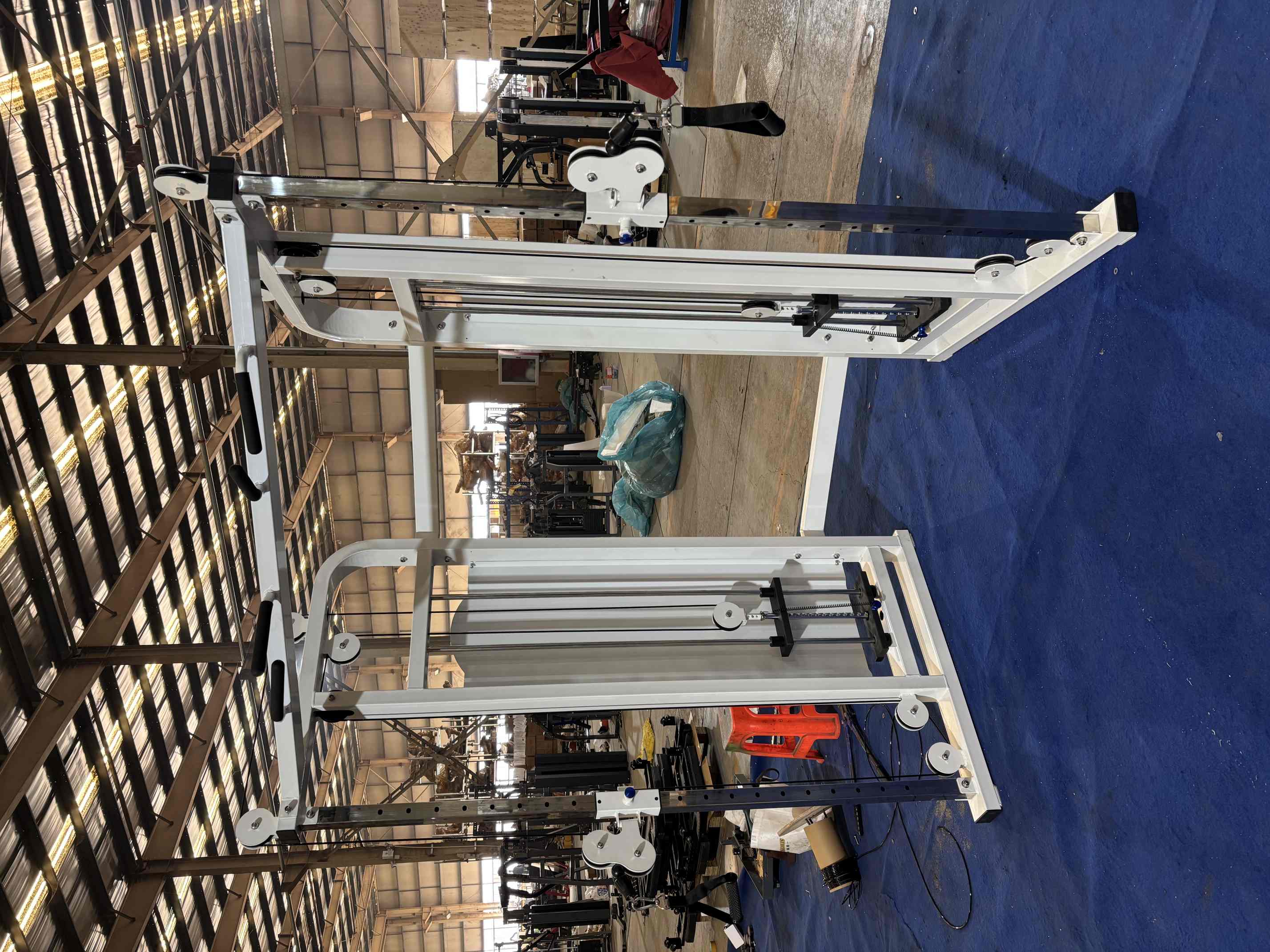
Only if the cable travel is smooth and the weight stack is actually heavy enough for your rows and pulldowns. Cheaper units often feel fine in the showroom but get choppy under load, so test the full range before committing.
A 2.4m by 3m area can hold a half rack, an adjustable bench, a barbell, and rubber mats if you store plates vertically. If the garage still parks a car, consider a folding rack and wall storage so you can clear the floor quickly.
Used commercial pieces from closed gyms can be a bargain and are built to take abuse, but measure your door and ceiling first because they are often bulky and heavy. New home gear is easier to fit and move, just do not confuse compact with stable.
Heavy rubber mats around 10 to 15mm thick work well. Interlocking tiles are fine if you do not mind cleaning the seams, while rolled rubber gives a cleaner lifting surface but is harder to pull up when the garage needs to be used for the car.
Conclusion
Working with a typical Chinese garage means accepting that floor space is measured in steps, not meters. Most units sit long and narrow, with just enough width for a car and a wall-mounted rack. A half rack bolted to concrete handles squats and bench work without eating the middle of the room. GHD or leg press usually not worth it. A fold-away bench and a pair of adjustable dumbbells get more done than a room full of single-purpose gear. Power comes from standard 220V outlets, so most residential breakers tolerate a treadmill or small air bike, but running a heater, dehumidifier, and cardio machine on one circuit can trip before a workout ends. I'd rather plug the dehumidifier into a separate wall line and keep the training electronics on their own socket.
Humidity and concrete are the quiet gear killers. In coastal cities, bare steel rusts within weeks, and rubber mats trap moisture against the floor. A vapor barrier under stall mats, a small fan running after sessions, and keeping chrome sleeves wiped down make more difference than buying coated bars. Local brands earn their place for racks, benches, and bumpers because replacement parts and basic welds are cheap and easy to fix. Imported units make sense for precision items like a rower or adjustable bench where the hinge quality matters. If the car still needs to come inside, keep the rack on the back wall and use wheeled storage or wall hooks so the floor clears in under five minutes. Ceiling-mounted pull-up bars and fold-down safeties also help keep the parking spot usable. The whole setup works when everything either folds, rolls, or lives above the bumper line.
Contact Us
Contact Person: Owen Wu
Email: [email protected]
Tel/WhatsApp: 86-15376736259
Website: https://www.yingruisfit.com/