
Custom Direct Expansion Air-Conditioning Units Deliver Precise Comfort and Energy Savings
2026-11-20
Conventional cooling often treats every space the same, leaving building owners to accept uneven temperatures and inflated energy use. Custom direct expansion air-conditioning units take a different path, matching capacity and control to actual load patterns. When those systems come from ROTER, precision comfort and measurable savings become part of the same design goal—and that changes how facilities perform from day one.
Why a Standard DX Unit Often Creates Its Own Comfort Problems
A basic direct expansion unit is usually sized to meet the hottest afternoon, but it spends most of its life at part load. The compressor cycles on and off around a single setpoint, so the room temperature drifts a degree or two before the system reacts. That stop-start pattern makes the air feel unstable, and because dehumidification only happens while the compressor runs, short cycles leave moisture in the space. The result is a cool but clammy room that never quite settles.
The same design also ties cooling and moisture removal together. When the thermostat is satisfied, the coil stops pulling water from the air even though the humidity may still be high. To compensate, occupants often lower the temperature setpoint, which makes the unit run longer and overcools the space. Cold supply air can also create drafts near registers, while corners and rooms farther from the thermostat stay warmer. Comfort becomes a game of adjusting the setpoint rather than a stable indoor condition.
At low load the unit has little ability to soften its output. The fan may run continuously, but the coil is no longer cold enough to dry the air, or the fan cycles with the compressor and leaves stagnant pockets. Air distribution suffers, filter runtime may drop, and noise from frequent starts becomes more noticeable. In short, the standard DX approach solves temperature in a blunt way, and in doing so it often creates the very humidity, draft, and temperature swing problems people complain about.
Matching Custom DX Capacity to the Building’s Real Heat Profile
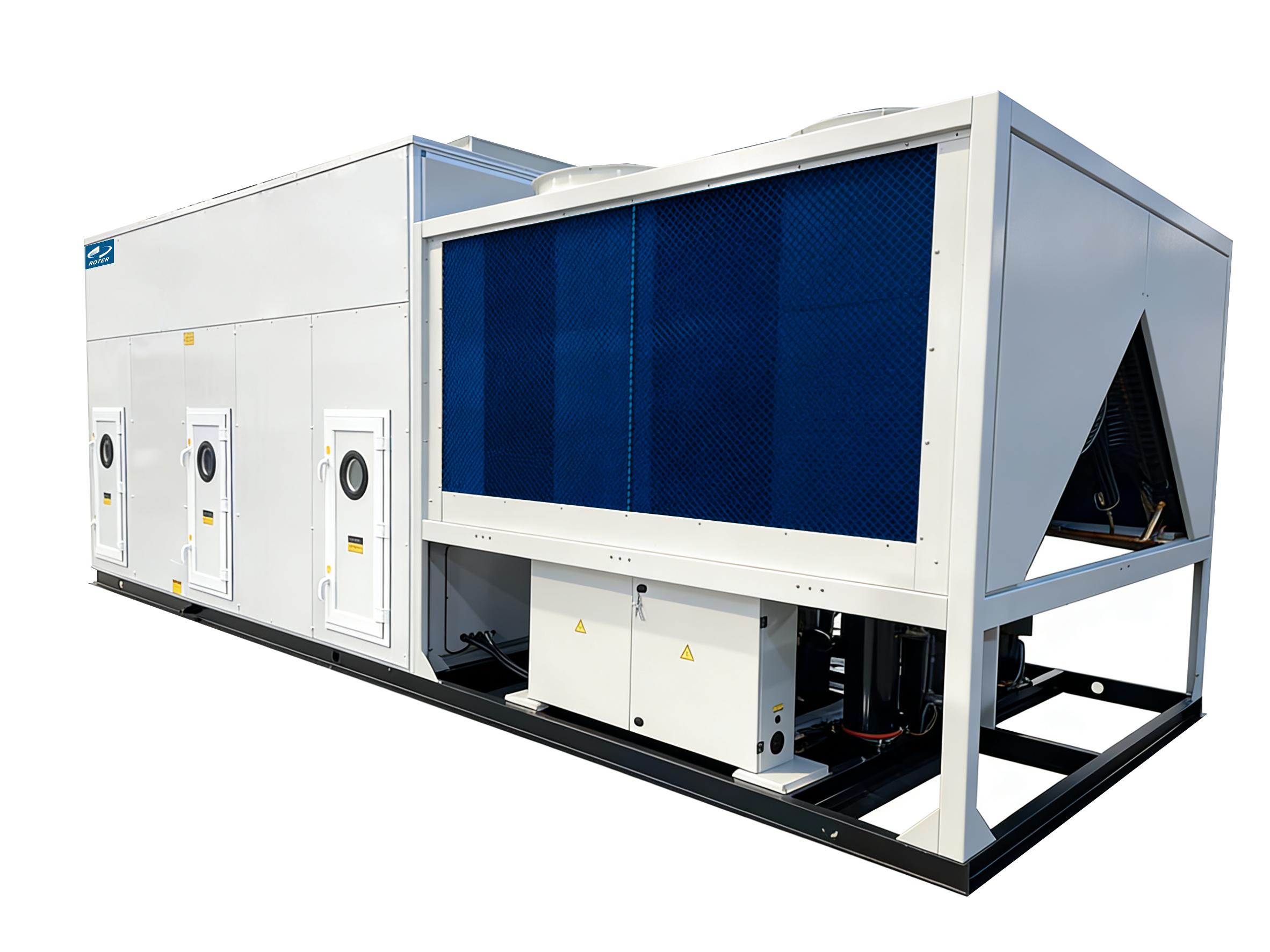
Equipment selections often lean on a single peak figure pulled from a generic load calculation. That habit leaves direct expansion systems oversized for the hours when the building is actually running at forty or sixty percent of design load. Matching custom DX capacity starts with the building’s real heat profile: the way solar gains, tenant equipment, occupancy, and ventilation loads rise and fall across a typical day, not just the worst-case afternoon in August.
Building a useful profile means looking past nameplate assumptions. Interval data from existing compressors, supply air temperatures, and even submetered circuits can reveal how often the space sits at part load. Those observations get tied to outdoor conditions and operating schedules so the equipment can be sized around sustained loads instead of a theoretical peak. In many buildings, the result is a smaller compressor or staged configuration that spends more time in its efficient range.
Once capacity follows the actual thermal signature, short cycling drops and latent load control improves because runtimes lengthen under mild conditions. The payoff shows up in steadier zone temperatures, better humidity management, and fewer starts on the compressor. It also leaves room for future changes, since the baseline is grounded in how the building really behaves rather than an inflated safety factor.
Controlling Humidity Without Overcooling Every Zone
In many commercial and residential buildings, the default strategy for managing humidity is to overcool each zone until moisture condenses on the coil. That approach works, but it also drives energy bills higher and leaves occupants reaching for sweaters in the middle of summer. A more thoughtful design separates the latent load—the moisture that needs to be removed—from the sensible load, which is simply the temperature adjustment. By doing this, you can keep every zone at a comfortable dry-bulb temperature without forcing the entire system to run colder than necessary.
The key is to handle dehumidification where it matters most. Instead of treating every zone as if it has the same humidity problem, you can use a dedicated outdoor air system or a central dehumidifier to condition the ventilation air before it reaches individual spaces. This allows the local terminal units—fan coils, chilled beams, or VAV boxes—to focus only on sensible cooling. Zones with low internal moisture gain no longer get overcooled just because another part of the building is humid. The result is more stable comfort, lower compressor runtime, and fewer cold spots near diffusers.
Another practical adjustment involves rethinking the supply air temperature. When the main AHU delivers air at a moderate temperature rather than a very cold one, the coil removes less moisture per pass, but the system avoids the deep overcooling that normally triggers reheat. Pair that with zone-level humidity sensors and a control sequence that only activates dehumidification when the dew point actually rises above the target. This way you are not chasing a fixed relative humidity number in every room. You are letting each zone ride its own sensible load while the central system handles the latent load only when needed.
The Part-Load Efficiency Edge Most Catalog Units Lack
A full-load efficiency figure is a little like a car's highway mileage: it looks great in a brochure and matters far less once you see how the machine actually gets used. Most catalog units are tuned to win the full-load comparison because that number is simple, repeatable, and easy for a spec sheet. Yet in actual operation, loads drift with weather, occupancy, and production schedules, and a system may spend seventy or eighty percent of its hours at half load or less. That is exactly where many standard designs start to lose the edge their nameplate suggests.
The reason comes down to how the unit sheds capacity. Common catalog models often rely on throttling, bypass, or simple on-off staging, which keeps the core components running closer to full speed even when the building needs far less output. Designs that hold efficiency at part load tend to use variable-speed drives, multiple compressors, or other unloading strategies that reduce real energy input as the load falls. The result is not just a better rating on paper; it shows up as a flatter efficiency curve and lower energy use across the hundreds of partial-load hours that dominate a normal year.
That gap rarely announces itself in a single headline number, but it becomes obvious when you compare energy bills for two similarly sized systems over a full season. If a unit is only impressive at full load, it is optimized for a condition that may occur a few dozen hours a year. The part-load edge belongs to equipment that is designed for the entire operating range, not just the best-case test point.
Making a Direct Expansion Unit Fit the Room, Not the Other Way Around
Rooms rarely cooperate with equipment dimensions, and a direct expansion unit tends to reveal every awkward inch when it is wedged against a beam, a sloped ceiling, or a bank of windows. The first useful step is to stop treating the unit as a fixed block and instead map the room's actual air path, clearance zones, and the places where occupants actually spend time. That often means placing the DX unit along an interior wall with enough return air space rather than defaulting to the wall closest to the outdoor condenser.
There are also quieter ways to make the machine belong. A shallow return plenum, a custom discharge collar angled away from a corner, or relocating a thermostat can do more for comfort than increasing capacity. For tight rooms, vertical or low-profile configurations with top or side supply may fit where a standard cabinet would block a walkway. The goal is to keep service panels reachable without turning the room into a machine closet.
When the layout is truly difficult, small compromises add up: routing refrigerant lines through a chase, shifting the unit a few feet to work with the ceiling slope, or choosing a quieter fan speed for a space where conversation matters. None of these changes force the room around the equipment; they let the equipment settle into the room's existing logic.
How Precise Refrigerant Control Cuts Energy Costs Year After Year
Most cooling systems waste energy through swings in refrigerant flow that go unnoticed in daily operation. When the expansion valve reacts too slowly or overshoots its target, the compressor works harder than necessary, and that extra effort shows up on the utility bill month after month. Precise control changes this by keeping the refrigerant exactly where it needs to be, eliminating the hidden drift that quietly inflates operating costs over time.
The real advantage appears when you look at performance over several seasons rather than a single afternoon. A system that holds superheat and subcooling within a narrow band avoids the wear that comes from constant correction. Compressors last longer, heat exchangers stay cleaner, and defrost cycles happen only when truly needed. These small differences compound into noticeable savings that repeat every year, without requiring constant manual adjustment.
Facility managers often discover that the upgrade pays for itself through reduced maintenance callouts alone, before even counting the energy reduction. Because the system no longer fights its own fluctuations, it runs quieter and responds more predictably to changing loads. That stability is the core of long-term savings, not a one-time efficiency gain but a permanent shift in how the equipment consumes power.
FAQ
A custom unit is built around the actual room-by-room load profile rather than a generic capacity band. The coil, compressor, fan, and controls are selected together, so the system reaches set point without the constant swings you often feel with off-the-shelf equipment.
They can be zoned and sized to match the areas that actually generate heat, such as conference rooms, server closets, or south-facing offices. Because each circuit handles a defined load, you avoid overcooling one zone to keep another tolerable.
Yes, when the design is right. The savings usually come from matching compressor capacity to part-load conditions, reducing fan energy through lower static pressure, and avoiding oversized equipment that short-cycles. It is less about adding one feature and more about eliminating waste across the whole unit.
Controls decide how the compressor stages, how the expansion valve reacts, and how airflow adjusts as conditions change. A custom setup lets you tune those responses to the space, which keeps temperature and humidity in a narrower band without constant manual adjustments.
Spaces with tight temperature or humidity requirements, high internal heat gains, or unusual duct layouts tend to benefit most. Examples include laboratories, broadcasting rooms, small data rooms, auditoriums, and light commercial spaces with long operating hours.
In many cases, yes. If the existing ductwork and electrical service can support the required airflow and load, a custom unit can be engineered to fit the available footprint and connection points while still improving part-load efficiency.
Oversizing is the most common problem, followed by ignoring humidity control and selecting components without checking how they behave together at part load. A proper load calculation and a clear sequence of operation prevent most comfort and energy complaints.
At least twice a year for most applications. Coil cleaning, refrigerant charge verification, drain pan inspection, and control calibration keep the unit operating close to its design performance. Spaces with high dust loads or continuous operation may need more frequent attention.
Conclusion
Standard direct expansion equipment is often sized around a narrow set of assumptions, so the unit ends up fighting the very space it is meant to serve. Short cycles, uneven temperatures, and moisture problems are not really separate failures; they come from capacity and airflow choices that ignore how a building gains and loses heat. Custom DX systems start from measured loads and actual occupancy patterns, matching cooling output to the building’s real heat profile instead of relying on a catalog compromise. That approach makes it possible to hold comfortable conditions without overcooling every zone just to strip humidity, and it also gives the unit a wider stable operating range during mild weather when most packaged machines become inefficient.
The long-term benefit shows up most clearly at part load. Rather than forcing a fixed compressor into a start-stop rhythm, custom direct expansion designs use precise refrigerant control to follow demand closely, reducing wasted energy and wear. When the unit is built around the room’s dimensions, duct constraints, and air distribution needs, it stops being an intrusive box and starts behaving like part of the building. Year after year, the savings come less from a single dramatic upgrade and more from a unit that rarely runs harder than necessary, keeping both temperature and humidity steady while energy costs stay lower than typical catalog equipment would allow.
Contact Us
Contact Person: Rhea
Email: [email protected]
Tel/WhatsApp: +8618800560886
Website: https://www.rotorairtech.com