

Custom Healthcare Wristband Kiosk Terminal: A Smarter Way to Manage Patient IDs
2026-06-29
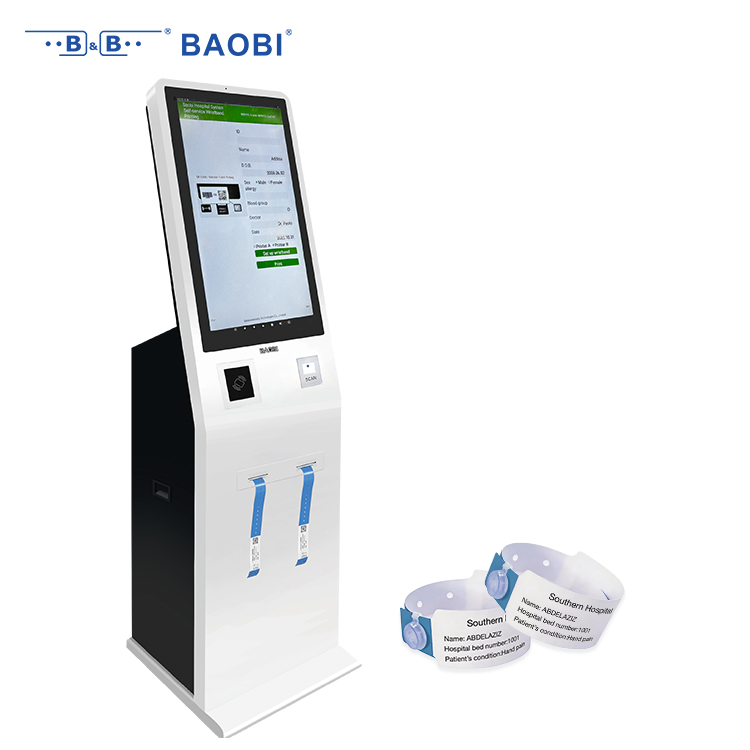
Imagine a hospital where patient identification is instant, error-free, and effortlessly managed. The BAOBI Custom Healthcare Wristband Kiosk Terminal makes this a reality, replacing outdated manual processes with a smart, self-service solution. Discover how this innovation is reshaping patient ID management—one wristband at a time.
Why Hospitals Are Switching to Self-Service Patient Check-In
The shift toward self-service check-in systems is largely fueled by the need to reduce bottlenecks in front-desk operations. Manual registration can create long queues, especially during peak hours, leading to patient frustration and increased wait times. By allowing patients to complete check-in via kiosks or mobile apps, hospitals streamline the entire process. This not only improves the flow of patients but also frees up administrative staff to focus on more complex tasks, such as handling insurance inquiries or assisting those with special needs, rather than processing routine paperwork.
Another key reason is the drive to enhance data accuracy and security. When patients input their own information directly, the likelihood of clerical errors drops significantly. Self-service platforms often integrate with electronic health records, ensuring that details like medical history, allergies, and current medications are up-to-date before the appointment. Moreover, these systems can include identity verification steps that comply with privacy regulations, giving patients peace of mind that their sensitive data is protected. This level of precision is hard to achieve in a hurried, paper-based environment.
Finally, self-service check-in aligns with modern patient expectations for convenience and control. People are accustomed to managing travel, banking, and retail transactions digitally, and healthcare is catching up. The ability to check in remotely, fill out forms ahead of time, and make co-payments without waiting in line creates a more satisfying experience. For hospitals, this translates into stronger patient loyalty and a competitive edge, as more individuals choose facilities that value their time and offer a seamless, tech-enabled visit.
Eliminating ID Errors at Every Step of Care
Patient identification mistakes can slip through cracks as simple as a misread wristband or a hurried verbal confirmation. In the emergency department, a nurse once nearly administered a blood transfusion intended for the bed next door because two patients shared a similar name. Catching this at the bedside prevented harm, but the near miss revealed how easily assumptions replace verification. Technology like barcode scanning and biometric checks helps, yet the real safeguard is a culture where staff feel empowered to pause and double-check without fear of slowing down workflow.
During handoffs between shifts or transfers to different units, critical details about a patient’s identity can become muddled. A lab technician might receive a mislabeled specimen because the phlebotomist scanned the wrong chart in a rush. To close this gap, some hospitals have implemented a “double-identifier” ritual at every transition—asking not just for a name but matching a date of birth or medical record number aloud. Pairing this with real-time photo displays in electronic records adds an extra layer of visual confirmation that reduces reliance on memory alone.
Even after discharge, ID errors follow patients home through prescriptions, referrals, and follow-up instructions. A patient once received another person's cardiac medication because the pharmacy confused two individuals with identical last names. Simple fixes like standardized wristband placement, redundant identity checks before test labeling, and encouraging patients to speak up when their details aren’t verified create a chain of accountability. When every caregiver—from registration to rehabilitation—treats identity confirmation as a non‑negotiable step, the system becomes resilient against the kinds of small slips that trigger serious outcomes.
Designed to Fit Your Hospital’s Exact Workflow
Every hospital runs on its own rhythm—from shift handovers to patient discharge protocols. Our platform molds itself to those existing patterns rather than forcing your teams to adopt rigid, one-size-fits-all processes. That means your staff can continue working the way they know best, while the system quietly optimizes behind the scenes, cutting out redundant steps and flagging delays before they become bottlenecks.
We sit down with your department heads during onboarding to map out your actual workflows—not some idealized version. The result is a configuration that respects the unofficial shortcuts and trusted workarounds your teams have developed over years, while still bringing consistency where it matters. No disruptive training marathons, no frustrated staff pushing back against new tools that feel alien to their daily reality.
When protocols evolve—as they always do in healthcare—the system adapts with you. A new triage procedure or compliance requirement doesn’t require an expensive customization project; your own administrators can reshape the logic in an afternoon. This keeps your hospital agile, turning workflow adjustments into a simple operational update instead of a technical crisis.
How a Simple Wristband Kiosk Cuts Wait Times in Half
Picture this: a busy check-in area where the line snakes around stanchions, and every second feels like an eternity. A wristband kiosk flips that scenario on its head. Instead of funneling everyone to a single desk, guests walk up to a self-service screen, tap in a few details, and a durable, color-coded wristband drops out instantly. No fumbling with paperwork, no back-and-forth questions, just a seamless bridge from arrival to access. The real magic? That wristband already knows what level of entry it grants, so scanning a barcode at the next checkpoint takes less than a second. It's the kind of quiet efficiency that makes people forget they were ever waiting.
Operators notice the difference in hard numbers. Where a manual station might handle one guest every minute or two, a kiosk processes two or three in the same span. Multiply that across a morning rush, and a queue that would normally stretch for forty-five minutes shrinks below twenty. The wristbands themselves do a lot of the heavy lifting—they're pre-loaded with access tiers, session timestamps, and even allergy alerts if it's a food-focused event. Staff stop being traffic cops and start being helpers, because the kiosk already handled the tedious bit. One venue manager said it best: "We didn't add more people; we added more pathways."
What really keeps the flow smooth is how adaptable the setup is. Temporary events can roll in a cart of kiosks, while permanent venues embed them into walls like ATMs. The interface adjusts on the fly—shorter menus for quick in-and-out visits, more options for complex multi-day passes. And because wristbands are waterproof and tamper-proof, there's no reprinting or rechecking later in the day. The line moves, the mood lifts, and suddenly, cutting wait times feels less like a system upgrade and more like a shift in expectations.
Protecting Patient Data Without Sacrificing Speed
Healthcare systems walk a tightrope every day—keeping patient records secure while ensuring doctors can pull up a chart in seconds, not minutes, during emergencies. The challenge isn’t just about locking data away; it’s about building barriers that don’t slow down care. When every second counts, clunky security protocols that force multiple logins or delay database queries can frustrate staff and even compromise patient outcomes. The trick lies in weaving protection into the flow of work so seamlessly that speed and safety become allies, not adversaries.
Modern approaches sidestep the old trade-off by embedding lightweight encryption and tokenization directly into data pipelines, shaving milliseconds off access times without exposing sensitive details. Clever use of on-device processing and intelligent caching means that patient histories load almost instantly, even if the central server is under heavy load or shielded behind rigorous firewalls. It’s a quiet revolution: algorithms that learn normal usage patterns can flag unusual access attempts in real time, while still letting authorized staff tap into vital information without any perceptible lag. This way, the data stays out of the wrong hands, but never out of reach when it’s needed most.
Real Stories: From ER Confusion to Instant Identification
A few months ago, paramedics rushed an unconscious woman into a bustling Chicago ER with no phone, no wallet, and no name. The staff scrambled to piece together her identity, checking missing person reports and even snapping a photo for local police. Just as the clock ticked past the golden hour for stroke treatment, a nurse noticed a small engraved bracelet tucked under her sleeve. It held her name, her blood type, and a critical allergy alert — details that instantly transformed her from an unknown Jane Doe into a patient with a clear treatment path.
In another case, an elderly man arrived disoriented and unable to speak after a fall. The team faced a terrifying guessing game over his medications until a tech-savvy resident scanned a faded QR code on his watchband. In seconds, they had his full medical history, emergency contacts, and even a recent EKG. What could have been a dangerous delay turned into swift, precise care — all because a small, unassuming tag bridged the gap between confusion and clarity.
FAQ
It’s a self-service station where patients can quickly receive a personalized identification wristband upon check-in. Rather than relying on staff to manually create and attach bands, this kiosk prints durable, scannable wristbands right at the point of entry, streamlining the entire registration process.
Traditional methods often involve handwritten labels or pre-printed sheets that can fade or cause errors. By automating wristband creation, the kiosk reduces misidentification risks, ensures every band contains accurate barcoded data that syncs directly with electronic health records, and frees up nurses to focus on care instead of paperwork.
Absolutely. Hospitals can upload their logos, choose color schemes matching their branding, and adapt the layout to include only the details they need—like patient name, date of birth, medical record number, or allergy alerts. The kiosk supports multiple templates, so different departments or clinics within a network can each have their own look.
Most facilities print a unique barcode or QR code that links to the patient’s digital chart, along with plain-text identifiers such as the person’s full name, date of birth, and an internal patient ID. Some add critical clinical flags (e.g., fall risk, latex allergy) if the setting requires it. Nothing unnecessary is shown to maintain clarity and privacy.
The terminal encrypts all information in transit and doesn’t store any personal data locally once the wristband is printed. Access to the admin panel is restricted via role-based credentials, and audit trails log who used the device and when. It’s built to comply with healthcare privacy standards like HIPAA.
The touchscreen interface walks people through a few simple steps, often starting with scanning an appointment confirmation or entering a date of birth. Clear icons and large text guide them, and if someone needs help, the process is so quick that a volunteer or nearby staff member can easily assist without slowing down the line.
Once identity is confirmed, the printer produces a wristband in under 30 seconds. The entire interaction from arrival to having the band on their wrist rarely takes more than a minute or two, which drastically cuts waiting times during peak check-in periods.
Conclusion
Hospitals are increasingly adopting self-service patient check-in systems, and the custom healthcare wristband kiosk terminal is at the forefront of this transformation. Unlike traditional front-desk registration that often leads to bottlenecks and misidentification, these kiosks allow patients to verify their identity in seconds, printing a durable, scannable wristband on the spot. The technology effectively eliminates ID errors at every care step—from admission to medication administration—by syncing directly with electronic health records. Designed to flex around each facility’s unique workflow, the kiosk can be configured for either a fully automated process or a hybrid model with staff assistance. It integrates seamlessly with existing hospital software, ensuring that the right patient gets the right care without the usual manual checks that slow down operations.
The impact on efficiency is striking: hospitals that deploy these kiosks often see wait times cut in half, freeing staff to focus on clinical tasks rather than paperwork. Speed, however, does not come at the expense of security. The terminal uses advanced encryption and biometric verification to protect patient data, meeting strict regulatory requirements while keeping the check-in process swift. Real-world examples tell the story best: an emergency department that once struggled with confusion during triage now instantly identifies incoming patients, reducing risk and improving outcomes. By combining simplicity with robust functionality, the wristband kiosk terminal represents a smarter, safer way to manage patient identities in modern healthcare settings.
Contact Us
Contact Person: Bill Xu
Email: [email protected]
Tel/WhatsApp: 8618688898707
Website: https://www.baobitech.com/