
Durable Non-Woven Geotextile Fabric for Superior Drainage and Filtration
2026-09-06
When a drainage system fails, the signs are rarely obvious at first—standing water, soft ground, or a sudden loss of soil stability. But what’s happening beneath the surface is often a matter of fabric choice. Durable non-woven geotextile fabric isn’t just a layer; it’s the quiet workhorse that keeps water moving and soil in place, even under relentless pressure. At JInseed Geosynthetics Solution, we’ve seen how the right fabric can turn a questionable subgrade into a long-term asset. But what makes one non-woven geotextile outperform another? The answer lies in how it handles the twin demands of drainage and filtration—and that’s exactly what this post unpacks.
Water Moves Fast, Soil Stays Put: The Non-Woven Advantage
When rain pounds bare earth, the result is predictable: puddles, runoff, and topsoil sliding downhill. Non-woven geotextiles flip that equation. Their tangled fiber matrix lets water pass through almost instantly, yet grabs onto soil particles with surprising tenacity. It’s not a trade-off—it’s a one-two punch that keeps drainage fast and ground firmly in place.
The secret sits in the random fiber orientation. Unlike woven fabrics with uniform pores, non-woven materials create a tortuous path for water and a physical net for soil. Fine particles that would normally wash away get caught in the fibrous web, while hydrostatic pressure releases through thousands of micro-channels. You end up with dry surfaces above and stable subgrades below.
Contractors and landscape architects reach for this material when a site demands both permeability and erosion control—think French drains, retaining walls, or slopes that see heavy storms. The non-woven advantage isn’t just about function; it’s about longevity. Fewer washouts, less silt buildup, and fewer callbacks to fix ruts or gullies.
How Much Abuse Can a Geotextile Take Before It Fails?
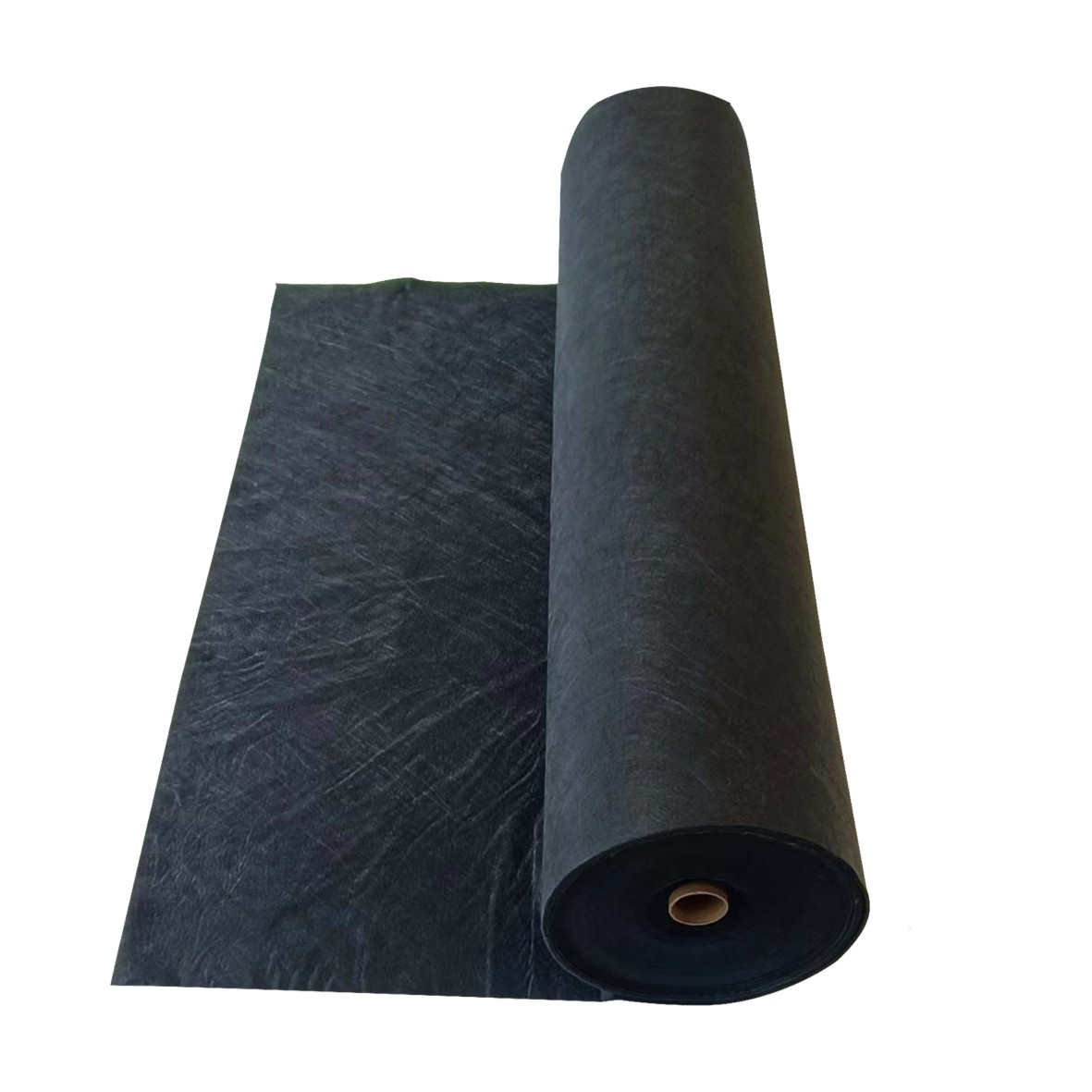
A geotextile on a job site rarely gets gentle treatment. It may be dumped on with angular rock, driven over by tracked equipment, or dragged across rough subgrade before any design load is applied. The real question isn't whether it can survive idealized lab conditions, but how much cumulative damage it can absorb before separation, filtration, or reinforcement functions break down. Punctures from sharp stones, tears from improper backfilling, and abrasion from repeated traffic can open small holes long before a tensile failure shows up on paper.
The failure sequence usually starts small. A puncture or tear creates a weak point, and then stress concentrates around that flaw when soil pressure or heavy loads push against the fabric. Over time, fibers creep, tear propagation accelerates, and the geotextile loses its ability to contain fine particles or support the overlying aggregate. In harsh installations, the effective strength after damage can be half or less of the pristine value listed on the product data sheet.
Engineers often rely on installation survivability tests—dropping angular fill from a height, subjecting the fabric to field-simulated abuse, or measuring puncture resistance with a CBR plunger—to estimate how much punishment a specific product can take. Still, there is no single number that guarantees performance. The answer depends on subgrade preparation, stone size and shape, drop height, and how carefully the contractor handles the roll. A geotextile that survives one site might fail quickly on another with sharper rock and less careful placement.
The Clogging Problem Most Drainage Fabrics Can't Solve
Walk onto almost any job site after a heavy rain and you'll see the same story: a drainage trench that's supposed to be moving water is instead holding it, with the fabric wrapped around the pipe already caked in a dark, slimy silt. The problem isn't that the fabric tore or failed structurally. It's that the pore spaces did exactly what they were designed to do—trap particles—until enough of those particles built up to seal the surface shut.
What makes this so stubborn is that most manufacturers test clogging resistance with clean, uniform sand under laboratory conditions. Real backfill, though, carries a messy mix of clay fines, organic debris, and mineral scale. Over time, these materials don't just plug the fabric's openings; they combine with bacterial growth to form a crust that water simply can't push through. Replacing the fabric doesn't help much, because the same failure pattern repeats once the surrounding soil reaches a certain fines content.
A few newer approaches try to sidestep the issue by using graded granular filters instead of a single fabric layer, or by specifying a nonwoven geotextile with much larger apparent opening sizes. But even these have limits. If the soil is fine enough or the groundwater chemistry promotes mineral deposition, the cycle of blinding comes back. The honest answer is that no drainage fabric yet handles every clogging scenario—so the smartest design often means planning for maintenance access instead of pretending the fabric will never need it.
Woven or Non-Woven? Matching Fabric to the Job
Woven fabrics get their strength from interlacing yarns at right angles. That grid structure handles tension, resists tearing, and holds its shape under repeated stress. Non-wovens, by contrast, are webs of fibers bonded through heat, chemical, or mechanical means. They skip the loom entirely, which makes them faster and cheaper to produce but often less durable when pulled or abraded.
Think about what the material actually has to survive. A reusable shopping tote or a heavy-duty furniture cover needs the dimensional stability and rip resistance of a woven polypropylene or canvas. On the other hand, a disposable medical drape or a filtration layer benefits from non-woven polyester or polypropylene: the random fiber orientation creates a tortuous path for particles, and the lower cost makes single-use practical. Geotextiles under a road base are usually woven because they must stabilize aggregate under load, while landscape fabric for weed control is typically non-woven because water flow and cost matter more than tensile strength.
That doesn't mean one category is always superior. Some jobs call for a composite or a non-woven with a scrim reinforcement. Before choosing, write down the specific abuse the fabric will face: abrasion, moisture, UV exposure, repeated washing, or just one-time contact. Match those requirements to the structure, not to the marketing label. A cheap woven can fail faster than a well-made non-woven in the wrong application, and vice versa. Testing a small sample under real conditions often settles the debate faster than a spec sheet.
Where This Fabric Earns Its Keep: Drainage, Roads, and Retaining Walls
In drainage trenches, this fabric acts as a quiet bouncer—keeping soil particles from crashing the gravel party while letting water slip through without a fuss. That balance between filtration and flow is what stops a simple French drain from turning into a clogged, swampy mess a season later.
On road jobs, it earns its place by separating the aggregate base from the soft subgrade below. Instead of watching your stone disappear into mud after a few heavy rains, the fabric holds the layers apart so the pavement doesn't ripple, rut, or sink where you least expect it.
Against retaining walls, the same material doubles as a drain and a shield. It lets groundwater escape through the wall face while keeping backfill where it belongs, which reduces the kind of hydrostatic pressure that makes walls bow and crack over time.
Small Installation Mistakes That Shorten Fabric Life
Most fabric failures trace back to how the material was secured, not the fabric itself. Pulling a panel too tight across a frame or railing leaves no room for the weave to move with wind or temperature shifts, so the fibers end up doing the stretching instead of the structure. A better approach is to leave just enough give for the fabric to breathe—often a finger's width of slack along each edge—while still keeping the surface from flapping hard enough to cause abrasion.
Fastener choice matters more than it seems. Using wood screws with sharp threads directly through the fabric invites tearing around every hole, especially once the material starts working back and forth. Grommets or webbing loops spread the load, but only if they're spaced close enough to prevent sagging between points. Skipping a reinforcing hem at the edge is another quiet killer; raw cuts unravel quickly under tension and exposure.
Sharp corners on the mounting frame can wear through a cover from the inside out, even when the outside looks fine. Padding those contact points with a scrap of rubber or an old garden hose sleeve costs a few minutes but can double the service life. The same goes for checking that attachment points don't pinch the fabric after the first rain—shrinkage can turn a previously loose fit into a stress point that tears before the next season.
FAQ
The fabric is made from high-strength polypropylene fibers that are needle-punched into a stable, rot-resistant mat. It won't break down when exposed to soil chemicals, moisture, or typical ground temperatures, so it keeps performing year after year.
Water passes through the fabric easily while it traps fines and sediment. That means the gravel layer stays clean and open, allowing faster water movement instead of turning into a clogged, muddy mess.
Yes, it's a common choice for French drains. Wrap the fabric around the perforated pipe and gravel to keep silt out while letting groundwater seep in. Just leave a little overlap at the seams.
It works well under driveways, patios, retaining walls, and parking areas. You can also use it for erosion control on slopes, separation under walking paths, and behind drainage stone.
Not at all. A standard utility knife or heavy scissors can cut it cleanly. Roll it out over the prepared subgrade, overlap edges by about 12 to 18 inches, and pin it down if needed before adding stone.
If installed properly, it resists clogging because the non-woven structure allows fine particles to be flushed through rather than building up. For silty soils, you may want a heavier grade to extend the service life.
Common widths are 3 feet, 6 feet, 12.5 feet, and 15 feet, with lengths from 100 to 360 feet. Weight options usually range from 4 oz to 8 oz per square yard depending on the project demands.
It does. Lighter 4 oz fabric is fine for basic separation, while 6 oz or 8 oz gives better puncture resistance and filtration for heavier loads or sharp angular stone. Choosing the right weight prevents tears during backfilling.
Conclusion
The real strength of a durable non-woven geotextile lies in how it handles water without letting soil slip through. Unlike tightly woven fabrics, the random fiber matrix creates a tortuous path that lets water race through while trapping fine particles—a balance that keeps drainage systems working long after cheaper options clog. But durability goes beyond filtering; this fabric has to survive rough handling, sharp aggregate, and years of buried stress. It resists punctures, tears, and UV degradation, so it doesn't quietly fail under a road or behind a wall. The question isn't just how much abuse it takes before breaking, but whether it keeps performing when every other layer depends on it.
Clogging is the slow killer of most drainage fabrics, but a well-designed non-woven geotextile uses graded pore openings to shed sediment rather than trap it internally. That's why matching the fabric to the job matters—woven for high strength and low flow, non-woven for filtration and drainage. Roads, retaining walls, and french drains all benefit when water moves freely and soil stays put. Even the best fabric fails early if installed wrong: wrinkles, short overlaps, or over-tensioning create weak spots. A few extra minutes spent on careful placement and proper lap joints extends the life of the entire drainage system, proving that durability starts with smart installation, not just a tough roll of fabric.
Contact Us
Contact Person: Jerry Qiu
Email: [email protected]
Tel/WhatsApp: +65 84265294
Website: https://www.jinseed-geo.com