

Fan Coil Unit Maker Reveals Key Considerations for Modern Buildings
2026-10-30
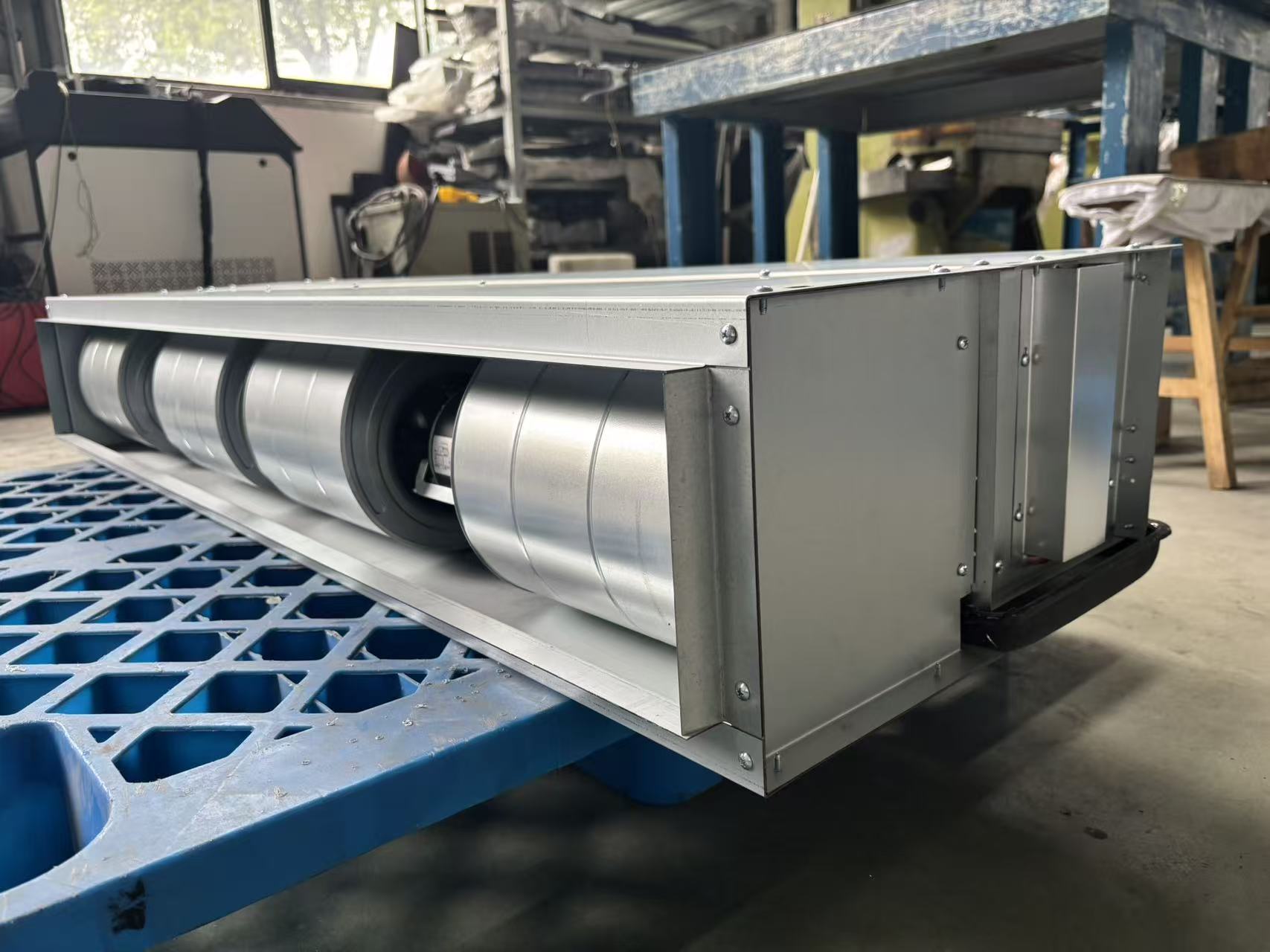
Modern buildings demand HVAC solutions that quietly balance performance, energy use, and occupant comfort—yet the fan coil unit is often the last piece to get real scrutiny. Shairko, a fan coil unit maker with decades of hands-on insight, pulls back the curtain on the key considerations most design teams miss until it's too late.
The Hidden Cost of Ignoring Part-Load Efficiency
Most efficiency ratings you see on equipment labels are calculated at full load, which is where machines are designed to shine. But in real-world operation, systems rarely run flat out for long. Compressors, pumps, and HVAC units cycle down, idle, or operate at 30 to 60 percent of capacity for the majority of their service life. When you only compare nameplate numbers, you miss the fact that a unit with a stellar full-load rating can burn through far more energy at part load than a modestly rated competitor that holds its efficiency curve flat across lower output ranges. That gap often wipes out any initial purchase savings within the first year of utility bills.
Ignore part-load behavior and you also inherit control instability. Equipment that is optimized only for peak demand tends to short-cycle, overshoot setpoints, or rely on bypass loops that waste pressure and flow. Over time, this translates into more wear on valves, seals, and motor windings — not just higher kilowatt-hours. Maintenance teams end up chasing intermittent alarms and replacing components far earlier than expected, while the actual root cause stays hidden in the operating envelope nobody bothered to examine. The silent drain shows up as inflated operating budgets that cannot be traced back to a single obvious failure.
A smarter procurement approach treats part-load efficiency as a design requirement, not an afterthought. Request performance curves at 25%, 50%, and 75% load, and compare them under realistic ambient conditions. In many facilities, choosing a slightly less efficient full-load unit with a superior part-load profile reduces annual energy consumption by 15 to 25 percent. That is money you never see on a spec sheet but definitely notice on the bottom line. The hidden cost is not hidden at all once you ask the right question: how does this machine behave when it is not working its hardest?
Why Acoustics Matter More Than Spec Sheets Suggest
Spec sheets love to flaunt frequency response graphs that look ruler-flat in an anechoic chamber, but your living room has walls, a couch, and a window that all decide to rewrite those curves the moment you press play. The same speaker that measures perfectly at one meter can turn boomy in a corner or hollow near a cathedral ceiling, and no printed number explains why. Real acoustics are a negotiation between driver, cabinet, and the room itself—a messy, three-way conversation that no single-axis measurement can summarize.
Transient speed, off-axis dispersion, and how distortion rises as you push toward realistic listening levels rarely make it into the bullet points. A speaker can post impressive THD figures at 90 dB yet fall apart at the dynamic peaks of a drum fill, where the ear is brutally sensitive to smearing and compression. What feels effortless in a demo often comes down to how cleanly a driver stops and starts, not just how flat it plays a sine sweep.
Ultimately, the gap between a spec sheet and sitting down with a record is the difference between reading a recipe and tasting the dish. Numbers can warn you away from obvious mismatches, but they can't predict the way a piano note hangs in the air or how a vocal seems to step forward from the mix. Some of the most engaging systems measure a little rough around the edges, while clinically perfect gear can leave you cold. Trust the room you're in and the music you love before you trust a graph.
Rethinking Filtration for Tighter Building Envelopes
As building envelopes become tighter, the old assumption that outdoor air infiltration will naturally flush out indoor pollutants no longer holds. Tight construction cuts energy losses but also traps particles, volatile organic compounds, and moisture inside. Filtration now has to carry more of the air-cleaning burden, which means asking harder questions about filter efficiency, pressure drop, and maintenance cycles rather than treating the filter as a basic screen.
A tighter envelope also changes where filtration belongs. Instead of relying on a single central filter, designers are looking at layered approaches: medium-efficiency filtration at the air handler paired with point-of-use units in bedrooms or living spaces. The goal is not simply to hit a MERV number but to match the filter's job to actual particle sizes and occupancy patterns, avoiding the energy penalty of an oversized system while keeping indoor air fresh without opening windows.
Moisture control adds another layer. With less natural drying from air leaks, a tight envelope can push relative humidity up, encouraging mold and degrading filter performance. Selecting filters with hydrophobic media and planning for condensation at the filter face becomes part of the overall design conversation, not an afterthought. Ultimately, rethinking filtration means treating it as a dynamic component of the building's respiratory system, one that must adapt to the very tightness we worked hard to achieve.
Smart Controls That Actually Reduce Tenant Complaints
Most tenant complaints trace back to a handful of repeat offenders: room temperature swings, stuffy air, confusing access systems, and slow maintenance responses. Smart controls fix these at the source rather than patching symptoms. A connected thermostat with per-zone scheduling stops the 3 p.m. freeze in north-facing units. Occupancy-based ventilation kicks in when a conference room fills up, so nobody has to prop doors open. Even small additions like smart locks with temporary codes reduce lockout calls that annoy both tenants and staff.
The key is choosing controls tenants don't have to think about. If a system needs a tutorial, it creates a new complaint. Look for devices that auto-adjust based on real usage patterns, not static schedules. For example, humidity sensors in bathrooms can trigger exhaust fans before mold becomes visible, and leak detectors under sinks can shut off water and alert maintenance before a drip turns into a ceiling stain downstairs. That kind of behind-the-scenes response is what actually lowers call volume and renewals lost to frustration.
The Overlooked Design Constraint of Maintenance Access
Maintenance access rarely survives first contact with a design review. The focus sits on form, throughput, thermal envelope, or upfront capital cost, while the person who later has to reach a blocked filter, drain a sump, or swap a worn coupling is nowhere in the room. A chiller skid may look compact on the datasheet, yet its condenser bundle can end up facing a structural beam because the layout was frozen before anyone walked the service route with a torque wrench in hand.
Part of the problem is that CAD models treat clearance as a static dimension. They do not capture the swing of a spanner, the crouch of a technician, or the need to pull a pump shaft straight out without hitting a cable tray. Maintenance access is not just about leaving a hatch; it is a sequence of movements, tool angles, and temporary supports that must be rehearsed against the real assembly. When the only feedback loop is a punch list after handover, those missing five centimetres become an expensive retrofit instead of a line item in the design freeze.
The cost shows up later as extended downtime, safety waivers, or improvised field modifications that void warranties. One data centre discovered that its UPS battery racks could not be extracted through the service corridor because the vendor had used the absolute minimum aisle width from the floor plan, ignoring the turning radius of a battery lift. Tighter integration between design and operations—where maintenance access is treated as a load-bearing requirement rather than a courtesy—would prevent most of these collisions before the first bolt is ordered.
Balancing First Cost Against 20-Year Operational Reality
The temptation to anchor on the lowest bid is hard to resist, especially when budgets are tight. Yet that initial number rarely captures how much a system will demand over two decades of daily operation. Energy draw, parts that wear out faster than expected, and the labor needed to keep things running all pile up in ways that make a modest price difference look trivial in hindsight.
Consider a commercial HVAC unit or a line of industrial pumps. A model that costs 15% more upfront might use 20% less electricity each year, and after a few summers the savings become impossible to ignore. But the less obvious factors matter just as much: how often a component fails, whether replacement parts stay available, and how much downtime the facility can tolerate before revenue suffers. Cheap equipment has a way of making its true cost known at the worst possible moment.
A practical approach is to build a rough twenty-year cost model that includes energy, maintenance labor, expected repairs, and periodic replacement. That model should be used to pressure-test the initial purchase price rather than simply accept it. It may reveal that a mid-range option with strong service support beats both the bargain and the premium choice. Teams that weigh operational reality this way tend to stop chasing false savings and start buying reliability that pays off long after the invoice is forgotten.
FAQ
Focus on sound levels and physical footprint. In dense residential or hotel towers, a unit that runs quietly at low fan speeds and fits into a shallow ceiling void can make or break occupant comfort and architectural flexibility.
Modern units increasingly use electronically commutated motors and wider coils to move more heat with less fan power. Some makers now tune control logic to sync with variable-speed heat pumps, cutting part-load consumption in ways older fixed-speed units couldn't.
Buildings are being designed with longer service cycles in mind. Removable panels, tool-free filter changes, and accessible drain pans reduce the time technicians spend in occupied rooms, which matters especially in healthcare and hospitality settings.
They allow zone-level scheduling, occupancy-based setbacks, and remote diagnostics. Instead of treating every room the same, a networked fan coil can respond to actual use patterns, which reduces energy waste without sacrificing comfort.
Yes. Filter media, coil coatings, and condensate management all influence air quality. Some manufacturers offer antimicrobial coil treatments and higher-MERV filter options to limit microbial growth and particle recirculation in tightly sealed buildings.
They offer multiple cabinet styles—horizontal, vertical, exposed, concealed—and allow custom casing colors or grille patterns. This lets the mechanical system blend into lobbies, offices, or guest rooms instead of fighting the interior design.
Verify existing piping sizes and electrical capacity first. Many newer high-efficiency units need less water flow but more control wiring. Pre-commissioning checks of valve actuators and sensors can prevent callbacks after occupancy.
Yes, when paired with heat recovery chillers or air-to-water heat pumps. Two-pipe changeover systems and four-pipe configurations allow simultaneous heating and cooling, which helps buildings phase out fossil-fuel boilers in many climates.
Conclusion
Modern building design often overlooks what happens after commissioning, but fan coil unit manufacturers are pushing the conversation toward operational reality. Part-load efficiency, for instance, rarely gets the attention it deserves—units spend most of their hours below peak capacity, yet spec sheets focus on full-load performance. This mismatch quietly inflates energy bills over decades. Acoustics are another area where paper ratings mislead: a unit can meet NC criteria in a lab yet still generate intrusive low-frequency hum once installed against a tight facade. The fix is not always a quieter fan but better casing design and vibration isolation that account for real duct connections. At the same time, tighter building envelopes demand a rethink of filtration. Higher-efficiency filters protect coils and indoor air quality, but they also increase static pressure, forcing fans to work harder unless the unit is designed for that trade-off from the start.
Controls often promise more than they deliver, yet properly configured smart thermostats and occupancy-based setbacks can cut tenant complaints dramatically—not by adding complexity, but by reducing temperature swings and overcooling. Maintenance access, though seldom discussed at design meetings, becomes a daily frustration for facility teams when filters and drain pans are buried behind ceilings or cramped soffits. A unit that cannot be serviced in ten minutes will eventually be neglected, regardless of its efficiency rating. Finally, the tension between first cost and 20-year operational reality shapes every decision. Cheaper units may win the bid but lose the lifecycle calculation once energy, acoustics, and maintenance hours are added. Leading manufacturers now present this full picture early, helping designers avoid the silent penalties of an under-specified fan coil system.
Contact Us
Contact Person: Crystal
Email: [email protected]
Tel/WhatsApp: 8613524235353
Website: https://www.airkohvac.com