
Gold Plating Production Line Supplier Qualities That Ensure Consistent Coating Results
2026-08-31
What separates a gold plating line that holds tolerance across thousands of parts from one that drifts after the first shift? It rarely comes down to a single feature. The real difference is in the supplier's approach to current distribution, bath stability, agitation, and automation—qualities that directly control coating thickness and uniformity. Junda has built its production line around these repeatable details, helping manufacturers avoid rework and pass costly quality audits. Here are the supplier qualities that deserve your attention before you commit to a line.
Calibration Routines That Make Coating Thickness Predictable
A calibration routine only works if it mirrors the actual measuring conditions. Start by selecting reference foils that bracket the expected thickness range, not just a single mid-range shim. Place them on the same substrate material and curvature as the production part—zinc-coated steel, cast iron, or blasted aluminum all shift the magnetic or eddy current response differently. Without that match, the instrument's zero point and slope are little more than guesses.
Run the sequence in the same order every time: zero on the bare substrate, then two or three known thicknesses spanning the low and high ends. After each step, check the reading drift. A good routine flags when the deviation on any reference exceeds a few percent, prompting a clean probe check or re-zero. This catches issues like wear on the probe tip or temperature swings before they turn into reject parts or hidden under-spec coatings.
Finally, verify the calibration with a reference piece that was not used to set the curve. If that independent check lands within tolerance, the next measurements become predictable rather than hopeful. Skipping this verification is where most field errors begin.
Supplier Transparency in Gold Bath Additives and Their Impact
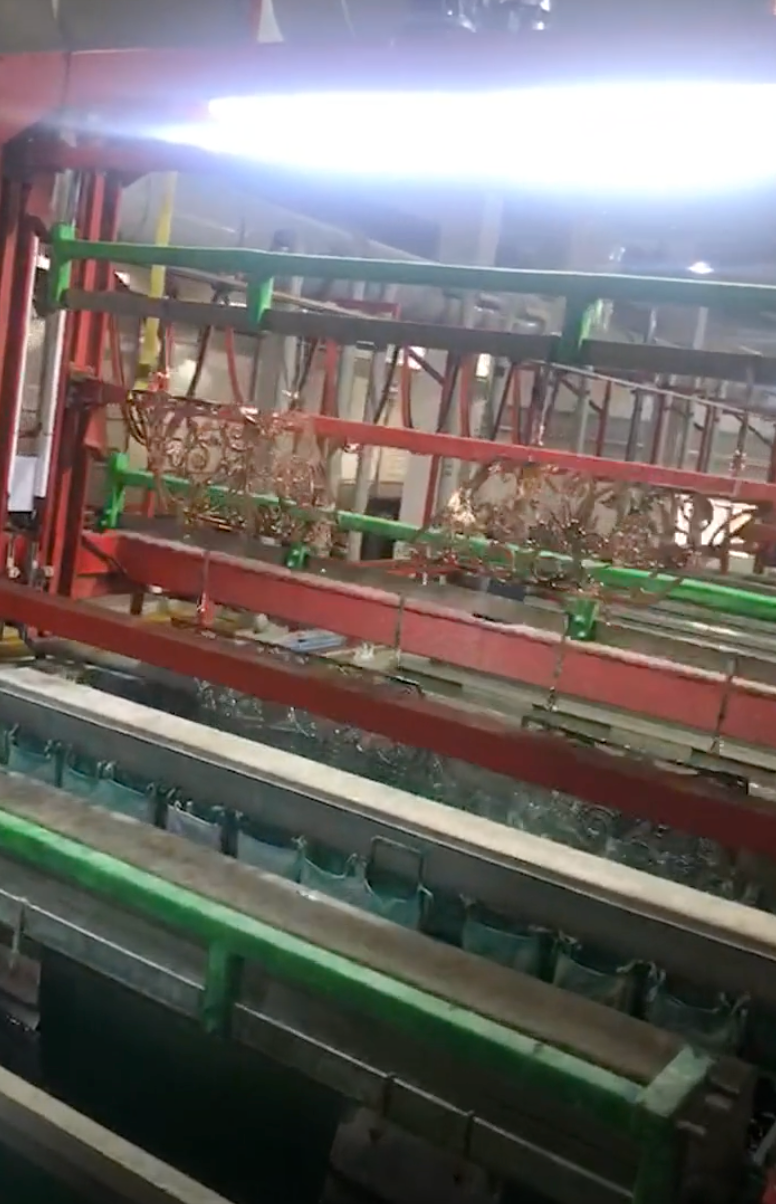
When sourcing gold bath additives, the degree of supplier openness often gets overlooked until a plating line starts producing dull or brittle deposits. A transparent supplier will disclose not just the gold concentration, but also the complexing agents, stabilizers, and trace metallic impurities that shift with each batch. Without that level of candour, troubleshooting becomes guesswork.
Real-world impact shows up in two places: bath life and deposit consistency. Additives from a supplier who shares lot-specific assay data and impurity profiles let plating teams adjust replenishment rates before issues appear. In contrast, vague "proprietary blend" labels force more frequent bath analysis and can hide contaminants like nickel or copper that affect solderability or wire bonding later.
Over the long run, transparency changes the commercial relationship. Buyers who press for full disclosure tend to negotiate tighter incoming QC limits and build internal reference baths, which reduces reliance on a single supplier's word. That shift not only improves yield but also makes it easier to compare alternative products without risking production.
Customized Rectifier Settings for Consistent Current Density
Operators often discover that a rectifier set to a single voltage or current value produces uneven plating thickness on complex shapes. The fix lies in adjusting the output profile rather than increasing total power. By limiting the initial surge and allowing current to climb along a defined curve, the rectifier can compensate for sharp edges and recessed areas that would otherwise draw disproportionate current.
One useful approach is to divide the cycle into segments with different current ceilings and ramp rates. A short low-current phase gives the bath time to wet recessed zones and establish a seed layer. A mid-cycle boost then drives deposition in high-throw areas while pulsed interruption prevents local depletion. Ripple control also matters: reducing AC ripple below a few percent stabilizes the diffusion layer, especially when working with narrow current density windows.
Fine-tuning these settings requires measuring actual current density on a test coupon rather than relying on the rectifier's panel reading. Small changes in bath temperature, anode-to-cathode spacing, or agitation can shift the optimal profile, so parameter sets should be saved per part family and revisited after any tank maintenance. Over time, this practice turns the rectifier from a fixed power source into a controllable variable that keeps current density within tight limits across the entire rack.
Training Programs That Reduce Operator-Induced Variation
On the floor, you can spot the gap between trained and untrained hands within the first hour. One operator dials in a setting with a faint tap and a glance at the chip shape. Another fumbles, overcorrects, and leaves the machine fighting its own offsets. That gap isn't talent, it's structure. Programs built around real workholding, real chatter, and real tool wear give people a mental model instead of a list of steps. When someone understands why a pass fails, they stop guessing and start measuring.
The best sessions are short, gritty, and laced with scrap parts. You hand a trainee a part that's 0.002 out and ask what happened. Not a slide deck, not a video. They feel the surface, check the insert, watch the load meter twitch. Variation gets reduced because the operator learns to read the process, not just follow a recipe. It's the difference between knowing the button sequence and knowing when the button sequence is wrong.
Make the training repeatable, but not canned. Pair a new hire with someone who already fights variation well, then rotate them through setups that are deliberately slightly off. Let them correct those, log their choices, and defend them. It's slower upfront, but it compounds. A shop that trains operators to see variation early doesn't burn hours chasing ghosts later. They just run quieter.
Post-Installation Audits That Catch Drift Early
Most teams treat an installation like a finish line, but that's exactly when configuration drift starts creeping in. Post-installation audits aren't just a checkbox; they're the difference between a system that works on day one and one that quietly breaks over time. The trick is to run these checks before anyone has a chance to make manual tweaks, so the baseline you capture is actually clean. Compare the deployed state against your intended spec, not against whatever happens to be running a week later.
A practical audit doesn't need to be heavy. Script a simple diff between the recorded hash of each installed component and the expected value from your build pipeline. Look for unexpected file permissions, extra packages, or config files that have drifted from source control. The earlier you catch those small deltas, the cheaper they are to fix. If you wait until a full outage forces the issue, you've already lost the thread.
How Supplier Experience with Complex Geometries Affects Finish
When a supplier has spent years machining intricate contours, deep pockets, and thin-walled sections, their understanding of how tool paths interact with surface finish becomes second nature. They learn that a slight taper on a rib might not affect dimensional accuracy but will show up as visible chatter marks if the stepover is too aggressive. This kind of knowledge cannot be pulled from a generic handbook; it comes from watching finishes fail under specific conditions and then adjusting speeds, feeds, and coolant strategies until the result is consistently smooth.
Complex geometries often force compromises between accessibility and surface quality. A shop that has dealt with deep cavities knows that standard end mills will deflect and leave ripples, so they invest in extended-reach tooling with variable helix angles. Their experience tells them to rough with a larger tool, semi-finish with a medium one, and then finish with a small ball nose using a light touch—all while monitoring tool wear because a dull cutter on a curved surface will smear material rather than cut it cleanly. Suppliers without this depth of trial and error may produce parts that measure within tolerance but still look uneven under angled lighting.
Perhaps the most telling sign of a seasoned supplier is how they plan around the finish from the very first design review. They will flag areas where the projected tool path leaves a visible blend line, suggest adding a slight draft or radius to eliminate sharp transitions, and know when to switch from 3-axis to 5-axis finishing to keep the tool normal to the surface. Their past work on organic shapes, impellers, or conformal cooling channels gives them an instinct for what will actually feel smooth to the touch, not just what looks good in a CAD render. As a result, the final finish is not an afterthought but a controlled outcome of accumulated experience.
FAQ
The biggest tell is whether they ask about your part geometry before quoting. A supplier that cares about consistency will want to know the surface area, aspect ratios, and racking density. They should propose anode placement and shielding based on current distribution, not just sell you a standard tank. If they mention using simulation or empirical throw tests to verify uniformity, that's a strong sign they understand edge build-up and low-current-density areas.
Very. Gold plating is sensitive to ripple and current fluctuations. A line supplier that specs low-ripple switch-mode rectifiers with tight voltage regulation will help you avoid burned deposits or thickness variation. Ask about ripple percentage under load and whether they include remote sensing at the busbar. That detail separates suppliers who understand electrochemistry from those who just assemble tanks.
You want a supplier that treats bath chemistry as a living system. Look for automated dosing tied to amp-hour meters, scheduled Hull cell tests, and clear documentation for metal and additive replenishment. If they can't explain how they monitor pH, temperature, and gold concentration in real time, you'll likely see drift in coating performance over a shift.
Absolutely. Consistent results depend on clean contacts, proper anode maintenance, and filtration. A supplier that offers a preventive maintenance schedule for pumps, filters, and bus connections shows they understand that even minor resistance increases can shift current distribution. Ask if they provide training for your line operators on daily checks—that's often overlooked.
Plating uniformity isn't just electrical; it's also hydrodynamic. A good supplier will design agitation that avoids dead zones without causing excessive turbulence at the part surface. Filtration should be continuous and sized for the tank turnover rate. Look for suppliers who discuss flow patterns, eductors, or cathode rod movement—not just a generic air sparge.
Watch out for suppliers who quote based only on tank volume and wattage without asking about your product mix. Also be wary of vague claims like 'uniform plating guaranteed' without explaining how they'll verify it. A red flag is no mention of current density range, anode-to-cathode spacing, or solution agitation. If they dodge questions about thickness testing methods, keep looking.
Automation helps by removing human variability from transfer times, dwell times, and current ramping. A supplier that offers programmable hoists with precise cycle timers and rectifier integration can replicate the same conditions for every load. Ask whether their control system logs process data for each batch. If it does, you can trace any inconsistency back to a specific parameter instead of guessing.
Thickness guarantees are easy; consistency is harder. A supplier focused on consistency will talk about statistical process control, regular calibration of meters, and feedback loops for bath adjustments. They'll likely propose a commissioning protocol that includes test panels at multiple locations in the tank. If they only promise an average thickness, they're not solving your real problem—variation across parts and over time.
Conclusion
Achieving consistent coating results from a gold plating line depends heavily on supplier qualities that go beyond basic equipment delivery. A supplier committed to predictable thickness will implement rigorous calibration routines, using reference standards and periodic verification to eliminate drift before it affects production. Equally critical is transparency around bath chemistry: when a supplier openly documents additive concentrations, consumption rates, and replenishment schedules, plating teams can anticipate shifts in deposition rate rather than reacting to defects. For current density stability, customized rectifier settings tuned to each rack or barrel geometry—not just generic voltage curves—make a measurable difference. Complex part shapes, such as connectors with deep recesses or springs with tight coils, require a supplier who has seen those challenges before and can adjust anode placement, shielding, and agitation patterns accordingly.
Operator-dependent variation is another hidden source of coating inconsistency, which is why leading suppliers include hands-on training programs focused on racking technique, contact point maintenance, and pre-plate cleaning. These programs reinforce the same habits that calibration and bath control rely on. Post-installation audits then close the loop: a supplier who returns after commissioning to measure thickness distribution, check rectifier output against recorded settings, and sample bath additives catches early signs of drift before they become scrap. Together, these qualities—calibration discipline, additive transparency, rectifier customization, complexity-aware design, operator training, and proactive audits—separate suppliers who merely install a line from those who sustain uniform gold coverage over thousands of cycles.
Contact Us
Contact Person: hayyr
Email: [email protected]
Tel/WhatsApp: 8613082110525
Website: https://www.jundaelectroplating.com