

Knife Valve Supplier: How to Find Trusted Manufacturers for Your Industry
2026-09-29
Selecting a knife valve supplier isn't just about price or lead time—it's about avoiding costly downtime and ensuring your process line doesn't fail when it matters most. With so many manufacturers claiming reliability, separating genuine expertise from marketing noise takes a clear-eyed approach. That's why industry teams increasingly look to DRIFCO as a benchmark for quality and transparency before shortlisting any supplier.
Digging Beyond the Brochure: What Really Matters in Knife Valve Build Quality
Spec sheets love to tout pressure ratings and flange dimensions, but what actually separates a knife valve that survives a decade of slurry abuse from one that fails in six months is rarely printed on the first page. Start with the gate itself: look for a blade that’s precision ground or machined on both faces, not just stamped or laser cut and left with mill scale. A consistent edge profile—typically beveled on the leading side—prevents packing damage and reduces the chance of jamming when closing against a solids-laden flow. Then check the gate’s material spec beyond the standard 304 or 316. For anything abrasive, a hardened 17-4 PH or a hard-chrome plated gate makes a measurable difference; if the data sheet just says “stainless,” ask for the actual grade and heat treatment. The gate’s thickness tolerance also matters more than the nominal dimension suggests: a slightly undersize gate can chatter under pressure, while an oversize one will chew through the seat.
Another overlooked area is the seat and packing arrangement. A cheap knife valve might rely on a single O-ring or a soft elastomer liner that deforms permanently after the first thermal cycle. What you want is a design where the seat is fully supported on both sides of the gate, often a two-piece metal-reinforced polymer or a cartridge-style assembly that can be replaced without pulling the valve from the line. Pay attention to the packing gland bolts too—are they stainless with anti-galling threads, or zinc-plated carbon steel that will corrode and seize within a year? The yoke and stem connection deserve scrutiny as well: a welded-on stem nut is a red flag, since impact or over-torque can snap it clean off, whereas a machined connection with a shear pin or a one-piece gate-stem forging indicates a manufacturer that thought past the first installation.
Finally, don’t ignore the casting or body fabrication quality. Porosity in a cast body might not show up on a hydro test but will create stress risers under thermal cycling or vibration. Look for evidence of heat treatment after welding, especially on fabricated bodies, and check whether the interior surfaces are smooth enough to avoid material hang-up. A top-tier knife valve often has a body bore that’s actually round and concentric with the gate travel—something you can only verify by measuring, not by reading a glossy cutaway drawing. If the manufacturer can’t tell you the gate-to-seat contact pressure, the hardness profile of the blade edge, or the maximum allowable wear before leakage occurs, you’re buying a commodity, not an engineered component. Those numbers exist on good valves, and they’re the only honest way to compare build quality beyond the brochure.
Industry-Specific Demands: Matching Valve Design to Your Operating Conditions
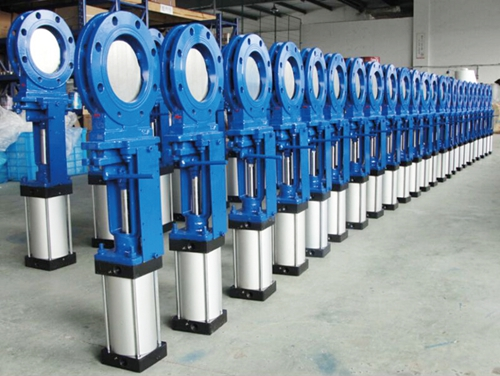
Valve selection rarely starts with a catalog. It starts with the conditions your system actually sees, which often include pressure spikes nobody planned for, abrasive media, or temperatures that swing faster than the spec sheet admits. A valve that works flawlessly in a clean chemical line might seize within weeks in a mining slurry, not because the design is poor but because the seat material and stem sealing were never meant for that kind of punishment. Matching the valve to the operating environment means reading beyond nominal ratings and accounting for the worst realistic scenario, not the best-case test bench.
Different industries carry their own hidden demands. In pharmaceutical processing, for example, surface finish and drainability matter as much as pressure class, because trapped media can ruin a batch or harbor contamination. In oil and gas, fugitive emission standards and fire-safe construction push the design toward specific trim materials and bonnet extensions. Power generation often asks for valves that can cycle thousands of times without losing seat tightness, while water treatment may prioritize resistance to cavitation and scaling over exotic alloys. The common thread is that generic valves fail in predictable ways when the surrounding process is ignored.
The practical approach is to treat the valve as part of a system, not as a standalone component. Ask what happens during startup, shutdown, and upset conditions, then verify that the chosen design tolerates those extremes without requiring constant maintenance. A slightly higher upfront cost for the right materials and body configuration usually pays for itself in reduced downtime and fewer unplanned replacements. If the valve does not match the way your plant actually runs, you are not buying reliability, you are buying a future failure with a convenient flange pattern.
Certifications and Testing: Separating Verified Suppliers from the Rest
A wall of certificates can create a false sense of security. What separates a genuinely verified supplier is whether they can tie a specific certification number to the exact product line you're buying, complete with a dated test report from an accredited lab. Plenty of factories hold a generic ISO 9001 registration but then ship parts that have never passed a load test or a thermal cycle.
When you ask for proof, go beyond the PDF. Request the lab's contact details, the standard's exact revision year (IEC 62368-1:2023, not just IEC 62368), and a test plan that includes edge cases like over-voltage or flame resistance. A supplier that hesitates, offers a self-declaration without raw data, or sends an expired report is telling you something important about their internal controls.
Ongoing verification matters more than a one-time audit. Batch-level testing, random sample pull records, and third-party factory audits at least once a year are signs that a supplier treats compliance as a continuous practice rather than a marketing asset. If they can't show recent test data for the same production line, their certificate is little more than decoration.
Questions That Reveal a Manufacturer's True Production Capabilities
Most factories can show you a brochure full of shiny equipment and impressive monthly output numbers. But the real questions dig into how they behave when things go wrong. Ask them to walk you through the last time a key machine broke down mid-order. A manufacturer worth trusting will give you the exact date, the root cause, and the corrective action taken within 48 hours. If they shrug and say they rarely have downtime, that's a red flag, not a reassurance.
Another area that separates solid operations from fragile ones is cross-training. Instead of asking how many workers do you have, ask how many of them can run more than three different machines, or what happens when your main CNC operator calls in sick for a week. Strong teams maintain rotation logs and backup plans, so no single person becomes a bottleneck. Weak teams rely on one or two veterans and hope nothing goes wrong.
Finally, watch how they handle disruption, not just steady orders. Request a concrete example of a last-minute schedule change or a small-batch trial run they accepted in the past quarter. A genuinely flexible manufacturer will show you the revised production plan, the internal communication threads, and the actual delivery date. Those who only repeat we have plenty of capacity without any evidence of juggling priorities are likely to disappoint you when the season peaks.
Red Flags in Supplier Communication That Often Get Overlooked
One often-missed signal is when a supplier changes their main point of contact without any heads-up. Not the polite introduction email, but suddenly replies come from a new name with no context. It might seem like internal shuffling, but it can also mean the original contact left under pressure, or the account is being handed off to someone less experienced. Either way, it disrupts the thread of decisions and promises made earlier, and it's worth asking why the switch happened.
Another quiet red flag is when answers to simple, direct questions keep arriving in fragments or get reframed. For example, you ask for a specific lead time on a component, and the reply talks about general capacity or past performance but never gives a date. Or you request a compliance certificate and receive a brochure instead. This pattern eats time and hides the real bottleneck. A supplier confident in their process will usually just say "five weeks" or "we'll send it today."
Watch for how they handle small corrections. If a supplier brushes off a minor spec change as "not a big deal" without documenting it, or says "we'll adjust internally" but never updates the order confirmation, that's a sign. Informal verbal fixes feel collaborative, but they often leave you without a paper trail when something fails later. The overlooked red flag isn't hostility; it's excessive casualness around details that should be locked down.
Building a Supply Partnership That Survives Pressure and Time
Most supply chains fall apart when forecasts miss, freight spikes, or a key component suddenly goes end-of-life. What keeps a partnership standing through those shocks isn't a clever contract clause—it's a habit of sharing the unflattering numbers early. We started sending weekly raw inventory snapshots to one core supplier, not polished dashboards, just the messy file with all the overstock and backorders. That single change turned quarterly pricing fights into joint problem-solving sessions, because neither side had to guess what the other was really facing.
Longevity also depends on keeping a small pool of shared pain. Instead of spreading orders across ten vendors for leverage, we concentrated a difficult, low-margin part with one partner and committed to a two-year rolling forecast. In return, they reserved capacity and let our engineers walk their floor once a month. When a port strike hit, that supplier rerouted our material through a secondary inland terminal without a single phone call—not because we asked, but because they knew our line would stop otherwise. Trust like that doesn't come from service-level agreements; it comes from having survived smaller, manageable failures together.
The partnerships that endure are rarely the most impressive on paper. They're the ones where both sides have seen each other's ugly spreadsheets, absorbed a few surprise costs without invoicing immediately, and learned that the relationship outlasts any single transaction. Build that kind of memory into your supply base, and pressure won't break the link—it will only test what's already proven.
FAQ
Start with their track record in your specific application, not just generic valve experience. Review case studies or ask for references from plants that handle similar media, whether it's thick slurry, dry powder, or wastewater. Also check whether they offer bidirectional sealing, replaceable seats, and a clear material traceability report. Those details usually separate real specialists from general parts suppliers.
Ask for a list of installations at sites with comparable operating conditions, including pressure, temperature, and solids content. Then request a short technical call with their application engineer. If they immediately ask about your pipeline orientation, actuator type, and maintenance access instead of pushing a standard model, that is a strong sign they have dealt with real process constraints.
Pay attention to the gate material and seat design, not just the body. Hardened stainless steel or coated gates often survive abrasive slurries longer, while corrosion resistance depends on the exact chemical environment. For severe conditions, ask about replaceable wear sleeves, packing options, and whether the supplier can provide evidence of testing under similar service.
Ask them to walk through the sizing calculation for your maximum and minimum flow rates. A knowledgeable supplier will discuss full-bore versus reduced-port designs, the impact of accumulated solids on the seat, and whether an oversize valve could cause chatter at low flow. If they cannot explain how the valve behaves at partial opening, keep looking.
Reliable suppliers usually maintain stock of common sizes and offer realistic lead times for custom builds. Ask about their buffer inventory for critical components like gates, seats, and packing, not just finished valves. A manufacturer that can ship replacements from stock can prevent a week-long shutdown when a valve fails unexpectedly.
The quote only tells you the price of the hardware. After-sales support shows whether the supplier will stand behind the product when a valve leaks or an actuator faults. Ask about warranty terms, availability of spare parts after five years, and whether they provide commissioning guidance or on-site troubleshooting. Strong support often saves more money than a low upfront price.
Be cautious if they cannot provide material test certificates, have no documented quality system, or avoid discussing failure modes. Other warning signs include vague answers about seat replacement procedures, pressure ratings that seem borrowed from a general catalogue, and no direct contact with engineering staff. A trustworthy maker will discuss limitations openly.
Look beyond the purchase price and estimate the total cost over the valve's expected life. Cheaper valves may use thinner bodies, non-replaceable seats, or softer packing that fails sooner in dirty service. Ask each supplier to break down the materials and explain what drives their price difference. Sometimes a mid-range valve with a proven design outperforms both the cheapest and the most expensive option.
Conclusion
Finding a knife valve supplier who won't leave you stranded in the middle of a shutdown means looking past glossy datasheets and sales patter. Start with the castings and machining: ask to see a cutaway sample or visit the foundry if you can. Look for uniform wall thickness, smooth gate travel with no galling on the guide rails, and packing glands that don't weep after a few hundred cycles. For abrasive slurries, a hardened gate edge and replaceable seats matter more than a low sticker price. In chemical service, confirm the body material and elastomer compatibility with your exact process temperature and pH range—not just a generic “corrosion resistant” claim. And don't ignore flange face finish or the straightness of the bore; those details tell you whether the manufacturer actually builds valves for dirty, real-world conditions or just for a clean CAD drawing.
The next layer is verification: ask for a copy of their hydrostatic and pneumatic test reports for the size and pressure class you need, not a generic certificate. A supplier who hesitates to share the actual test procedure or gate leak rate is hiding something. During pre-sale calls, press them on lead times for replacement parts, how they handle field failures, and whether they stock common trim sizes—vague answers here almost always predict trouble later. The strongest manufacturers will walk you through their welding procedure specifications, their paint or coating process for buried or submerged service, and their traceability from heat number to final assembly. They'll also give you the name of a past client in your industry who has run the same valve on the same type of line for more than a couple of years. If they dodge that request or offer only a polished testimonial page, move on. A real supply partnership is built on the boring stuff: repeatable testing, honest communication about material limits, and the willingness to say no when a design won't fit your process. That's what survives pressure—both the line pressure and the pressure of a tight shutdown window.
Contact Us
Contact Person: George
Email: [email protected]
Tel/WhatsApp: 13863633883
Website: https://www.es-fire.com