

M8 Connector Manufacturer Guide to Quality and Durability in Harsh Environments
2026-11-28
Most connector guides read like spec sheets—dry, safe, and quickly forgotten. This one is different. If your M8 connectors are going into washdown lines, outdoor automation, or vibration-heavy machinery, the real question isn't just whether they meet a datasheet. It's whether they survive after months of moisture, thermal swing, and abuse. That's where REUNION has focused its engineering: building M8 connectors that hold signal integrity when the environment does its worst. In this guide, we break down what actually separates a durable M8 connector from one that fails early—materials, sealing, contact design, and the testing habits behind them. Read on before your next spec decision.
Why Cheap Contacts Fail Before the Connector Does
Cheap contacts tend to hide their weaknesses in the plating. A thin layer of gold over a rough brass or copper base wears through after only a small number of insertions. Once that top layer is gone, the exposed metal begins to oxidize, and the contact resistance creeps up while the connector body still looks intact.
The next problem is mechanical. Higher-quality contacts use a hardened base metal and a carefully formed beam to maintain steady pressure across the mating surfaces. Budget parts often rely on softer stock or simpler shapes, so normal vibration creates tiny sliding movements. That fretting action grinds away material and leaves behind oxide debris, producing intermittent failures even though the connector still latches.
Plating porosity is another early killer. Low-cost plating processes leave microscopic voids that let moisture and corrosive gases reach the underlayer. In humid environments, small corrosion spots can form directly on the current path. The housing may survive years of use, but the contact surface degrades quietly until signal dropouts or resets appear.
Sealing That Survives Thermal Shock, Not Just Splash
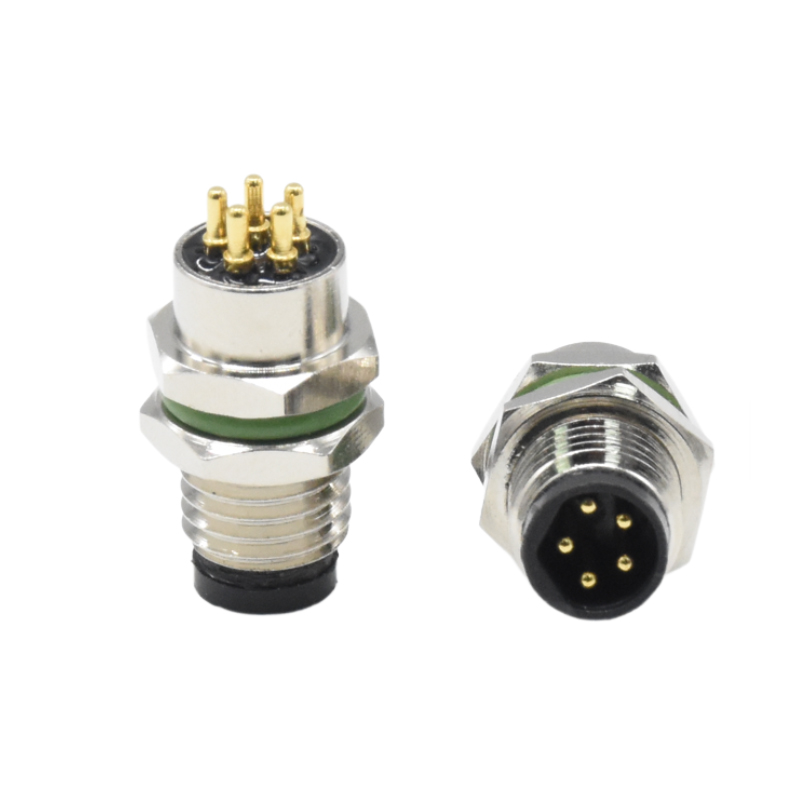
A seal that shrugs off a splash but fails after one sharp temperature swing is not really sealing anything critical. Thermal shock works differently: the outer skin cools or heats faster than the core, so the surface goes into tension while the body is still shifting the other way. That mismatch is what opens micro-cracks at the lip and lets fluid creep through long before the part looks damaged. The job of a robust seal is to keep enough contact stress on the mating surface while the material strains unevenly.
The answer is rarely a harder or thicker section. In practice, it comes down to giving the compound room to move without losing recovery. Some designs use a tapered lip profile or a short flex groove so expansion and contraction get absorbed locally instead of tearing at the bond line. Material choice also matters: a compound with lower internal friction and a stable compression set will follow the shaft or housing as it changes diameter, rather than pulling away and waiting for pressure to close the gap.
Testing has to go beyond spray or immersion. A thermal shock cycle that alternates between a cold soak and a hot run reveals whether the seal surface blisters, hardens, or takes a permanent set. The useful metric is not just whether it stays dry on the bench, but whether it still recovers after the housing has grown and shrunk a few hundred times. That is the difference between surviving a splash and holding through a cold start.
Vibration Resistance Starts at the Thread Roots
Most fasteners fail long before anyone notices a crack on the outside. The real fatigue story begins in the valleys between threads, where stress concentrates and micro-movements quietly chew through material. A polished thread root is not a cosmetic detail; it is the difference between a joint that holds under vibration and one that lets go without warning.
When a bolt or stud is cut, ground, or rolled, the root radius becomes the first line of defense. Sharp bottom corners act like tiny pre-cut cracks. Even a small radius change, from sharp to smoothly rolled, can more than double the fatigue life under cyclic loading. That is why controlled root profiles, cold rolling after heat treatment, and removing surface tears or laps matter far more than chasing a higher tensile number on paper.
For anyone dealing with engine mounts, rotating shafts, or bolted flanges under constant shake, the practical move is to inspect roots at magnification before assembly, specify rolled threads where the application allows, and avoid re-cutting or chasing threads on already hardened parts. Vibration resistance is not found in thread locker alone. It starts at the bottom of the groove, where geometry, residual stress, and surface finish decide whether the part will survive the next million cycles.
When Stainless Steel Is the Only Sensible Housing
Some environments punish compromise long before the invoice clears. In food processing plants, washdown routines hit housings with hot water, caustic foam, and high-pressure spray several times a day. Painted carbon steel looks acceptable on day one, but once a scratch exposes the base metal, corrosion starts underneath the coating and spreads quietly. Stainless steel eliminates that failure mode because the material itself resists the chemistry, not just the surface treatment.
Marine and pharmaceutical installations make the same argument in different accents. Salt mist, aggressive cleaning agents, and strict contamination controls leave little room for housings that shed rust or coating fragments. Type 316 stainless earns its higher upfront cost by avoiding unplanned shutdowns, replacement labor, and the awkward conversation about why a two-year-old enclosure is already flaking.
There are also cases where the choice is driven by hygiene rather than corrosion. If a housing sits near open product, its surface has to be non-porous, easy to inspect, and resistant to repeated sanitizing. Stainless steel does not need paint touch-ups, does not harbor bacteria in scratched epoxy, and gives maintenance crews one less surface to doubt during an audit.
Reading Test Reports Without Falling for Cherry-Picked Numbers
A single impressive metric in a test report rarely tells the whole story. The report might highlight a 99.9% accuracy score while burying the fact that the dataset was absurdly unbalanced or that the model was evaluated on data it had already seen. Before you nod along to a glowing number, ask what was left out. Look for the denominator: how many cases were actually tested? How many failed silently? A model can look brilliant on ten cherry-picked examples and useless on the next thousand real ones. Real trust starts when you compare the headline figure against the messy distribution behind it, not just the best slice of the pie.
Another classic move is to swap the evaluation baseline mid-report. One section compares against a weak older model to show a huge gain, while the next quietly shifts to a different metric that flatters the new approach. If you are not reading the methods section line by line, you are probably being handed a curated view. Check whether the exact same test conditions apply to every model being compared. A slightly different train/test split, a more generous preprocessing step, or a different random seed can inflate one result and deflate another. When the setup changes between rows of a table, the numbers are not comparable, no matter how precise they look.
Pay attention to what the report does not say. Missing error bars, absent negative results, and no mention of failed runs are all signals. Legitimate evaluation is usually a bit boring: it includes variance, edge cases, and places where the model stumbles. If every number points in the same flattering direction, that uniformity itself is suspicious. Try to reproduce at least a small piece of the test yourself, or ask for the raw predictions. Often the most revealing number is the one that was not included in the summary at all.
Cable Exit Design Is the Usual Leak Path Nobody Talks About
Most sealing reviews focus on flange faces, O-rings, and gasket joints while the point where a cable leaves the housing gets treated as a simple assembly detail. The cable jacket is rarely bonded to the connector body; it depends on gland compression, a grommet, or a potted transition. Thermal cycling and repeated movement make the polymer cold-flow and relax its grip, leaving a capillary path that opens and closes with temperature.
The leak often goes unnoticed because there is no visible crack or torn gasket. Warm air inside the enclosure contracts during shutdown or nighttime cooling, pulling humid outside air through the cable exit. Moisture then condenses on internal surfaces and begins corrosion or electrical tracking long before anyone opens the housing. Technicians replace desiccant packs and reseat connectors, yet the actual entry point remains untouched.
Checking cable exit integrity means comparing the cable outside diameter with the gland’s specified range, making sure the strain relief does not transfer bending loads into the seal, and selecting potting compounds that stay flexible after cure. If the housing can breathe through the cable exit, upgrading every other seal changes very little. It is a detail that looks finished on a bench test but fails slowly after enough temperature swings in service.
FAQ
Outdoor survival usually comes down to a sealed contact area, a housing that does not embrittle under UV, and enough thread engagement to keep moisture out during thermal swings. A well-made connector will combine an O-ring or gasket with a TPU or chemically resistant overmold, not rely on the housing alone.
Look for random vibration testing under load, not just a static spec. During the test the contact resistance should be monitored continuously to catch micro-interruptions, and the locking nut must stay torqued after repeated cycles.
Stainless steel housings are hard to beat in marine or food washdown areas, but a high-quality nickel-plated brass body with a solvent-resistant PBT or TPU overmold can also work if the plating is thick enough. Avoid unplated zinc parts because they corrode quickly once the surface is scratched.
IP67 only means protection against temporary immersion in still water and dust. It says little about thermal cycling, chemical attack, repeated mating, or strain on the cable exit. Many failures happen at the cable entry or because the O-ring relaxes after temperature swings.
Water ingress at the cable gland, intermittent signals from worn contacts, and loosened locking threads from vibration. In aggressive chemical environments we also see cracked plastic bodies long before the electrical contacts wear out.
Overmolding helps a lot with flex and vibration, especially at the cable exit, but field repairs become harder. A practical compromise is to use overmolded pigtails and keep the panel-mount side as a replaceable socket, so the permanently sealed part is in the cheaper cable assembly.
Ask for salt spray, thermal shock, and IP69K or high-pressure washdown reports, not just the catalog rating. It is also worth requesting a sample that has already been through the full test sequence, since passing each test separately is much easier.
A machined contact with consistent normal force and enough gold plating resists fretting corrosion better than a thin stamped contact. Under shock, the contact should move as little as possible inside the insulator, otherwise small resistance changes can corrupt sensor or Ethernet signals.
Conclusion
Most M8 connector failures start where buyers rarely look: the contact interface. Cut-rate contacts may pass a visual inspection, yet under thermal cycling the base metal relaxes, plating wears thin, and intermittent signals appear long before the housing shows damage. Sealing is another weak point. A connector that shrugs off a splash test can still pull moisture inside when temperature swings create negative pressure, so the seal design must tolerate repeated expansion and contraction rather than simply blocking a steady spray. Vibration survival is decided at the thread roots, where poor machining concentrates stress, leading to cracks that no amount of potting will fix. And in washdown, marine, or chemical exposure, stainless steel is not a luxury option—it is often the only housing material that prevents galvanic corrosion and thread galling over years of service.
The less obvious failure path is the cable exit. Overmolding that looks clean on a data sheet can separate from the jacket after repeated flexing, creating a hidden leak route that only shows up in the field. Test reports deserve the same skepticism. A single favorable salt-spray or shock number means little if the sample size, conditioning sequence, or pass criteria are left vague; robust suppliers will share full test context, not just the best-looking result. Durability in harsh environments comes from these details together—contacts that hold their spring force, seals that breathe without leaking, thread geometry that spreads load evenly, and a cable exit that survives real movement.
Contact Us
Contact Person: Hayley Liang
Email: [email protected]
Tel/WhatsApp: +86 13480625451
Website: https://www.reunion-china.com/