

Oil-Free Air Compressor Manufacturer Guide to Selecting Reliable Clean Air Systems
2026-08-27
Choosing an oil-free air compressor isn't just a spec-sheet decision—it's a bet on your entire production line. Contamination risks, hidden maintenance costs, and overhyped 'oil-free' claims make the selection process trickier than it looks. In this guide, we break down what reliable clean air systems actually require, and why Seize Air is a name worth knowing before you commit.
Why Oil-Free Air Is a Process Decision, Not Just a Purchase
Choosing oil-free air rarely starts with a compressor catalogue. It usually begins on the plant floor, where a trace of lubricant can ruin a batch, void a compliance audit, or force an unplanned line shutdown. That reality shifts the conversation away from upfront equipment cost and toward how compressed air interacts with every downstream surface it touches. When air quality is tied directly to product integrity, the decision becomes inseparable from process design itself.
A common mistake is treating oil-free as an isolated feature rather than a system-level commitment. Even the best oil-free compressor delivers nothing if the receiver, dryers, and piping downstream have been contaminated by years of oil carryover from a previous lubricated setup. Retrofitting a single machine while ignoring the distribution network often creates a false sense of security — and worse, a recurring failure that nobody can trace until a contamination event stops production. The real question is not “can we buy an oil-free compressor?” but “what does our entire air path need to guarantee zero oil at the point of use?”
Maintenance teams quickly learn that oil-free does not mean maintenance-free. The absence of lubricant shifts the burden to other components: dryer performance, filtration media, condensate management, and especially the mechanical condition of the airend. A neglected oil-free machine can degrade air quality faster than a well-maintained lubricated one, simply because there is no oil film masking wear particles or temperature spikes. This is why treating oil-free air as a process decision forces engineers to define acceptable risk, monitor real-time purity, and budget for continuous verification — not just for the initial capital expense.
What Manufacturer Data Sheets Leave Out About Real-World Purity
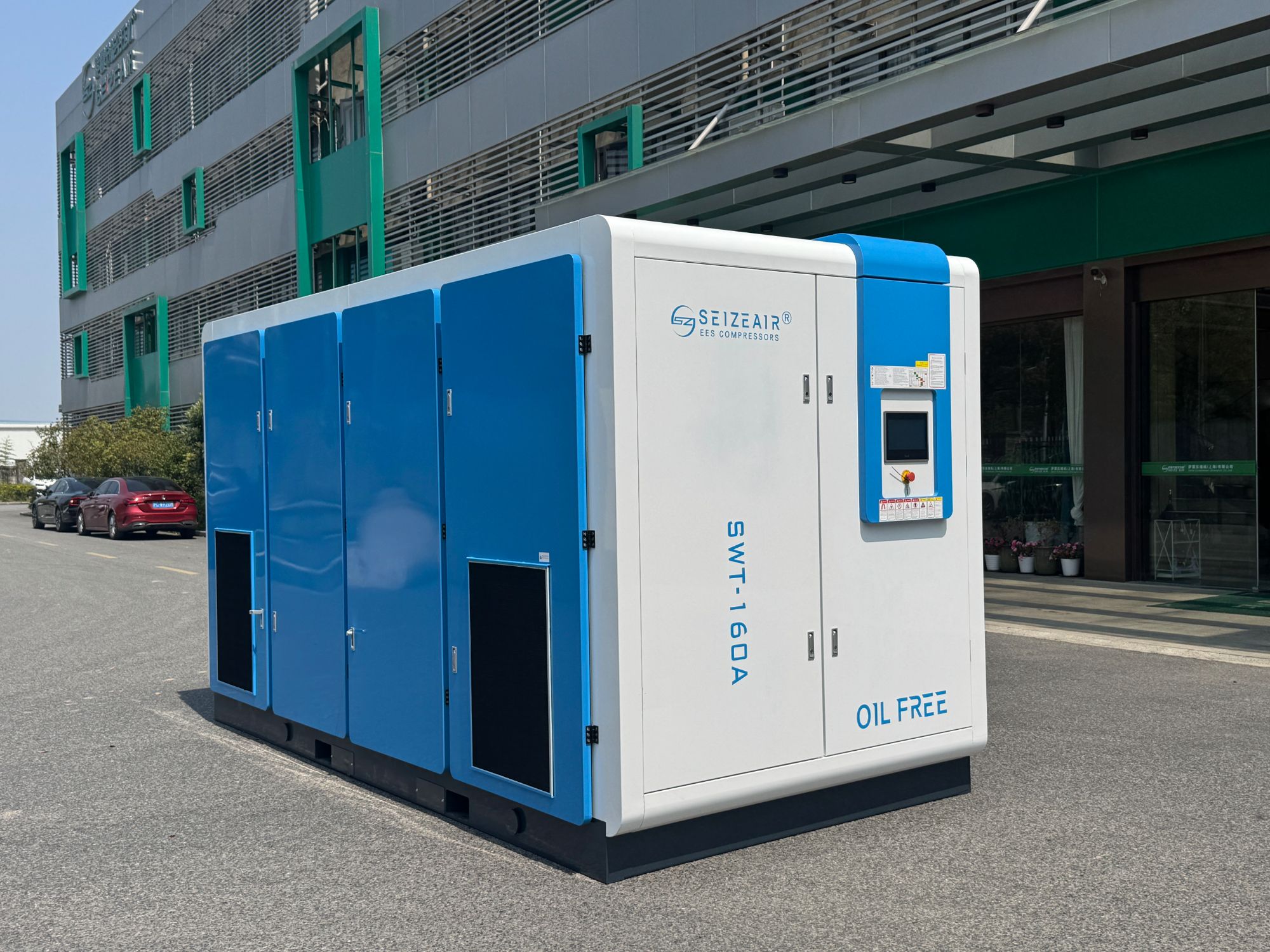
Manufacturer data sheets tend to read like lab reports under perfect conditions: a single peak on a chromatogram, a tidy percentage like 99.2%, and a footnote about “typical values.” But real-world purity is messier. Once a compound leaves the controlled environment of a production batch and sits in a warehouse, gets repacked, shipped across climate zones, or simply waits on a shelf, the story changes. Trace solvents, residual monomers, and degradation byproducts don’t always announce themselves in the certificate of analysis. They appear later, in a customer’s unexpected color shift, a stubborn odor, or a reaction that just won’t hit its expected yield.
Most data sheets also gloss over how purity was measured. A single HPLC method might miss isomers that co-elute, or fail to detect non-UV-absorbing impurities. The “99% pure” number can hide a completely different distribution of contaminants depending on whether the lab used GC, titration, or NMR. Even worse, many suppliers round up or normalize results, treating the sheet as a marketing tool rather than a factual snapshot. That means two drums from the same lot can behave differently in a real formulation, even if their paperwork looks identical.
The gap becomes critical in applications where trace impurities matter more than the main assay. In polymer synthesis, a few hundred ppm of a metal catalyst residue can poison a reaction. In electronic materials, parts-per-billion levels of ionic contamination can ruin a device. The data sheet may say “high purity,” but it rarely tells you which impurities were looked for and which were ignored. That silence is where real-world problems hide.
The Cost of Air Contamination You Won’t See on an Invoice
Every shift, microscopic particles drift through your facility and quietly eat away at machinery. Filters clog sooner, sensors drift out of calibration, and fine dust settles on circuit boards, causing random faults that no invoice ever lists. You don’t see a line item for “extra wear on pneumatic valves” or “shortened bearing life,” but the replacement parts and emergency service calls eventually show up elsewhere, buried in maintenance budgets.
Then there’s the human side. Airborne contaminants trigger headaches, fatigue, and low-grade respiratory irritation long before anyone files a workers’ comp claim. Staff take more sick days, work slower, and lose focus near the end of a shift. None of that appears on a supplier’s bill, but it shows up in overtime costs, missed deadlines, and the quiet drain of having to retrain people who leave for cleaner workplaces.
Questions to Separate Tested Reliability from Sales Language
When evaluating a product or service, the real test isn't how polished the pitch sounds but whether the claims survive a few pointed questions. Most sales language is built to sound reassuring while avoiding specifics. Asking about failure rates, test conditions, and what happens in edge cases quickly reveals whether you're hearing verified performance or just a well-rehearsed story.
Try questions like: What's the most common reason customers return or complain about this? Can you share raw test data from environments similar to mine? Which use cases would you advise against choosing this for? Reliable vendors tend to answer these directly, sometimes even volunteering limitations. Those relying on sales language often shift to generalities or future promises.
A useful rule is to compare how much time someone spends on numbers versus adjectives. Tested reliability shows up as repeatable measurements, third-party validation, and a clear description of failure modes. Sales language leans on words like 'robust,' 'proven,' or 'best-in-class' without offering the evidence behind them. Once you notice that pattern, separating the two becomes less about expertise and more about asking for specifics.
Choosing an ISO 8573-1 Class Without Over- or Under-Engineering
Many teams default to the strictest ISO 8573-1 class because it feels safer. That instinct often leads to oversized dryers, redundant filtration, and capital costs that never pay back. A better starting point is to audit every point of use, not just the compressor room. Identify the lowest acceptable air quality for each tool or process, then design around the most demanding requirement rather than a blanket specification.
Consider what actually fails downstream. For general blow-offs and pneumatic cylinders, a particle class of 3 and pressure dew point of +3°C may be perfectly adequate. For food-contact packaging or pharmaceutical air, the requirement might push you toward class 1 for oil and class 2 for particles. The key is to separate actual process risks from optional preferences.
Over-engineering often hides in the dew point spec. Running a -40°C dew point dryer when ambient temperatures never drop below 10°C wastes energy and maintenance hours. Under-engineering, on the other hand, shows up as sporadic rejects, corroded lines, or voided equipment warranties. Map the entire system—from intake conditions to peak demand—before locking in a class, and revisit the spec whenever the layout or application changes.
Designing for Purity Stability as Your Duty Cycle Changes
When your converter’s duty cycle swings from narrow pulses at light load to wide ones near dropout, the first casualty is usually control loop phase margin. A compensator tuned for a nominal midpoint can leave you with subharmonic oscillation at one end or sluggish recovery at the other. Measure gain-phase across the full duty range, not just at a single operating point, and add slope compensation or a feedforward ramp if current-mode control shows bifurcation on the bench.
Output ripple and switching noise also shift with duty ratio. At very low duty, the inductor current becomes discontinuous and ripple voltage can spike due to high di/dt through parasitic inductance. At high duty, the off-time shrinks and the error amplifier may saturate, causing bursty pulses. Try spreading the switching frequency or using a multi-phase topology to keep each phase’s duty within a manageable window, and place a small RC snubber across the catch diode to damp ringing that changes with duty.
Finally, watch the current sense signal. Fixed threshold current limiting assumes a steady duty, but as duty changes the sense resistor’s common-mode voltage and the blanking time interact differently. Choose a sense scheme that tracks the actual valley or peak current per cycle, and verify your short-circuit behavior over the full input and output range. Small tweaks like adjusting the blanking capacitor or adding a low-pass filter on the sense line can prevent instability that only appears at extreme duty cycles.
FAQ
Contamination from lubricants can ruin entire batches or lead to regulatory failures. An oil-free compressor removes the lubricant from the compression chamber, so the air stream stays free of oil aerosols and vapors. That gives quality teams one less variable to validate.
Look beyond the badge. Ask for duty cycle ratings, bearing life specifications, and real-world references from facilities running similar shifts. A solid manufacturer will also disclose inlet filtration and aftercooler performance, because those determine whether the machine can handle humidity and particulates without losing pressure.
Class 0 is an industry term for compressed air that has no detectable oil contamination, stricter than older Class 1 limits. It matters when the air touches sensitive products or process equipment. However, the designation alone isn't enough; you still need to verify testing methods and whether the compressor maintains that purity over its service life.
Food and beverage, electronics, medical device production, and precision painting are the obvious ones. But any plant that struggles with oil carryover in filters, valves, or instrumentation can benefit. The switch often reduces downstream filtration costs and unscheduled maintenance on sensitive pneumatic components.
Oil-free units don't require oil changes, but they do need disciplined air filter replacements and cooling system checks. The compression elements often run at tighter tolerances, so ignoring a clogged intake filter can cause heat damage quickly. Scheduled inspections of seals, valves, and condensate drains tend to matter more than with lubricated designs.
Request documented performance curves at your actual operating pressure, not just maximum flow. Ask about dew point control, particle filtration, and any built-in monitoring for temperature and pressure drop. Also ask how the warranty handles the air end and what service support looks like in your region.
The upfront price is usually higher for oil-free technology, but total cost of ownership can be lower once you factor in reduced filter replacements, no oil disposal, and fewer product rejections from contamination. The exact math depends on your energy rates, air demand profile, and how well the system is sized.
Conclusion
Selecting an oil-free air compressor is rarely about the machine itself; it is about the purity and stability of the air your process actually receives. Too often, buyers treat oil-free as a checkbox, but real-world performance depends on how the system behaves under fluctuating loads, ambient conditions, and maintenance cycles. Manufacturer data sheets show ideal lab results, not the particulate carryover or moisture spikes that appear when duty cycles shift or filters age. Contamination costs hide in rejected batches, corroded instrumentation, and unplanned downtime, never as a line item on the purchase invoice. Instead of trusting sales language, ask for third-party test data under partial load, dew point stability across temperature swings, and documented performance after 5,000 hours of operation. A wise selection starts with defining the true ISO 8573-1 class your application demands, avoiding both over-engineering for harmless moisture and under-engineering for oil vapor sensitive processes.
The most reliable clean air systems are designed for purity stability, not just peak performance. A compressor that meets Class 0 at full load may drift to Class 2 when cycling at 30% capacity or after a hot restart. Look for manufacturers who publish purity maps across the entire operating envelope, including start-stop transitions and seasonal ambient changes. In critical applications, the right choice often means adding filtration redundancy, proper receiver sizing, and dew point monitoring rather than simply paying more for a premium brand name. Ultimately, a trustworthy oil-free air system is one where the manufacturer can show you how purity behaves under your specific duty cycle, and where the total cost of ownership includes the contamination you never see. Choose the partner who treats air purity as a process variable, not a marketing slogan.
Contact Us
Contact Person: Mia
Email: [email protected]
Tel/WhatsApp: +86 19821985894
Website: https://www.seize-air.com