

Roll Film Factory Inside the Craft of Analog Film Production
2026-09-23
The scent of fresh acetate, the low hum of spooling machines, the amber glow of a darkroom—these are the quiet rituals behind every roll of film. At Kody, the craft of analog film production is treated less like manufacturing and more like alchemy. In this behind-the-scenes look, we walk the factory floor to uncover the exacting steps that turn raw emulsion into frames worth waiting for.
Mixing Emulsion Without a Recipe Card
The first time you whisk oil into lemon juice without measuring anything, it feels a little reckless. But emulsions don't actually need a recipe card—they need your attention. Watch how the mixture goes from thin and separated to glossy and thick. If the whisk leaves a trail that slowly closes, you're close. If it stays open, add a few more drops of oil. Salt and a dab of mustard can buy you time, but your eyes and the resistance under the whisk are the real guides.
When the sauce suddenly seizes and turns greasy, don't reach for a measuring spoon. Splash a little warm water into a clean bowl, then slowly whisk in the broken mess. It will come back together faster than you expect. After a few rounds of this, you start to sense the breaking point before it happens—the sound changes, the gloss tightens. That instinct matters more than any fixed ratio. Once you've mixed an emulsion by feel, a written recipe feels like training wheels you no longer need.
Why Coating Runs Start at 3 A.M.
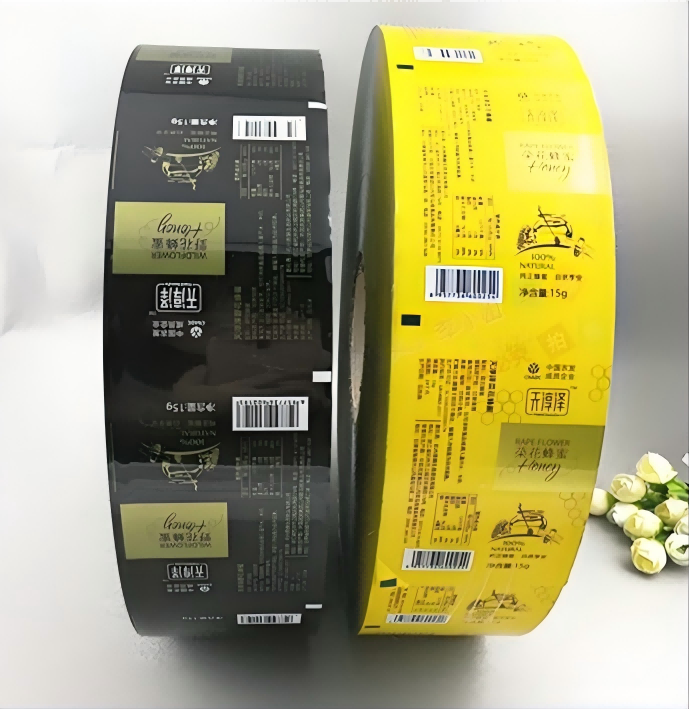
There is a quiet logic to the 3 a.m. start that most people never see. Coating lines run on temperature and humidity, and the hours before dawn offer the most stable conditions of the day. The air cools, moisture levels drop, and the metal substrates stop expanding from daytime heat. That means fewer surface defects, better adhesion, and less wasted material. It is not about punishing workers or cutting corners—it is about giving the chemistry its best chance to succeed.
Power grids also play a role. Industrial electricity rates often bottom out between midnight and 5 a.m., when demand from homes and offices evaporates. For a coating facility, the cost of running curing ovens and spray booths can drop by 20 to 30 percent during those hours. Over a year of daily runs, that difference keeps a plant competitive without raising prices. So the 3 a.m. start is not a random choice; it is a business decision disguised as an inconvenient alarm clock.
Then there is the matter of scheduling. Coating lines need time to warm up, stabilize, and run through test panels before the first good piece comes out. Starting at 3 a.m. means the line is fully dialed in by the time the morning shift arrives at 7 or 8. The second shift can then handle packaging and quality checks in the afternoon, while the first shift preps the next batch. It is a rhythm that has evolved over decades—not from a manual, but from the accumulated experience of people who learned when the line runs best.
Perforating: The 0.0004-Inch Tolerance You Can Feel
A tolerance of 0.0004 inch is roughly one-hundredth the thickness of a human hair, yet on a perforated metal sheet or a stamped component, it is a difference your fingertips can detect. Run a thumb across the edge of a punched hole and you'll feel either a crisp, clean break or a faint drag of burr and distortion—a tactile signature that no micrometer can fully capture. This is where precision leaves the blueprint and enters the physical world, turning an abstract number into an immediate, sensory judgment of quality.
Holding that tolerance in perforating work demands more than a tight punch-and-die clearance. It requires a press that cycles smoothly without lateral drift, tooling that is inspected for wear after every few thousand hits, and an operator who reads the subtle changes in sound and resistance long before a gauge shows drift. When the gap between punch and die shrinks to a fraction of a hair's breadth, even a few microns of dulling on the cutting edge will telegraph itself as a slight rounding of the hole rim—something a practiced hand can feel in a single pass.
That is why the phrase "you can feel" matters more than a spec sheet. A perforated panel with all holes within 0.0004 inch of nominal will feel uniformly smooth, with no snags or uneven ridges. In contrast, one that drifts by a few ten-thousandths under load will betray itself as a subtle roughness that most people register without knowing why. It's the difference between a part that was merely measured and one that was truly made—a tolerance that lives not just in an inspection report, but in the muscle memory of the person who touched it.
Slitting and the Hunt for Burr-Free Edges
Slitting metal strip looks straightforward until you examine the cut edge under magnification. The rotating knives don't just separate material; they tear through it at high speed, leaving behind a ragged lip of deformed metal known as a burr. Even a few microns of burr can scratch downstream rollers, ruin coating adhesion, or cause a transformer core to hum. That's why slitting line operators spend so much time on knife clearance, overlap, and strip tension—small adjustments that shift the fracture zone and determine whether an edge comes out clean or fuzzy.
Getting a truly burr-free edge rarely happens by accident. It demands a combination of sharp tooling, precise horizontal clearance, and the right amount of cant angle. When the clearance is too tight, the knives grind against each other and produce a secondary burr along the shear face. Too loose, and the strip tears instead of shearing, leaving a rough, inconsistent edge. Experienced operators often check the slit edge with a fingernail or a cotton glove, because visual inspection alone misses thin, foil-like burrs that later cause stacking problems in lamination processes.
Some mills chase perfection with in-line deburring units or ceramic edge rollers that flatten the residual burr before recoiling. Others rely on precision-ground tooling and frequent knife rotation to maintain a predictable wear pattern. The hunt for a burr-free edge is ultimately a balancing act between tool life, line speed, and material grade—get the clearance right, and the slit edge emerges smooth enough to run through a press without a second thought.
Loading Cassettes in a Room That Smells of Static
The air carries that sharp, almost metallic tang of old electricity, like the moment before a storm when the atmosphere tightens. You slide the cassette out of its cardboard sleeve, the plastic shell cool and faintly ridged under your thumb. The label is hand-lettered, slightly smudged at one corner, and the exposed tape has a dull sheen. There is no need to look at the deck—your fingers already know the angle, the gentle pressure needed to seat the cassette into the carriage until it clicks with a soft, hollow finality.
Static clings to everything here: the wool of your sweater, the dust on the speaker grilles, the fine hairs on your forearm. When you press play, the first second is not music but that low, grainy hiss—like rice poured onto a metal tray. It is not unpleasant. It is the sound of waiting, of circuits waking, of a machine that has held countless hours of voice and distortion in its magnetic skin. You can almost smell the heat of the motor warming up, a faint ozone note mixing with the stale carpet and the old paper of lyric sheets tucked into the shelf above.
Rewinding is even more intimate. The whir is uneven, a mechanical stutter that tells you the tape has been played many times, stretched slightly, loved imperfectly. You stop, press play again, and let the first notes drift out through the static like a voice finding its way through a fogged window. The room smells the way old photographs look—faded at the edges, but sharp where it matters.
Testing Every Tenth Roll by Shooting a Brick Wall
At the coating plant, every tenth master roll gets cut into short test strips before the full batch moves to slitting. A technician loads one strip into a well-worn camera body, steps outside to the old brick wall behind the building, and fires through a range of apertures. The wall's repeating mortar lines and subtle surface variations act like a built-in resolution chart, making focus drift, exposure errors, or color imbalance impossible to miss.
Once the strip is developed, it goes straight onto a light table for inspection. The technician looks for uneven density across the frame, scratches from the cassette, or shifts in shadow and highlight rendering that would never appear on a neutral gray card. Because the brick wall is permanent and shot under standardized midday light, every test strip can be compared directly with reference strips from previous production runs.
If the tenth-roll sample passes, the entire batch is released for confectioning and packing. If it fails, the batch is held, and additional rolls from the same coating run are pulled—sometimes every fifth, sometimes every single roll—until the defect boundary is mapped. It's a deliberately low-tech check, but it catches the kind of coating anomalies and optical alignment problems that automated scanners still overlook.
FAQ
It's a deep look at how traditional roll film is manufactured—from coating the base with light-sensitive emulsion to spooling it into cassettes. The phrase captures both the physical factory setting and the meticulous craft behind every step.
Many value the organic grain, the delayed gratification, and the tactile ritual of loading and advancing film. Analog also forces a slower, more deliberate approach because each frame has real cost and consequence.
Coating happens in near-total darkness with precision rollers spreading multiple emulsion layers onto a polyester or acetate base. Temperature, humidity, and speed are monitored constantly; any deviation can ruin entire master rolls.
Automation handles speed and repeatability, but human judgment is still critical for setting coating thickness, aging the emulsion, testing batches, and catching subtle defects that machines might miss. It's a blend of chemistry, engineering, and instinct.
The supply chain for raw materials has shrunk dramatically, so factories often have to reformulate using fewer available chemicals. Maintaining consistency with smaller production runs is harder, and skilled technicians are harder to find.
The base is the clear, flexible support—usually polyester or acetate—that gives the film its physical strength. The emulsion is the light-sensitive layer containing silver halide crystals suspended in gelatin; it's where the image is actually recorded.
They run sensitometric tests on sample strips from each batch, exposing them to controlled light and measuring density after development. Results are compared against a reference standard, and batches that drift too far are rejected or adjusted.
Yes, color film uses multiple emulsion layers—each sensitive to different wavelengths—with dye couplers that form color during processing. Black-and-white typically has one or two layers and no dye couplers, so coating and quality control are simpler but still exacting.
Conclusion
Inside a roll film factory, the craft of analog production begins with emulsion mixing that defies rigid formulas. Veteran technicians rely on intuition, adjusting silver halide ratios by feel rather than a recipe card, because humidity and aged gelatin shift every batch. This hand-tuned chemistry sets the foundation, but the real drama unfolds at 3 A.M. Coating runs start before dawn to exploit cooler, cleaner air, reducing dust and static that would ruin wet layers. After drying, perforating machines punch sprocket holes with a tolerance of 0.0004 inch—thin enough to feel as a whisper of resistance when you run a thumb along the edge. Slitting then slices wide master rolls into 35mm strips, and operators hunt obsessively for burr-free edges, because even a microscopic nick will scratch emulsion during winding.
Down the line, cassette loading happens in a room that smells of static—a faint ozone tang from ionizers fighting dust cling. Workers load film into canisters under dim safelight, their movements practiced until they become unconscious. Finally, every tenth roll is pulled for a real-world test: a technician shoots a brick wall, checking for uneven development, light leaks, or focus shifts. This ritual closes the loop, blending mechanical precision with human judgment. The factory is not a sterile lab but a workshop of inherited tricks, where the smallest tactile cue—a rough edge, a sticky hinge—guides decisions. That is what keeps the craft alive in an age of instant pixels.
Contact Us
Contact Person: Cindy Lee
Email: [email protected]
Tel/WhatsApp: 8613622669331
Website: https://www.dgkody.com