

Top 10 Bread Crumb Production Lines for Consistent Quality and Output
2026-11-18
Choosing a bread crumb production line often starts with output per hour, but the more expensive question is whether that output stays consistent after days of continuous running. Crumb size drift, uneven drying, and frequent stops quickly erase the savings from a lower purchase price. In this roundup, we compare ten systems that are built to hold quality and throughput under real production pressure, including several configurations from MINGDE that emphasize uniform baking, drying, and size reduction. The goal is to help you see beyond the spec sheets and focus on the details that keep a line running predictably.
Feeding the Line Without Dough Density Spikes
Density spikes usually show up when the hopper level is allowed to swing too far. A slug of dough drops from the mixer, the metering screw briefly runs under a heavier column, and the next few pockets come out over scale. Keeping the fill height within a narrow band makes the feed pressure at the screw more predictable and removes most of the surge at the divider.
A better setup uses a small buffer above the hopper with a level sensor tied back to the conveyor speed. Instead of starting and stopping the line, the screw speed trims continuously against a load cell reading. That gives the operator a steady mass flow without flattening the dough, and the divider stops producing dense or airy pockets in waves.
Temperature still has to be managed alongside the feed control. Warmer dough flows faster and reads as a density drop; cooler dough pushes harder and looks like a spike. Narrowing the temperature window and letting the dough rest briefly before it reaches the final metering section keeps the density trace flat without slowing the line.
Extrusion Plates Worth Adjusting Mid-Run
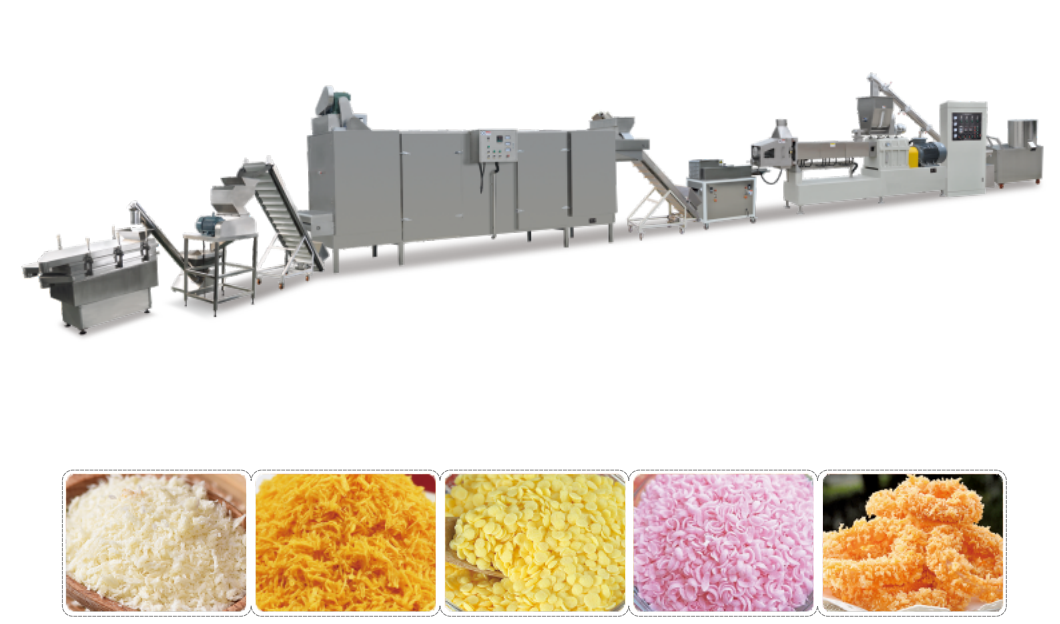
Mid-run extrusion plate tweaks usually come down to watching the edges and the center fight each other. A slight crown in the lip can push more material toward the middle, while tightening one end a touch pulls thickness back into line. Operators who check a quick profile sample every few minutes can often catch a drift before it becomes a full-width gauge issue.
Temperature drift matters just as much as the mechanical setting. If one side of the plate runs cooler, the melt stalls near that edge and the sheet starts to sag or ripple. Loosening a bolt on the hotter side sometimes helps, but most of the real correction is in balancing barrel zones and letting the plate settle before making another move.
Small moves win here. A quarter turn on the adjusting bolts can shift thickness more than expected, especially with thin gauge product. Write down the starting positions, make one change at a time, and wait for the downstream rollers to react. That patience keeps a mid-run adjustment from turning into a full line stop.
Bake Chambers That Pull Moisture Before the Surface Over-Toasts
In a standard oven, the exterior can race toward deep brown while the middle stays wet and heavy. Chambers that actively pull moisture change that sequence. By drawing humid air away from the dough or batter during the first half of the bake, they stop the surface from steaming and force the structure to firm up before intense browning kicks in.
The venting pattern matters more than raw temperature. A well-placed extraction port near the top or back removes the saturated boundary layer that usually sits against the crust. Without that damp layer, heat transfers deeper, starches gelatinize evenly, and the surface stays pale long enough to develop flavor instead of burning early.
Some units run a two-stage cycle: a humid draw keeps the outer skin elastic while the crumb sets, then a drier phase pulls residual moisture to create a thin, crisp shell. The finished item has a deeper bake and less of the acrid edge that comes from over-toasting just to dry the center.
Cooling and Handling That Keep Crumb Brittle for the Mill
Getting the crumb to the mill in the right condition starts long before it reaches the grinding chamber. After leaving the reactor or dryer, the material often carries enough residual heat to soften and clump if it is moved too quickly. A controlled cooling step gives the crumb a chance to set into a firmer, glassier state. Rather than relying on a single long cooling conveyor, many processors now use short, staged air contact zones that pull heat out evenly without drying the surface into a hard shell. This keeps the interior structure consistent, so the crumb shatters cleanly under the mill rolls instead of smearing.
Handling between cooling and milling matters just as much. Sharp drops, steep chute angles, or overfilled transfer bins can crush the cooled crumb and create fines before it ever reaches the feed throat. A gentler approach uses lower drop heights, wider discharge openings, and slower belt speeds to preserve the brittle character that the cooling step worked to build. Keeping the crumb loose and free-flowing also prevents bridging in hoppers, which is a common hidden cause of uneven mill feed and fluctuating particle size.
The real test comes when the crumb enters the mill. If cooling has been uneven, the mill will fight a mix of hard, brittle pieces and softer, warm clusters. That inconsistency shows up as higher energy draw, more heat generation, and a wider distribution of the finished powder. By paying attention to residence time, air movement, and transfer design, operators can hold the crumb in a narrow temperature and moisture window that lets the mill do its job with less strain and fewer adjustments.
Screening Setups That Sort More and Smash Less
Most crushing circuits still lean on brute force, but the real bottleneck is rarely horsepower. It is the moment particles meet a screen deck and nobody knows whether they will pass, bounce, or wedge. A smarter setup starts with the feed curtain: if material is not spread evenly across the full width, you are already paying for wasted motion and premature wear. Simple changes like adjustable splitter plates, a slight deck angle tweak, or replacing worn rubber buffers can shift the whole distribution so finer fractions drop out earlier instead of riding along to the crusher.
Then there is the interaction between stroke, speed, and open area that most checklists ignore. A screen running too flat or too fast can throw good product back into the chamber, creating recirculating fines that act like sandpaper on liners. Tuning the throw to keep near-size particles tumbling rather than slamming can cut impact damage dramatically. In many plants, a modest reduction in amplitude paired with a slightly steeper incline lets undersize escape faster and leaves the deck clearer for the next layer.
The payoff shows up quietly: fewer emergency shutdowns, longer intervals between liner swaps, and a steadier tonnage curve. Instead of chasing a bigger motor or another stage, operators who treat screening as a sorting problem first often find the same crusher suddenly has spare capacity. The goal is not to soften the rock. It is to stop asking the chamber to do work that a well-tuned screen could have finished before the next belt ever moved.
The Sensor Cues That Catch Batch Drift Before Rejects Pile Up
Batch drift rarely announces itself with a single glaring alarm. More often, the first hints arrive as small, repeatable shifts in sensor signatures that experienced operators learn to read long before dimensional checks fall out of tolerance. A slight downward trend in melt pressure across consecutive cycles, a thermocouple trace that takes a few seconds longer to settle, or a subtle rise in backpressure during injection can all point to material inconsistency, screw wear, or a drifting barrel temperature zone. None of these alone may trigger a fault, but together they form a pattern that says the process is walking away from its center.
What makes these cues useful is not that they predict a specific defect, but that they show up early enough to adjust the process while parts are still good. Viscosity-sensitive readings, for example, often reflect moisture uptake or feeder bridging before short shots or burn marks appear. Vibration signatures on a dosing unit can flag inconsistent fill density long before weight checks fail. Tracking the distance between upper and lower control limits on a few correlated variables usually gives a clearer warning than waiting for any one parameter to cross a hard alarm threshold.
The practical move is to pair those sensor traces with a lightweight trend review at the line rather than chasing every fluctuation. When shift notes mention a heater cycling oddly or a slight oscillation in holding pressure, those remarks often correlate with the same drifts visible in the data. Catching that quiet divergence early keeps the run centered, adjustments minor, and the reject bins from becoming the first place a problem gets noticed.
FAQ
Start with how the line handles particle size control. The best setups combine gentle crushing with adjustable sifting instead of a single aggressive mill. That keeps the crumb structure airy and prevents excessive dust, which often gets overlooked until it affects texture and yield.
Usually the problem is uneven drying or moisture feedback. If the dryer zones are not independently controlled or the return air is not conditioned, the same recipe can shift throughout a shift. Lines with real-time moisture sensors and automatic temperature trimming hold consistency far better.
It reduces long-term wear and contamination risk, but also affects thermal behavior. Thicker contact surfaces distribute heat more evenly, which matters for uniform color and moisture. Cheap carbon steel frames can pass food safety checks yet cause subtle batch differences.
Yes, if the sizing section is designed for quick screen changes and the transport paths are accessible. The most practical setups use clamp-style screens and reversible conveyors, allowing a shift change to handle a new spec in under 30 minutes.
It becomes critical at scale. Exhaust heat from the dryer can preheat incoming air or warm the final cooling stage, cutting utility consumption noticeably. Top lines include heat exchangers and variable-speed fans rather than running everything at fixed maximum settings.
Feeding overly hard or cold bread into high-speed milling heads. That creates impact shock and uneven wear. Better lines use a pre-breaking stage and monitor amperage to adjust feed speed, which protects downstream sizing components.
Not automatically. Continuous systems give steady throughput once tuned, but batch lines can offer tighter recipe control for smaller runs. The key is whether the controls let operators repeat exact settings, not whether the process is labeled continuous or batch.
Watch for rising motor current at the same feed rate, wider variation in sieve analysis, and higher fines after cooling. These often point to dull cutters or misaligned screens. Fixing them early avoids drifting product quality and unnecessary downtime.
Conclusion
The most dependable bread crumb lines start with a feed system that avoids density spikes rather than chasing them downstream. Gentle hopper discharge, slow auger speeds, and constant-level controls keep dough entering the extruder at a uniform rate. Extrusion plates that can be adjusted mid-run matter more than fixed tooling because operators can correct hole expansion or tearing without shutting down. In the bake chamber, staged airflow and humidity extraction pull moisture early, so the surface does not over-toast while the center still carries water. That combination preserves a clean, pale-to-golden crumb and avoids the burnt notes that later show up in the mill.
After baking, the focus shifts to preserving brittleness for the mill. Cooling conveyors with low drop heights and gentle transfers keep the crumb structure from compacting, so it shatters cleanly instead of smearing. Screening decks that use wider openings, lower vibration, and longer travel sort more usable fractions while crushing fewer particles. Real-time sensors on moisture, mill load, and particle size provide the early cue that a batch is drifting, allowing small adjustments before rejects accumulate. Lines that hold consistent quality and output tend to treat these stages as one connected system: the right bake profile feeds the right mill behavior, and the right screen settings protect the final particle distribution.
Contact Us
Contact Person: LILY SUN
Email: [email protected]
Tel/WhatsApp: 0086-13969103791
Website: https://www.snackfoodmachinery.com/