

Top Furniture Casters Supplier Shares Expert Picks for Smooth Mobility
2026-09-17
Mobility matters more than most folks realize—until a wobbly caster turns a simple furniture shuffle into a backache. That’s precisely why CMCL, a top furniture casters supplier, asked its own experts to cut through the noise and reveal which casters they’d actually spec for real-world use. Their picks? They might surprise you. Here’s the shortlist.
What Makes a Caster Roll Effortlessly Across Hard Floors
A caster that glides across polished concrete or tile isn't just about having a round wheel. The contact patch matters enormously: hard, narrow wheels made from polyurethane or phenolic deform less under load, so they don't waste energy pushing a flattened spot along the floor. But hardness alone isn't enough—if the wheel is too rigid, every tiny floor irregularity turns into vibration and noise. Good casters for hard floors usually sit in the 85–95 Shore A range for polyurethane, giving just enough give to absorb micro-bumps without sacrificing rollability.
Bearings and swivel geometry do the hidden work. A pair of precision ball bearings inside the hub keeps friction low even under heavy carts, while a properly offset swivel head lets the wheel trail naturally instead of hunting left and right. If the raceway is gritty or the bearing shields are loose, the caster binds at the start of every push. The best designs also add a slight crown to the wheel profile—less rubber kissing the floor means less drag, yet still enough contact to avoid feeling squirrelly on smooth surfaces.
Carpet, Tile, or Concrete: Matching the Wheel to the Surface
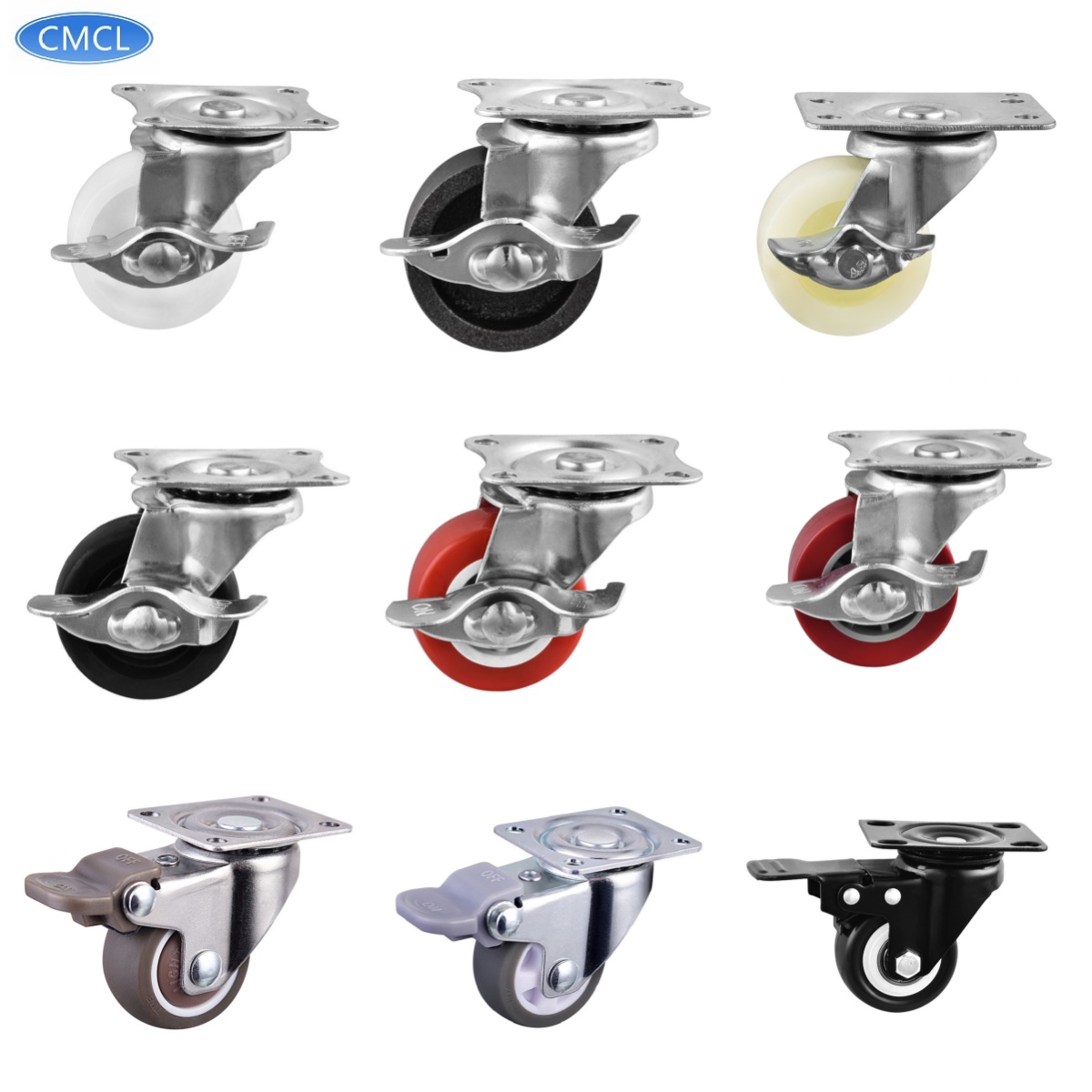
On plush carpet, hard plastic wheels sink and drag, forcing you to push twice as hard. Softer rubber or polyurethane treads roll over fibers without chewing them up, and a wider wheel spreads the load so you're not leaving permanent tracks in the pile.
Tile demands a different approach. Hard nylon wheels can click across grout lines and, over time, scratch the glaze. A medium-soft urethane wheel with a rounded edge takes the chatter out of the ride and won't leave gray scuff marks on light-colored tile.
For concrete, think about debris, not just hardness. Small chips and dust will embed in soft wheels and turn them into sandpaper. Go with a harder polyurethane or phenolic wheel that can shrug off grit, or use a pneumatic wheel if the floor is badly cracked and you need a little cushion.
The Material Difference Between a Silent Glide and a Squeaky Drag
A silent glide and a squeaky drag often live in the same drawer, separated by nothing more than the material that carries the weight. Steel ball bearings are the workhorses: they handle heavy drawers and long cycles, but they depend on grease to keep their voices down. When that grease separates, the hardened balls sing against the steel race. Nylon rollers, on the other hand, start out nearly silent because the polymer absorbs micro-vibrations. The trade-off is that nylon flexes and can develop flat spots under sustained load, which turns a once-smooth pull into a lumpy drag.
Then there's the middle path: coated or lined slides. A PTFE or acetal liner puts a low-friction film between moving metal parts, so the system stays quiet even when lubrication thins out. The difference is audible in the first inch of movement. A coated slide begins with a faint, even shush, while an unlubricated steel slide hesitates, then shudders into motion with a metallic scrape. Moisture and dust make the gap wider. Polymer and coated surfaces shed grit more easily; exposed steel tends to trap it and grind.
That's why the quietest hardware usually pairs a strong metal frame with a soft or slick contact surface. It is not about adding more grease but about removing the need for it. When you compare a silent glide and a squeaky drag, you are really hearing material choices made months or years earlier.
Why Weight Ratings Matter More Than the Wheel Size
Most shoppers fixate on rim diameter, convinced that bigger wheels automatically mean better performance or a tougher build. But that’s only half the story. The weight rating—often stamped on the wheel or buried in the spec sheet—tells you how much load that wheel can actually handle before it risks bending, cracking, or failing outright. A flashy 20-inch wheel with a low load rating is a liability on a loaded van or a potholed street, while a modest 16-inch steelie with a high rating will shrug off abuse for years. If your vehicle regularly carries heavy gear, tows a trailer, or just battles rough roads, the weight rating is the first number you should check, not the last.
Wheel size also changes how the tire absorbs impact. A larger rim leaves less sidewall to flex, so more of the shock transfers straight into the wheel itself. That means a bigger wheel needs a stronger—often heavier and pricier—construction just to survive the same pothole that a smaller wheel with a taller tire shrugs off. The weight rating quantifies that survival threshold. Ignore it, and you may end up with a set of wheels that look great in the driveway but crack on the first fire road. Match the rating to your real-world load, and the wheel size becomes a matter of taste rather than a gamble.
Locking Casters That Keep Your Furniture Exactly Where You Want It
Most casters roll when you least expect them to, but these lock into place with a firm press of the tab. Whether it’s a workbench that needs to stay put while you’re planing or a kitchen island that drifts during meal prep, the brake grips the wheel from both sides so it can't wiggle on tile or hardwood.
You don’t have to kneel down or fiddle with tiny levers. A quick toe tap engages the locking mechanism, and the furniture stays exactly where you left it. Release it just as easily when you want to move things around for cleaning or rearranging.
The nylon wheel tread is soft enough to protect floors but firm enough to hold position under load. No slow creep, no sudden slide — just predictable, stable placement for desks, carts, and tables in high-traffic areas.
Our Most-Requested Casters for Chairs, Carts, and Workbenches
Most of the casters people ask us for again and again fall into two groups. For chairs, it's usually a 2-inch stem caster with a soft polyurethane tread—something that fits a standard office chair base, rolls without rattling, and won't leave black streaks on light floors. For carts and workbenches, the requests center on plate-mounted casters with a total-lock brake, so the wheel and swivel both freeze. That second part matters more than it sounds when you're pushing against a bench.
The floor you roll on changes what makes sense. On sealed concrete or wood, a softer wheel keeps the noise down and protects the surface. On carpet, a wider, slightly firmer wheel moves with less resistance. We keep the top-requested models split by floor type rather than trying to sell one universal option, and that alone cuts down on returns and mismatched orders.
A quick measurement before ordering avoids most fit problems. Pull one old caster and check the stem diameter and length, or for plate-mounted casters, measure the bolt-hole spacing. For workbenches holding heavy tools, choose a load rating with at least 25 to 30 percent headroom above your total weight—it keeps the casters rolling smoothly for years instead of months.
FAQ
Soft tread materials like polyurethane or rubber are your best bet. They roll quietly and won't scratch or scuff the surface. Check the wheel hardness rating. Anything in the Shore A 75 to 95 range usually works well for wood.
Look at the load capacity per caster, not just the total weight. Divide the furniture's weight by the number of casters, then add a safety margin of about 25 percent. Steel or iron frames with polyurethane wheels tend to hold up well under constant load.
In most cases yes, as long as the mounting plate or stem size matches. Swivel casters add maneuverability but need a little more clearance to rotate. Measure the space under the furniture before buying.
Hard wheels like nylon or steel roll easily but can damage delicate floors and are noisy. Soft wheels like rubber or polyurethane absorb shock and protect surfaces, though they may require a bit more push on carpet.
Dual-wheel or medium-hardness polyurethane casters are a solid compromise. They won't sink into carpet too much and still glide over tile or wood without leaving marks.
Choose casters with brakes or locking mechanisms. Total-lock brakes stop both wheel rotation and swivel action, which is useful for beds or workbenches. Some casters also have a directional lock to keep movement in a straight line.
If the chair has sockets, pull out the old stem casters and press in new ones with the same stem diameter. For plate-mounted casters, use a drill and wood screws. Make sure all four casters are the same height to avoid wobble.
Conclusion
Getting furniture to glide rather than grind starts with understanding how wheel materials and floor types interact. A top furniture casters supplier notes that polyurethane wheels often deliver the quietest, smoothest movement on hard surfaces like tile and hardwood, while softer rubber compounds grip carpet without excessive resistance. On concrete, a slightly harder wheel with a rounded tread tends to roll more freely and resist flat-spotting. The distinction between a silent glide and an irritating squeak frequently comes down to the bearing type and the wheel's durometer, not just the caster's overall size. In fact, experienced suppliers emphasize that weight ratings deserve more attention than wheel diameter: a small caster rated well above the actual load will outlast and outperform a larger, under-rated one. Matching the wheel to the surface prevents dragging, scuffing, and that frustrating push-pull struggle.
Beyond rolling ease, control matters. Locking casters keep chairs, carts, and workbenches stable when you need them to stay put, with total-lock designs that immobilize both swivel and wheel. Among the most-requested options from this supplier are twin-wheel polyurethane casters for office chairs, heavy-duty phenolic or nylon casters for workshop carts, and stem-mount rubber casters for light furniture. These picks balance load capacity, floor protection, and noise reduction for everyday use. Whether you're replacing worn wheels on a favorite armchair or building a mobile workstation, choosing the right material, rating, and locking mechanism transforms jerky, noisy movement into smooth, controlled mobility. It's the kind of practical expertise that separates a generic hardware pick from a caster that actually feels effortless under real conditions.
Contact Us
Contact Person: Ruby
Email: [email protected]
Tel/WhatsApp: +86 13360379367
Website: https://www.cmcl-casters.com