

Vacuum Circuit Breaker Factory: A Behind-the-Scenes Look at Precision Assembly and Safety Testing
2026-11-16
Ever wondered what goes into building a vacuum circuit breaker that utilities trust to protect power grids? Step inside XIAOPAI's factory, where micron-level tolerances and brutal safety trials separate real reliability from marketing claims. This behind-the-scenes look follows the assembly line and test benches that turn raw components into silent guardians of electrical networks.
Inside the Cleanroom Where Dust Is Treated Like a Contaminant
Stepping through the airlock feels like entering a different world, one where the tiniest speck of dust carries more weight than a misplaced tool. Here, every surface is wiped down with lint-free wipes, and the air itself is filtered so aggressively that a single human hair becomes a glaring intrusion. Workers move with deliberate slowness, their bunny suits crinkling softly, as if the room itself might shatter under a careless gesture.
The obsession with dust isn't theatrical—it's practical. A particle smaller than a red blood cell can ruin a photomask or short out a wafer, turning months of work into scrap. So the cleanroom treats dust the way a hospital treats a pathogen: with gowning rituals, sticky mats that peel off shoe soles, and constant monitoring of particle counts. Even the paper used for notes has to be specially coated, because ordinary paper sheds fibers like a dog in summer.
What outsiders often miss is how this environment rewires human behavior. People learn to breathe through their noses, to avoid sudden movements, to think twice before scratching an itch. After a few hours, you start seeing your own skin as a dust generator. The cleanroom doesn't just filter the air—it filters you, until the line between discipline and instinct blurs.
The Calibration Dance Before Every Circuit Breaker Ships
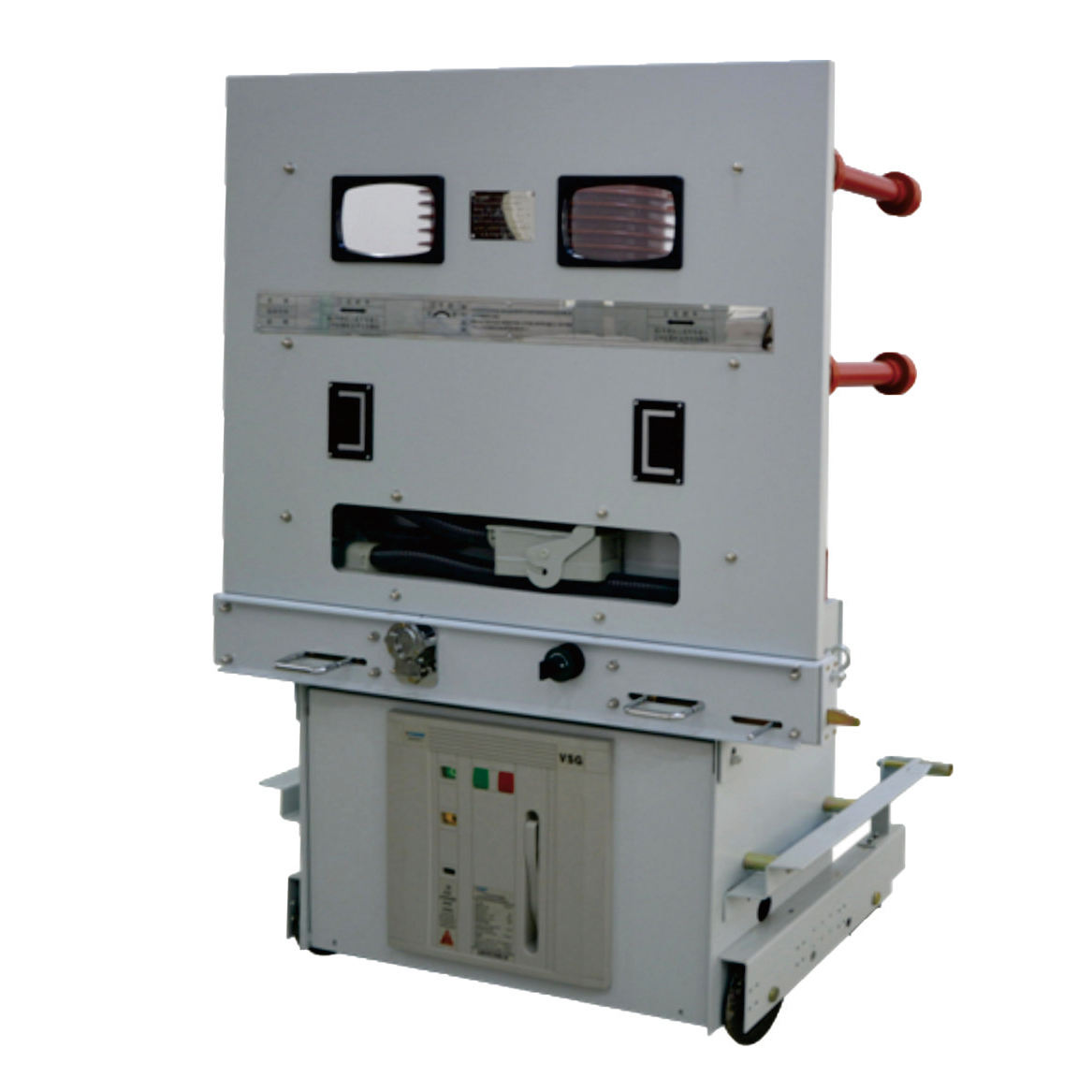
Every breaker that leaves the floor carries a subtle fingerprint of human attention. It begins with the torque wrench—not merely set, but listened to. The click isn’t a sound. It’s a conversation between spring steel and copper contact, telling the technician whether the mechanism will remember its promise ten thousand operations from now.
Then comes the thermal walk. A slow, deliberate current climbs through the bimetal strip while a technician’s eyes trace the curve of deflection against a scribed scale. No two strips bend exactly alike, so the adjustment screw turns in fractions of a degree. This is where the breaker learns its own personality—too eager, and it nuisance-trips; too stubborn, and it lets a fault simmer.
Finally, the magnetic pulse. A short, violent surge tests the instantaneous trip. The breaker must react faster than a blink, yet the calibration bench sits in near silence, broken only by the soft snap of the latch releasing. Only after this three-part dance does the breaker earn its label, ready to sit quietly in a panel for decades, waiting for the one moment it must not hesitate.
How a Single Misaligned Contact Halts the Entire Line
It starts with a connector that refuses to seat. The insertion force feels normal for a second, then the automated jig flags a resistance spike — a pin inside the socket has drifted a fraction of a millimeter off its mating axis. The machine pauses, awaiting a reset. No one notices that the entire downstream sequence has already stopped waiting for this one subassembly.
A single bent terminal in a harness can cascade quickly. The error code points to a misalignment, but the real culprit is often upstream: a worn locating fixture, a batch of housings with slightly oversized cavities, or a pick-and-place nozzle that lost its vacuum pulse. Once the line halts, operators begin the ritual of unbolting guards, pulling the suspect part, and inspecting under a microscope. Every minute of diagnosis eats into a production quota that was already tight.
Without a rapid recovery path, the stoppage spreads. Buffers drain, upstream stations idle, and downstream robots wait with empty grippers. The misaligned contact becomes a choke point not because it's difficult to fix, but because the entire line architecture assumes perfect insertion every cycle. One connector out of thousands, off by less than the thickness of a human hair, can shut down a plant that builds hundreds of units an hour.
Vacuum Leak Tests That Reject More Than They Pass
A vacuum leak test that rejects more assemblies than it passes often looks impressive on paper—until the production floor starts filling with perfectly good components. The problem usually isn't a sudden wave of real leaks. It's the test method itself latching onto harmless fluctuations in pressure decay, temperature drift, or seal seating that have nothing to do with an actual leak path.
When rejection rates climb above the pass rate, the first casualty is trust. Technicians begin overriding alarms or retesting parts until they get a lucky green light, which defeats the purpose of the check. Meanwhile, engineering chases phantom leaks, tears down units that were never faulty, and pads cycle times just to accommodate re-runs.
A more useful approach is to tune the test around functional requirements rather than raw sensitivity. That means setting pass/fail limits based on the maximum allowable leak for the application, accounting for material permeability and ambient conditions, and switching from absolute pressure decay to differential or mass flow methods when the signal-to-noise ratio is poor. The goal isn't to catch every microscopic anomaly—it's to reliably separate parts that will fail in service from those that won't.
The Robot-Human Handoff at the Final Assembly Station
On the line's last stretch, the robot doesn't simply stop working. It waits for a specific torque signature or a light curtain break, then slides the partially assembled unit into a transfer jig within easy reach. This is less a handoff than a negotiated pause: the machine's last move leaves the workpiece angled so a person can reach the two recessed fasteners without bending around a fixture.
Human hands take over where compliance matters. The robot can preload a bracket to 80 percent, but the final seating often relies on a worker's feel for thread engagement and a quick visual check for gasket alignment. Supervisors used to call these "feel steps"; now they're the reason the cell still has a manual station rather than a fully automated one.
The handoff zone itself stays deliberately uncluttered. A small tray for the torque driver, a shadow board for three socket sizes, and a single red button that pauses the robot's next cycle if something doesn't fit. No monitors, no dashboards. The interface is the part and the pause, which keeps the rhythm from drifting into either full automation or old-school bench assembly.
Simulating a Decade of Switching in Under an Hour
Compressing ten years of switching behavior into a sixty-minute simulation run sounds almost absurd, but it is precisely what event-driven emulators now accomplish. The trick is to skip idle time and amplify rare transition patterns, letting the switching fabric churn through millions of state changes, route updates, and buffer reallocations at full tilt. Instead of watching a single production switch age in real time, engineers feed a high-fidelity model a decade's worth of synthetic traffic and configuration drift, then watch the important failures surface without waiting a decade.
The hour-long window forces a different kind of discipline. Rather than logging every packet, the simulation records only deviations from expected behavior: a port that flaps after three years of marginal voltage, a firmware race condition triggered by a specific sequence of VLAN changes, or a slow memory leak that would have gone unnoticed in daily operation. Fault injection becomes routine—link cuts, power dips, malformed control packets—and the model's response is compared against a library of golden traces. This makes it easy to spot regressions in new code before it ships.
What makes the accelerated approach work is not raw speed but careful weighting of long-tail events. The simulator deliberately spends more virtual time on rare but high-impact scenarios, so a decade of ordinary forwarding is collapsed into a few minutes while the interesting failures get replayed in slow motion. The result is an engineer leaving the room with a short list of actionable fixes and a much stronger sense of which switching components are actually robust—without having to rotate through ten years of on-call shifts.
FAQ
Even a tiny misalignment in the vacuum interrupter can lead to gas leaks or unreliable arc extinction. That's why every component is checked against tight tolerances before and after assembly.
The interrupter is placed under high voltage while a magnetron or Penning gauge checks internal pressure. This reveals any microscopic leak that would shorten the breaker's service life.
It starts with incoming part inspection, then moves through interrupter mounting, mechanism alignment, lubrication, and final tightening. After that, each unit goes to a dedicated test bay.
They undergo dielectric withstand tests, mechanical endurance cycling, contact resistance measurement, and sometimes short-circuit simulation. These prove the breaker can interrupt faults without failing.
Dust or humidity trapped inside the interrupter can cause surface flashover or reduce vacuum quality. Controlled air and strict gowning rules keep contamination levels extremely low.
Each breaker gets a unique serial number linked to batch records, torque values, test results, and the names of operators. If a field issue ever arises, the factory can pull that unit's full history.
Premium plants use automated welding, 100% testing instead of batch sampling, and calibrated instruments for every measurement. Budget lines often skip environmental controls and rely on visual checks alone.
Yes, especially where maintenance access is limited. Vacuum interrupters need no gas refilling, contain no greenhouse gas, and can handle tens of thousands of operations with minimal wear.
Conclusion
Walk into the cleanroom and the first thing you notice is how ordinary it looks—until you realize every surface is wiped down twice, and the air itself is filtered to remove particles far smaller than a human hair. Dust is treated like a contaminant because inside the vacuum interrupter, a single stray speck can slowly degrade the seal over years of operation. Workers pass through air showers, wear full bunny suits, and handle components with gloves that get replaced after every shift. It's not theater; it's the first line of defense. Meanwhile, before any circuit breaker ships, a technician goes through what the floor calls the "calibration dance." Spring tension, contact gap, and opening speed are measured, adjusted, and measured again—sometimes four or five times—until the numbers fall into a window narrower than the thickness of a sheet of paper. Skipping a repeat measurement isn't allowed, because the difference between a good breaker and a liability often hides in the final tenth of a millimeter.
A single misaligned contact can halt the entire line, and nobody overrides the alarm. When the laser inspection flags an offset too small to see by eye, the fixture locks and the line stops. It might cost an hour of production, but sending a flawed unit out would cost far more. Then comes the vacuum leak test, where more units are rejected than pass. Rejected breakers aren't patched; they're completely torn down and rebuilt, because a slow leak won't show up for years—and by then it's someone else's emergency. At the final assembly station, a robot positions the heavy vacuum interrupter while a human worker makes the last torque adjustments and checks the tactile feel. The robot doesn't get tired, but it can't tell when a bolt feels slightly off. After that, the breaker goes to a test rig that simulates a decade of switching in under an hour, cycling it through thousands of operations while monitoring contact wear, temperature rise, and vacuum integrity. Only after that signed test report does the unit get a shipping label.
Contact Us
Contact Person: Kellen Chen
Email: [email protected]
Tel/WhatsApp: 8613806536768
Website: https://www.cnxiaopai.com