

Waterproof Connector Supplier Evaluation Criteria for Reliable Product Design
2026-11-16
Every waterproof connector on your bill of materials either protects the design or becomes its quiet failure point. Before locking in a supplier, most teams focus on IP ratings and forget the harder questions: consistency of molding, contact retention under thermal cycling, and how honestly the vendor documents test conditions. This guide sets out the practical criteria we use at REUNION to separate dependable waterproof connectors from ones that only look sealed on a datasheet. If your next enclosure cannot afford field returns, the checklist ahead is worth the read.
The Weak Point Is Rarely the Gasket Itself
A leaking flange usually gets blamed on the gasket before anyone looks at the metal around it. Strip down enough failed joints and a pattern emerges: the gasket surface may show uneven compression, deep scoring from a dirty flange face, or signs of being crushed in one corner while barely touching in another. That is not a material defect. It is the fingerprint of a sealing surface that was never flat, clean, or properly aligned to begin with.
Bolt load often plays a bigger role than the gasket compound. When torque is applied in one pass, or the tightening sequence skips around the flange, the load lands unevenly. The gasket then has to compensate for a gap it was never designed to bridge. Over time, thermal cycling loosens the assembly just enough for a small leak to appear, and the gasket gets blamed for not holding up.
Even the right gasket will fail if it is handling a condition it was not selected for. A material that works fine with steam may soften in contact with a trace solvent, or a spiral wound gasket may uncoil under repeated pressure spikes. The failure starts with the application, not with the part. Replacing the gasket with a thicker or harder one rarely fixes the root problem.
IP Ratings Describe a Test, Not Your Application
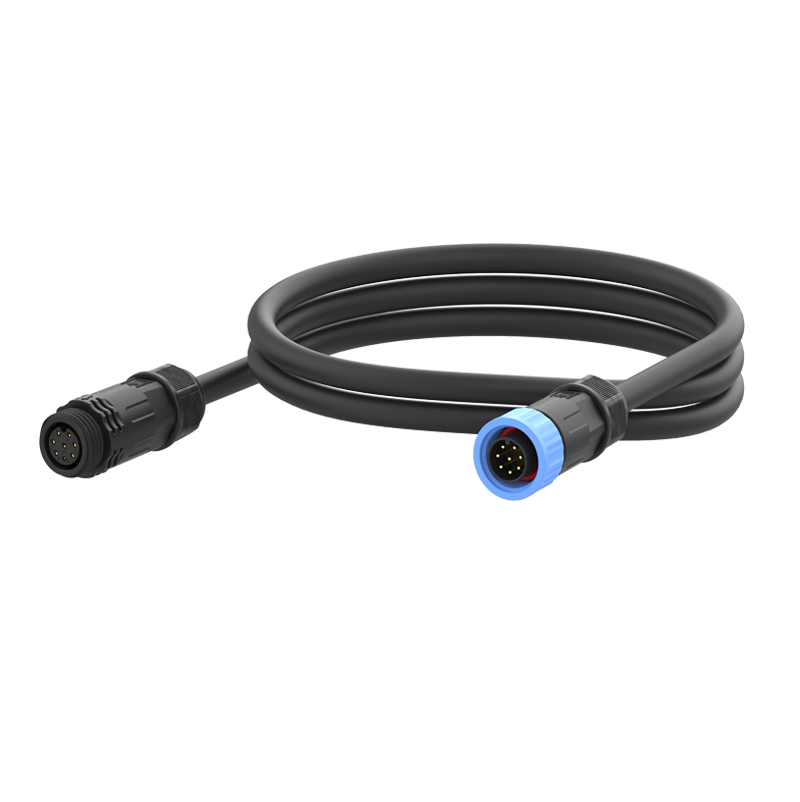
An IP68 label often gets read as a guarantee that a device can live underwater or survive a dusty worksite. In practice, the rating only captures how one sample performed in a controlled laboratory setup. The test uses specific water depth, exposure time, temperature, and often fresh water while the unit remains static. None of that is a stand-in for the messy conditions a product actually faces.
Temperature swings, seal aging, vibration, salt spray, cleaning agents, and even the orientation of the enclosure can change how moisture enters. A housing that passes a thirty-minute dunk in still, cool tap water may fail after months in a hot, condensing environment. The IP code tells you which test was passed, not that the enclosure will stay sealed in your specific application.
That is why the two digits deserve a closer look. Check the manufacturer's stated test parameters rather than treating IP67 or IP68 as a fixed level of ruggedness. If the conditions in your plant, vehicle, or outdoor installation are harsher than the test, leave a margin or run your own validation. The rating is a useful starting point, but the application decides whether it holds.
Tolerance Drift That Appears Only in Volume
Tolerance drift that stays hidden through prototype and pre-production runs has a habit of surfacing only after line speed increases and parts start arriving in the thousands. Tool wear accelerates, cutting temperatures shift, and small differences in raw material lots stack up in ways that a five-piece capability study cannot reveal. The result is a process that looks stable on paper but gradually walks toward the edge of the tolerance band once fixture clamping, chip buildup, and spindle growth begin repeating across hundreds of cycles.
This drift is rarely the fault of a single variable. It tends to emerge from the accumulation of modest changes—a few microns lost to abrasive wear, slightly more variation in a new coil of material, an operator compensating for a dull insert by adjusting an offset. In low volumes those effects remain too small to separate from measurement noise. In sustained production they align often enough to create nonconforming parts, even though every discrete setup still measures within specification.
Catching volume-only drift requires data that tracks long-run behavior instead of snapshots. Moving range charts, periodic tool life studies, and lot-by-lot dimensional logging often expose movement that capability indices miss. When the signal appears only after several hundred parts, the fix is usually not tighter inspection but earlier intervention: more conservative tool change intervals, thermal stabilization periods, or fixture maintenance timed to production cycles rather than calendar days.
When the Golden Sample Is Not the Production Sample
A golden sample carries a quiet authority on the factory floor. It sits in a labeled box, gets handled with care, and becomes the visual shorthand for what “good” looks like. The trouble begins when that sample stops reflecting what the line can actually repeat. Tooling wears, operators change shifts, a supplier sends a slightly different resin batch, and suddenly the approved reference is more of a memory than a standard. Teams can spend weeks measuring parts against a sample that no longer matches the process that made it, and the resulting corrections often make the product less consistent, not more.
This gap shows up in small ways at first. A texture appears a little deeper, a snap fit feels tighter, a color shifts under certain light. If the golden sample is treated as a fixed target rather than a snapshot of one moment, those small deviations get dismissed or hidden. The more useful approach is to treat the golden sample as a living reference—revalidate it, compare it to current process capability, and retire it once the production reality has moved too far. Otherwise the team ends up optimizing for a version of the product that no longer exists.
Custom Tooling Conversations Worth Having Early
Most teams treat custom tooling as an implementation detail that can be sorted out later. That tends to backfire once habits form around manual workflows, and the cost of switching grows quietly. Raising the topic early gives you a chance to see which friction points are actually slowing people down and which ones only look annoying in passing.
A useful early conversation starts with a simple question: what are we repeatedly doing by hand that a small internal tool could absorb? It helps to push past the obvious answers. Instead of listing every inconvenience, focus on tasks where mistakes are expensive, handoffs are frequent, or time disappears without anyone noticing.
It is also worth deciding early who will own whatever gets built. Custom tools rarely stay static, and the maintenance burden tends to fall on the person who wrote the first version. Naming that person, and agreeing on when a tool should be retired, prevents a well-meaning side project from becoming an unmanaged dependency.
Raw Material Changes That Quietly Alter Performance
Raw Material Changes That Quietly Alter PerformanceFAQ
Look at how consistently they document and verify IP ratings, not just the rating they print. Early on, a supplier that shares detailed cross-section drawings, material datasheets, and test reports for their seals gives you something concrete to work with before your prototype cycle begins.
Ask about failure modes under temperature cycling, vibration, and repeated mating. A capable supplier will talk about compression set, seal retention features, and how housing tolerances affect the o-ring or gasket over the product's service life instead of repeating catalog specs.
Not by themselves. Certifications confirm that a compound meets a standard, but they don't tell you how the connector performs in your specific chemical, UV, or thermal environment. Request application-specific test data and, where possible, small-batch samples for your own accelerated life testing.
Check whether they measure critical seal dimensions during production, use vision or pressure testing at final assembly, and maintain lot traceability for plastic and elastomer batches. These practices reduce the chance that a well-designed connector fails in the field because of process drift.
When your enclosure geometry, cable routing, or assembly sequence won't tolerate standard dimensions. The right supplier will offer modified insert layouts, custom cable overmolding, or alternative sealing materials without pushing you toward a poorly matched standard part.
Ask for dimensional control plans, material compliance statements, IP validation reports, and a clear process for change notification. If the supplier is hesitant to share these, treat it as a red flag regardless of how attractive the unit price is.
Compare cost on a total-lifecycle basis rather than piece price alone. A connector that saves a few cents but requires rework, higher warranty reserves, or field replacements will quickly erase the initial savings once products are deployed in wet or washdown environments.
Run a small pilot order through your own assembly process, then subject the assembled products to thermal shock, pressure/vacuum leak checks, and repeated connect-disconnect cycles. This exposes both mechanical quality and whether the supplier's documented specifications hold up outside their own test lab.
Conclusion
A supplier’s paperwork can look flawless while the actual sealing interface fails for reasons that have little to do with the gasket. In many connector failures, the weak point sits in the housing geometry, compression set, or how the seal behaves after repeated thermal cycling. Waterproof claims built only on IP test reports often hide this reality: an IP rating describes a controlled laboratory dunk or spray, not the pressure wash, vibration, or chemical exposure your product sees in the field. Volume production adds another layer. Prototype parts may fit tightly, but tolerance drift across cavities, insert molding, and automated assembly can open microscopic leak paths that no bench sample reveals. For that reason, evaluating a supplier means asking for capability data from real production runs, not just dimensional reports on a golden sample.
Tooling conversations deserve attention before the design freezes, especially around gate location, parting lines, and seal groove finishes that affect long-term watertight performance. A supplier who raises those constraints early often prevents costly late changes. Equally important is control over raw material changes. A quiet substitution of resin, lubricant, or elastomer compound can alter adhesion, shrinkage, or durometer enough to compromise sealing without changing the part number. Reliable suppliers disclose material and process changes in writing, lock critical characteristics, and validate first articles from production tooling under conditions closer to actual use than a standard IP test. That combination of transparency and process evidence matters more than a polished sample.
Contact Us
Contact Person: Hayley Liang
Email: [email protected]
Tel/WhatsApp: +86 13480625451
Website: https://www.reunion-china.com/